


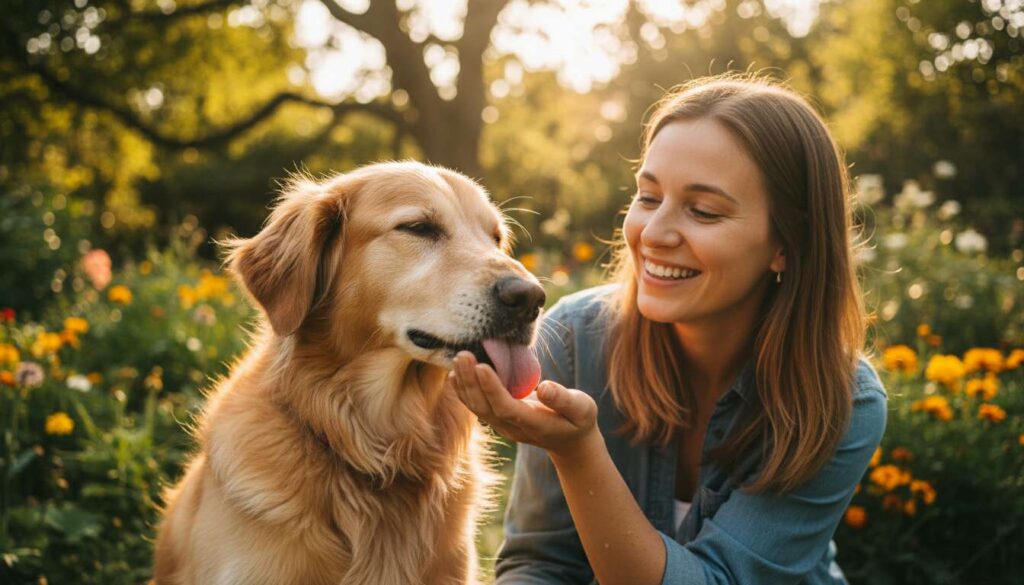
Dogs communicate through a fascinating array of behaviours, and licking stands amongst their most frequent and meaningful gestures. Whether greeting their owners at the door, grooming their puppies, or interacting with fellow canines, dogs use their tongues as versatile tools for expression and connection. This seemingly simple action carries layers of significance that reflect their emotional state, social bonds, and physical wellbeing. Understanding the motivations behind this behaviour offers valuable insights into the complex world of canine communication and helps owners recognise when normal licking crosses into concerning territory.
Understanding canine language: why do dogs lick ?
The evolutionary roots of licking behaviour
Licking represents an instinctive behaviour deeply embedded in canine evolution. Puppies experience licking from the moment they enter the world, as mother dogs clean their newborns and stimulate vital functions through this action. This early association creates a powerful connection between licking and comfort that persists throughout a dog’s life. Wild canids also demonstrate licking behaviours within their packs, establishing it as a fundamental aspect of canine social structure that transcends domestication.
Multiple functions in canine communication
Dogs employ licking across various contexts, each serving distinct purposes. The behaviour functions simultaneously as:
- A method of gathering information about their environment through taste and scent
- A social bonding mechanism that reinforces relationships
- A self-soothing technique during stressful situations
- A practical hygiene tool for maintaining cleanliness
- An attention-seeking strategy to engage with humans or other animals
The versatility of licking makes it challenging to interpret without considering the broader context of a dog’s body language, environment, and individual temperament. Recognising these nuances helps distinguish between normal behavioural expressions and potential concerns that warrant closer attention.
Beyond these general functions, licking also serves specific emotional and social purposes that reveal much about a dog’s inner world and relationships.
Expression of affection: licking as a sign of love
The bonding power of canine kisses
When dogs lick their owners’ faces, hands, or feet, they frequently express genuine affection and attachment. This behaviour mirrors the nurturing licks puppies receive from their mothers, creating an association between licking and positive emotional connections. Dogs often reserve their most enthusiastic licking sessions for their favourite humans, demonstrating selective affection that strengthens the human-animal bond.
Chemical communication through taste
Dogs possess extraordinary sensory capabilities that extend beyond simple taste perception. When licking human skin, they detect:
- Salt content that appeals to their taste preferences
- Pheromones and chemical signals that convey emotional states
- Residual food traces that might linger on hands or faces
- Unique scent signatures that help them identify individuals
This sensory exploration reinforces recognition and familiarity, allowing dogs to maintain mental maps of their beloved companions. The act simultaneously satisfies their curiosity whilst expressing devotion, creating a mutually reinforcing cycle of affection.
Whilst affection drives much licking behaviour, dogs also utilise this action to navigate their social environment and establish their place within group dynamics.
Communication and socialisation: the role of licking among dogs
Establishing pack hierarchy
Within canine social structures, licking serves as a submissive gesture that acknowledges another dog’s higher status. Subordinate dogs often lick the muzzles of dominant pack members, a behaviour inherited from wolf ancestors where younger pack members lick adult faces to stimulate regurgitation of food. Though domesticated dogs no longer rely on this feeding mechanism, the gesture persists as a sign of respect and deference.
Greeting rituals and social bonding
Dogs engage in licking during introductions and reunions, establishing friendly intentions and reducing potential tension. This behaviour facilitates:
| Social situation | Licking function | Typical outcome |
|---|---|---|
| Meeting unfamiliar dogs | Signals non-threatening approach | Peaceful initial interaction |
| Reuniting with pack members | Reinforces existing bonds | Strengthened group cohesion |
| Conflict de-escalation | Demonstrates submission | Reduced aggression potential |
| Play initiation | Invites friendly engagement | Positive social interaction |
These ritualistic exchanges allow dogs to navigate complex social landscapes without resorting to aggression, maintaining harmonious relationships within multi-dog households and during encounters with unfamiliar canines.
Beyond social functions, licking also addresses practical needs related to cleanliness and physical maintenance.
Hygiene: licking for self-cleaning and caring for others
Personal grooming instincts
Dogs naturally lick themselves to maintain cleanliness, removing dirt, debris, and loose fur from their coats. This self-grooming behaviour proves particularly noticeable after meals, outdoor adventures, or bathroom activities. Whilst less fastidious than cats, dogs still demonstrate innate hygiene awareness that prompts regular cleaning sessions focused on paws, genital areas, and any spots that feel uncomfortable or dirty.
Wound care and healing properties
When injured, dogs instinctively lick wounds, a behaviour rooted in survival mechanisms. Canine saliva contains:
- Enzymes that possess mild antibacterial properties
- Proteins that may promote tissue repair
- Natural cleansing agents that remove surface contaminants
However, excessive wound licking can impede healing by preventing scab formation and introducing harmful bacteria. Veterinary professionals often recommend protective collars to prevent counterproductive licking that damages healing tissue despite the dog’s helpful intentions.
Caring for pack members
Mother dogs meticulously lick their puppies to stimulate elimination, clean their coats, and provide comfort. This nurturing behaviour extends beyond puppyhood, as adult dogs sometimes groom their companions or even their human family members. Such behaviour demonstrates empathy and social bonding whilst serving practical hygiene purposes within the family unit.
Whilst moderate licking serves beneficial purposes, certain circumstances transform this normal behaviour into a concerning pattern that requires attention.
Sources of stress or anxiety: when licking becomes excessive
Identifying stress-related licking patterns
Dogs experiencing anxiety frequently resort to repetitive licking as a self-soothing mechanism. This behaviour resembles human nervous habits like nail-biting or hair-twirling, providing temporary relief from uncomfortable emotions. Stress-induced licking typically targets specific areas such as paws, flanks, or household surfaces, and intensifies during triggering situations.
Common anxiety triggers
Various circumstances may provoke stress-related licking behaviours:
- Separation anxiety when left alone for extended periods
- Environmental changes such as moving house or family restructuring
- Loud noises including thunderstorms, fireworks, or construction sounds
- Insufficient mental stimulation or physical exercise
- Conflicts with other household pets or family members
- Previous traumatic experiences that create lasting sensitivities
Distinguishing normal from problematic licking
Owners should monitor licking frequency, duration, and context to identify concerning patterns. Normal licking occurs intermittently and stops when the dog engages in other activities. Problematic licking persists despite distractions, creates visible skin damage, or interferes with daily routines including eating, sleeping, or playing.
When licking crosses from occasional stress relief into obsessive patterns, it may indicate underlying health concerns that demand professional evaluation.
Health issues: compulsive licking, a sign not to be ignored
Medical conditions triggering excessive licking
Persistent licking sometimes signals physical discomfort or illness rather than purely behavioural concerns. Underlying medical issues that provoke increased licking include:
| Condition | Affected areas | Additional symptoms |
|---|---|---|
| Allergies (food or environmental) | Paws, belly, ears | Redness, scratching, hair loss |
| Skin infections | Localised patches | Odour, discharge, inflammation |
| Arthritis or joint pain | Affected joints | Limping, reluctance to move |
| Gastrointestinal discomfort | Lips, air, surfaces | Vomiting, appetite changes |
| Neurological disorders | Varied locations | Coordination issues, seizures |
Compulsive disorder recognition
Canine compulsive disorder represents a serious behavioural condition where licking becomes ritualistic and uncontrollable. Dogs suffering from this disorder demonstrate obsessive patterns that dominate their waking hours, causing significant physical damage and diminished quality of life. This condition requires comprehensive veterinary and behavioural intervention combining medication, environmental modification, and training protocols.
When to seek professional help
Owners should consult veterinary professionals when observing:
- Raw, bleeding, or infected skin from constant licking
- Licking that persists for hours without interruption
- Sudden onset of intense licking behaviour
- Licking accompanied by other concerning symptoms
- Behavioural changes including aggression or withdrawal
- Ineffectiveness of distraction or redirection attempts
Early intervention prevents complications and addresses root causes before patterns become deeply entrenched. Veterinarians can perform diagnostic tests to identify medical issues whilst certified behaviourists develop tailored management strategies for psychological components.
Licking behaviour encompasses a remarkable spectrum of canine communication, from tender expressions of love to urgent signals of distress. Understanding the four primary motivations behind this behaviour enables owners to appreciate normal social interactions whilst recognising warning signs that demand attention. Affectionate licking strengthens bonds between dogs and their human companions, social licking facilitates peaceful coexistence within canine communities, hygienic licking addresses cleanliness needs, and stress-related licking reveals emotional struggles requiring support. When licking transitions from functional behaviour to compulsive pattern, prompt veterinary consultation ensures proper diagnosis and treatment. By interpreting this versatile behaviour within its proper context, owners can respond appropriately to their dogs’ needs and maintain the health and happiness of their beloved companions.