



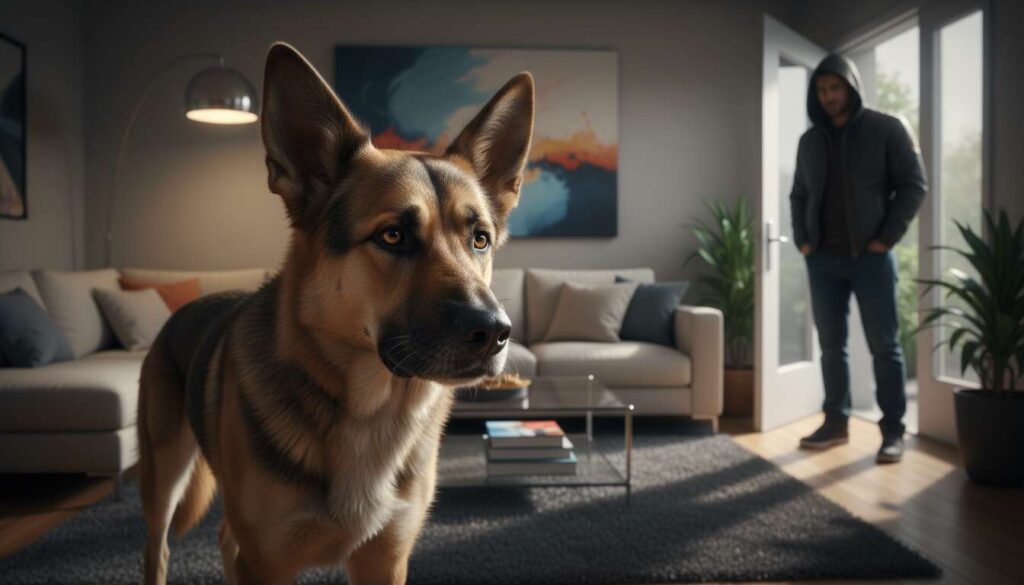
Dogs possess an uncanny ability to assess people within moments of meeting them. Their reactions—a wagging tail, a low growl, or sudden wariness—often reveal something their human companions might miss. This remarkable talent stems from a combination of heightened senses, emotional intelligence, and evolutionary instincts that have been refined over thousands of years of domestication. Understanding how our canine friends evaluate strangers can help us appreciate their protective nature and perhaps even trust their judgement when something feels amiss.
The exceptional scent of dogs: an innate ability
The power of the canine nose
A dog’s sense of smell operates at a level far beyond human comprehension. With approximately 300 million olfactory receptors compared to our mere six million, dogs can detect scents at concentrations nearly 100,000 times lower than humans can perceive. The portion of their brain dedicated to analysing smells is proportionally 40 times larger than ours, making scent their primary tool for interpreting the world.
This extraordinary capability allows dogs to:
- Detect chemical changes in human bodies caused by fear, anxiety, or aggression
- Identify individuals by their unique scent signature
- Sense hormonal fluctuations associated with emotional states
- Recognise substances such as adrenaline released during stress
Chemical signals humans unknowingly emit
When people experience negative emotions or intentions, their bodies release specific chemical compounds through sweat and breath. Dogs can detect these pheromones instantly, providing them with information about a person’s emotional state before any verbal or physical interaction occurs. Research has demonstrated that dogs can distinguish between the scent of a person experiencing fear versus one who is calm and relaxed.
| Emotional State | Chemical Released | Dog’s Typical Response |
|---|---|---|
| Fear or anxiety | Cortisol, adrenaline | Alert posture, increased attention |
| Aggression | Testosterone, noradrenaline | Defensive stance, possible growling |
| Calm confidence | Balanced hormone levels | Relaxed demeanour, friendly approach |
This chemical detection system functions as an early warning mechanism, alerting dogs to potential threats before danger becomes obvious. Beyond scent, dogs also rely on their ability to read human behaviour and emotional cues.
How dogs perceive human emotions
Reading facial expressions and body language
Dogs have evolved alongside humans for at least 15,000 years, developing an exceptional ability to interpret our non-verbal communication. Studies have shown that dogs can distinguish between happy and angry human faces, even in photographs. They pay particular attention to the eye region, where subtle emotional changes are most evident.
When assessing a person, dogs observe:
- Facial expressions, particularly around the eyes and mouth
- Body posture and movement patterns
- Gestures and hand positioning
- Eye contact duration and intensity
- Overall tension or relaxation in muscles
Vocal tone and energy assessment
The human voice carries significant emotional information that dogs decode with remarkable accuracy. They respond not to the words themselves but to pitch, tone, volume, and rhythm. A person attempting to mask hostile intentions may speak normally, but subtle vocal tensions often betray their true state. Dogs detect these inconsistencies, becoming wary when vocal signals don’t match body language.
Additionally, dogs sense what many describe as “energy” or “vibes”—the overall demeanour and intention a person projects. This perception likely combines multiple sensory inputs into an instinctive assessment. These observational skills work in tandem with specific behavioural red flags that trigger canine suspicion.
The behavioural signs a dog recognises in a dubious person
Inconsistent behaviour patterns
Dogs excel at detecting incongruence between different signals. When someone’s words, tone, facial expression, and body language don’t align, dogs notice immediately. A person who smiles whilst displaying tense shoulders or clenched fists sends mixed messages that dogs interpret as potentially threatening or dishonest.
Specific warning indicators
Certain behaviours consistently trigger defensive or cautious responses in dogs:
- Direct, prolonged staring, which dogs perceive as confrontational
- Sudden, unpredictable movements that suggest instability
- Approaching too quickly or invading personal space
- Reaching towards the dog or owner in an aggressive manner
- Displaying nervous or erratic behaviour
- Attempting to separate the dog from their owner
The role of past experiences
A dog’s personal history significantly influences their reactions. Dogs who have experienced mistreatment may be more sensitive to certain characteristics, such as gender, height, or specific clothing items associated with past trauma. Whilst this isn’t true detection of “bad people,” it demonstrates how dogs use pattern recognition to protect themselves and their families.
| Behavioural Sign | What It May Indicate |
|---|---|
| Excessive nervousness | Guilt, anxiety, or discomfort |
| Aggressive posturing | Hostile intentions or dominance |
| Avoiding eye contact | Deception or submission |
| Forced friendliness | Manipulation or hidden motives |
Understanding what dogs detect helps explain the biological mechanisms driving their protective responses.
The science behind dogs’ protective instinct
Evolutionary origins of guardian behaviour
The protective instinct in dogs traces back to their wolf ancestors, who survived through pack cooperation and territorial defence. When dogs were domesticated, this instinct transferred to their human families. Dogs view their households as their pack, with a natural drive to protect pack members from perceived threats.
Selective breeding has enhanced these traits in certain breeds, particularly those developed for guarding, herding, or protection work. However, even breeds not specifically bred for protection display guardian behaviours when they perceive their family is at risk.
Neurological responses to threats
When a dog senses danger, their brain’s amygdala activates, triggering the fight-or-flight response. This neurological reaction causes:
- Increased alertness and sensory processing
- Release of adrenaline and cortisol
- Heightened muscle tension for rapid response
- Enhanced memory formation of the threatening stimulus
The bond factor
Research has revealed that the human-dog bond involves oxytocin, the same hormone associated with maternal bonding. When dogs and their owners interact positively, both experience oxytocin increases, strengthening their emotional connection. This biochemical bond intensifies the dog’s motivation to protect their human, making them more vigilant about potential threats to their loved ones.
These protective instincts have been documented in countless real-world situations where dogs have proven their detective abilities.
Famous examples of detective dogs
Working dogs in law enforcement
Police and military forces worldwide employ dogs for their exceptional detection capabilities. German Shepherds, Belgian Malinois, and Labrador Retrievers commonly serve in roles detecting explosives, narcotics, and even electronic devices. These working dogs undergo extensive training, but their natural abilities form the foundation of their success.
Notable examples include:
- Sniffer dogs at airports who have prevented countless security threats
- Search and rescue dogs who locate missing persons by scent alone
- Cadaver dogs who assist in criminal investigations
- Dogs trained to detect specific diseases, including certain cancers
Household heroes
Beyond professional contexts, numerous accounts exist of family dogs warning their owners about dangerous individuals. Dogs have alerted families to intruders, refused to allow suspicious visitors to enter homes, and even physically intervened to protect children from threatening strangers.
One documented case involved a family dog who repeatedly blocked a repairman from entering a child’s room, behaviour the dog had never displayed before. The family later discovered the individual had a criminal history involving children. Whilst anecdotal, such stories reinforce the belief that dogs possess an intuitive sense about people’s character.
Medical detection dogs
Perhaps most impressive are dogs trained to detect medical conditions. These remarkable animals can identify:
- Drops in blood sugar levels before diabetic emergencies
- Oncoming seizures in epileptic patients
- Certain types of cancer through scent
- Bacterial infections in hospital settings
These capabilities demonstrate that dogs’ detective skills extend beyond identifying “bad people” to detecting invisible threats to health and wellbeing. For those wishing to enhance their own dog’s natural abilities, several approaches can help.
Tips for nurturing your dog’s detective skills
Building confidence and trust
A confident dog with a strong bond to their owner makes the most reliable guardian. Establish trust through consistent training, positive reinforcement, and regular quality time. Dogs who feel secure in their relationship with their humans are more likely to alert them to genuine concerns rather than reacting from fear or insecurity.
Socialisation and exposure
Proper socialisation helps dogs distinguish between normal behaviour and genuine threats. Expose your dog to:
- Various people of different ages, genders, and appearances
- Different environments and situations
- Other animals in controlled settings
- Common urban sounds and stimuli
Well-socialised dogs develop better judgement about when alertness is warranted versus when a situation is safe.
Training exercises to enhance natural abilities
Specific activities can sharpen your dog’s observational skills:
- Scent work games that encourage using their nose
- Alert training where dogs signal when they notice something unusual
- Boundary training to establish protected areas
- Controlled exposure to friendly strangers with varied demeanours
Respecting your dog’s instincts
Perhaps most importantly, pay attention when your dog reacts to someone. Whilst not infallible, dogs’ assessments often prove accurate. If your normally friendly dog displays consistent wariness towards a specific individual, consider their warning seriously. Their reaction stems from sensory information you cannot access.
| Training Approach | Benefit |
|---|---|
| Positive reinforcement | Builds confidence and clear communication |
| Scent work | Enhances natural detection abilities |
| Socialisation | Improves judgement and reduces false alarms |
| Boundary training | Establishes protective parameters |
Dogs possess remarkable abilities that combine sensory superiority, emotional intelligence, and protective instincts refined through millennia of evolution. Their capacity to detect chemical signals, read body language, and sense incongruence in human behaviour makes them exceptional judges of character. Whilst we shouldn’t rely solely on canine judgement, respecting and nurturing these natural detective skills can provide valuable insights and enhanced security. The bond between humans and dogs extends beyond companionship to encompass a unique partnership where each species contributes their strengths, creating a relationship built on mutual protection and trust.