



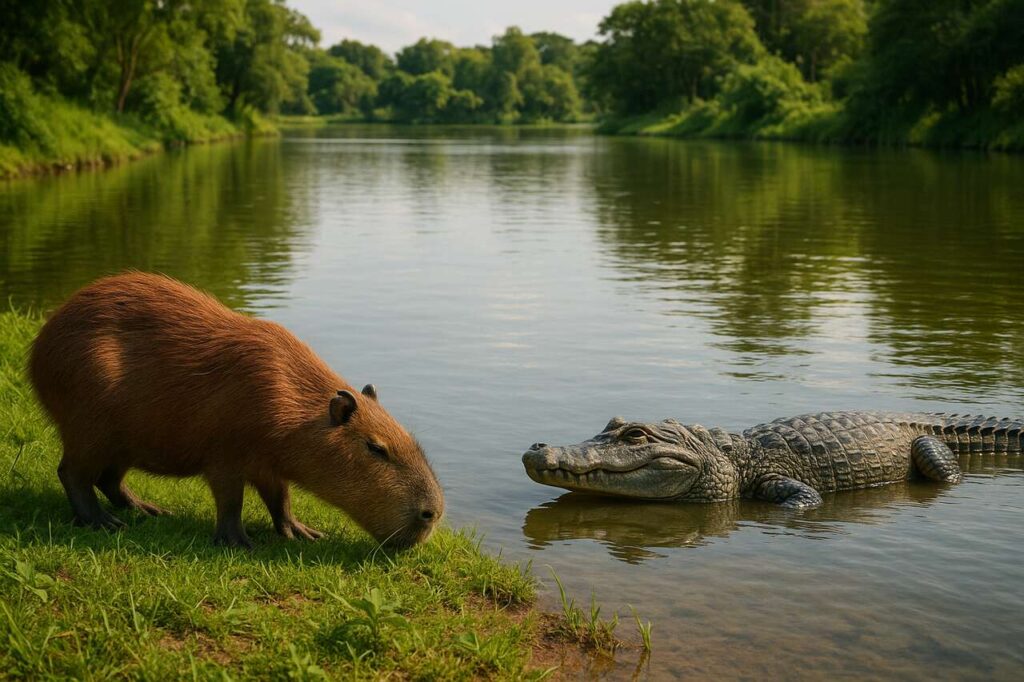
Across the wetlands of South America, a curious phenomenon captures the attention of wildlife observers and researchers alike. Capybaras, the world’s largest rodents, frequently share waterways with crocodiles and caimans, yet attacks remain remarkably rare. This seemingly paradoxical relationship between predator and potential prey raises fascinating questions about animal behaviour, ecological dynamics, and survival strategies in shared habitats.
The distinct geographical distribution of the crocodile and the capybara
Overlapping habitats in South American wetlands
Both capybaras and crocodilians inhabit the tropical and subtropical regions of South America, particularly in areas such as the Pantanal, the Amazon basin, and various river systems across the continent. These environments provide abundant water sources, vegetation, and suitable conditions for both species to thrive.
| Species | Primary Habitat | Geographic Range |
|---|---|---|
| Capybara | Wetlands, riversides, marshes | Throughout South America |
| Caiman | Freshwater rivers, lakes | Central and South America |
| Crocodile | Coastal and freshwater areas | Limited South American regions |
Shared resources without direct competition
The coexistence of these species is facilitated by their different dietary requirements. Capybaras are herbivorous, feeding primarily on grasses and aquatic plants, whilst crocodilians are carnivorous. This fundamental difference means they do not compete for the same food sources, reducing potential conflict. The geographical overlap creates opportunities for interaction, yet the ecological niches occupied by each species remain sufficiently distinct to allow peaceful cohabitation.
Understanding this geographical context helps explain why these animals encounter each other regularly, setting the stage for examining the physical characteristics that influence their interactions.
The size of the capybara: a challenge for crocodiles
Substantial body mass and dimensions
Adult capybaras represent a considerable physical challenge for most crocodilians found in their habitat. Weighing between 35 and 66 kilograms, with some individuals reaching even greater masses, capybaras are far from easy targets. Their body length can exceed one metre, and their robust build presents difficulties for predators accustomed to smaller prey.
Energy expenditure versus nutritional gain
Predators constantly evaluate the cost-benefit ratio of hunting attempts. For crocodiles and caimans, attacking a capybara involves:
- Significant energy expenditure during pursuit and capture
- Risk of injury from the capybara’s defensive actions
- Potential for the prey to escape into dense vegetation
- Uncertainty of successfully subduing such a large animal
When smaller, more vulnerable prey such as fish, birds, or juvenile mammals are readily available, the rational choice for a crocodile becomes clear. The energy invested in capturing easier prey yields a better return with minimal risk.
Beyond their impressive size, capybaras possess additional characteristics that further discourage predatory attacks.
Defensive characteristics of the capybara
Physical adaptations for survival
Capybaras exhibit several defensive features that make them less attractive to crocodilian predators. Their eyes, ears, and nostrils are positioned high on their heads, allowing them to remain almost entirely submerged whilst maintaining full sensory awareness. This adaptation enables them to detect threats early and respond appropriately.
Speed and agility in aquatic environments
Despite their bulk, capybaras are remarkably agile both in water and on land. They can swim swiftly and dive for extended periods, reaching depths that allow them to evade surface predators. On land, they can run at speeds sufficient to reach cover quickly when threatened. This combination of aquatic and terrestrial mobility provides multiple escape routes.
Vigilance and threat assessment
Capybaras demonstrate sophisticated threat assessment capabilities. They distinguish between active and passive dangers, remaining calm near an inactive crocodile whilst reacting immediately to aerial predators or approaching threats. This discernment allows them to conserve energy by not fleeing unnecessarily, whilst maintaining readiness to escape genuine danger.
These individual defensive traits are amplified considerably when capybaras operate within their natural social structures.
The social behaviour of the capybara: a neighbour of choice
Group dynamics and collective vigilance
Capybaras are highly social creatures, typically living in groups ranging from 10 to 20 individuals, though larger congregations occur during dry seasons. This social structure provides significant advantages:
- Multiple sets of eyes and ears monitoring for threats
- Vocal communication systems that alert the group to danger
- Collective defensive responses that can deter predators
- Shared knowledge of safe routes and refuge locations
Communication and warning systems
The vocal repertoire of capybaras includes various sounds for different situations. Warning calls spread rapidly through the group, triggering coordinated responses. This communication network makes it difficult for predators to isolate vulnerable individuals, a strategy upon which many crocodilian hunting techniques depend.
Strength in numbers
A solitary capybara might present an opportunity for a large caiman, but a group of capybaras represents a different calculation entirely. The commotion created by multiple animals fleeing, the difficulty of selecting and pursuing a single target, and the potential for defensive action from adult members make group attacks highly inefficient for crocodiles.
This social cohesion contributes to a broader pattern of interaction that characterises the relationship between these species.
A peaceful coexistence in the ecosystem
Mutual tolerance and ecological balance
The relationship between capybaras and crocodilians exemplifies ecological equilibrium rather than constant predation. Both species benefit from sharing resources without excessive conflict. Crocodiles maintain their role as apex predators by focusing on abundant, easily captured prey, whilst capybaras utilise the aquatic environment for feeding and thermoregulation without facing constant predatory pressure.
Behavioural adaptations over time
Years of cohabitation have resulted in adaptive behaviours on both sides. Capybaras have learned to recognise when crocodiles pose genuine threats and when they can safely ignore their presence. Similarly, crocodiles have learned that capybaras are not worth the effort when simpler prey abounds. This mutual understanding reduces unnecessary confrontations.
Ecosystem benefits of coexistence
The peaceful relationship between these species contributes to overall ecosystem health. Capybaras help maintain vegetation balance through their grazing, whilst crocodiles control populations of smaller animals. Neither species disrupts the other’s ecological function, allowing the wetland ecosystem to maintain its biodiversity and productivity.
This harmonious dynamic is further reinforced by the availability of alternative food sources for crocodilians.
Alternative prey for crocodiles
Abundant and accessible food sources
South American wetlands teem with alternative prey species that offer crocodiles and caimans more efficient hunting opportunities. These include:
- Fish of various species and sizes
- Aquatic birds and their eggs
- Small mammals such as rodents and young ungulates
- Reptiles including snakes and smaller caimans
- Amphibians during breeding seasons
Opportunistic feeding strategies
Crocodilians are opportunistic predators that adapt their diet based on availability and ease of capture. The energy required to catch a fish or snatch a bird is considerably less than subduing a 60-kilogram capybara. This pragmatic approach to feeding means that capybaras simply do not feature prominently in the crocodilian diet when easier options exist.
| Prey Type | Capture Difficulty | Energy Return |
|---|---|---|
| Fish | Low | Moderate |
| Birds | Low to moderate | Moderate |
| Small mammals | Moderate | High |
| Adult capybara | High | High but risky |
Seasonal variations in prey availability
The abundance of prey fluctuates seasonally, yet the wetland ecosystems typically provide sufficient alternatives throughout the year. During periods when fish congregate in shrinking pools or birds nest in accessible locations, crocodiles exploit these opportunities rather than pursuing challenging prey like adult capybaras.
The combination of ecological factors, behavioural adaptations, and prey availability creates a stable dynamic between capybaras and crocodilians. This relationship demonstrates that predator-prey interactions are far more nuanced than simple pursuit and capture. The size, defensive capabilities, and social structure of capybaras, combined with the opportunistic nature of crocodilian feeding and the abundance of alternative prey, result in a coexistence that benefits both species. Observations across South American wetlands consistently confirm that peaceful cohabitation represents the norm rather than the exception, illustrating the complex balance that characterises healthy ecosystems.