



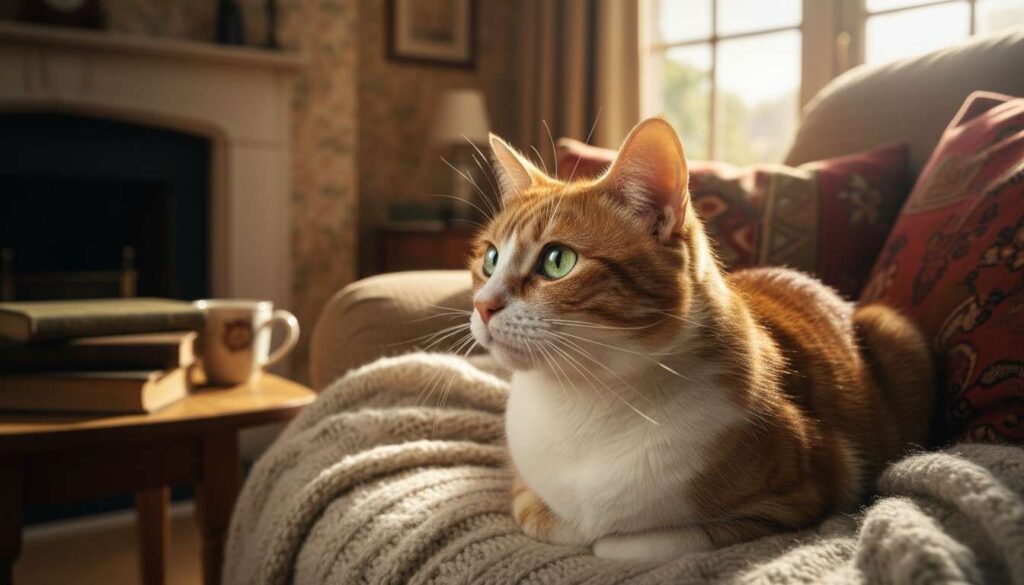
Have you ever noticed your feline companion trailing behind you as you move from the kitchen to the bedroom, then to the bathroom, seemingly unable to let you out of sight ? This common behaviour intrigues many cat owners who wonder whether their pet is simply affectionate or whether deeper motivations are at play. Understanding the reasons behind this shadowing tendency requires examining both the instinctive nature of cats and the bonds they form with their human caregivers. Zoologists and animal behaviourists have identified several compelling explanations for why cats become our constant companions indoors, revealing that this behaviour reflects a complex interplay of evolutionary traits, emotional needs, and environmental factors.
Why Your Cat Follows You Everywhere
The Instinct for Security and Protection
Cats are naturally cautious creatures that seek safety in their surroundings. When your feline follows you throughout your home, it often stems from an innate desire for security. In the wild, kittens remain close to their mothers for protection against predators and environmental threats. This behaviour persists into adulthood, particularly in domestic settings where cats view their owners as providers of safety and comfort.
Older cats and those who have experienced trauma or significant life changes display this behaviour more frequently. Adoption, moving house, or the introduction of new pets can trigger heightened attachment responses. Your presence becomes a reassuring constant in an otherwise unpredictable world, offering your cat a mobile safe zone as you navigate your daily routines.
Affection Expressed Through Proximity
Contrary to popular belief that cats are aloof and independent, many felines demonstrate their affection through constant companionship. This shadowing behaviour represents a clear indication that your cat genuinely enjoys your company. Rather than seeking physical contact like dogs might, cats often express their attachment by simply choosing to remain near you.
- Following you from room to room without demanding attention
- Sitting nearby whilst you work or relax
- Positioning themselves where they can observe your activities
- Greeting you enthusiastically after periods of separation
These subtle demonstrations of affection reveal the depth of the bond between cats and their owners, challenging outdated notions about feline emotional capacity.
Territorial Monitoring and Marking
Cats possess a highly developed territorial instinct that influences much of their behaviour. When your cat follows you, it may be engaging in territorial monitoring, keeping track of activities within its domain. Through scent glands located on their face, paws, and flanks, cats deposit pheromones that mark their environment and establish ownership.
By accompanying you throughout the house, your cat effectively patrols its territory whilst simultaneously marking you as part of its familiar landscape. This behaviour serves the dual purpose of maintaining environmental awareness and reinforcing the social bond between you and your pet.
Understanding these fundamental motivations provides insight into the scientific principles that govern feline conduct.
The Scientific Reasons Behind Cat Behaviour
Neurological and Hormonal Influences
Research into feline neuroscience has revealed that oxytocin, often called the “bonding hormone”, plays a significant role in cat-human relationships. When cats interact positively with their owners, their brains release this hormone, which reinforces attachment behaviours and encourages proximity-seeking.
| Hormone | Function | Behavioural Impact |
|---|---|---|
| Oxytocin | Social bonding | Increased following and proximity-seeking |
| Cortisol | Stress response | Heightened attachment when elevated |
| Dopamine | Reward processing | Reinforces positive associations with owner |
These neurochemical processes explain why some cats become particularly attached to specific individuals within a household, forming preferences based on positive interactions and emotional responses.
Evolutionary Adaptations in Domestic Settings
Domestication has profoundly influenced feline behaviour over thousands of years. Whilst wild cats are predominantly solitary hunters, domestic cats have evolved to thrive in social environments that include humans. This evolutionary shift has enhanced their capacity for forming attachments and recognising the benefits of maintaining close relationships with their caregivers.
Zoologists note that cats who follow their owners exhibit neotenic behaviours, retaining juvenile characteristics into adulthood. This phenomenon includes the persistence of kitten-like attachment patterns, where adult cats continue to seek the proximity and reassurance they once required from their mothers.
Sensory Perception and Environmental Awareness
Cats possess exceptionally acute senses that inform their behaviour. Their superior hearing allows them to detect subtle sounds associated with your movements, whilst their keen sense of smell helps them track your location throughout the home. This sensory acuity means your cat remains constantly aware of your whereabouts, facilitating the following behaviour.
- Hearing ranges extending to ultrasonic frequencies
- Olfactory capabilities far exceeding human perception
- Visual adaptations for detecting movement
- Whisker sensitivity providing spatial information
These sensory advantages enable cats to monitor their environment efficiently, including tracking their favourite humans with remarkable precision.
Beyond these biological factors, psychological elements significantly shape how cats relate to their owners and their surroundings.
The Psychology of the Cat: Attachment and Territory
Attachment Theory Applied to Felines
Psychological research has demonstrated that cats form genuine attachment bonds with their owners, comparable to those observed in human infants and their caregivers. Studies employing the “strange situation test” have shown that cats exhibit distinct attachment styles, with many displaying secure attachment characterised by using their owner as a safe base for exploration.
Cats with secure attachments feel confident exploring their environment when their owner is present but may follow them closely during times of uncertainty or stress. This behaviour reflects a healthy psychological bond rather than unhealthy dependence, indicating that your cat views you as a source of comfort and stability.
Territorial Psychology and Resource Management
From a psychological perspective, cats perceive their homes as complex territorial systems divided into core areas, home ranges, and boundaries. Your movements throughout these zones trigger your cat’s territorial monitoring instincts, prompting them to follow and assess any changes to their environment.
Additionally, cats associate their owners with valuable resources including food, water, play, and affection. Following you increases their chances of accessing these resources when they become available, demonstrating learned behaviour reinforced through positive outcomes.
Separation Anxiety and Emotional Distress
Whilst following behaviour is often benign, it can sometimes indicate separation anxiety, a psychological condition affecting some cats. Signs that distinguish normal attachment from problematic anxiety include:
- Excessive vocalisation when separated
- Destructive behaviour in your absence
- Inappropriate elimination outside the litter box
- Over-grooming or other stress-related behaviours
- Refusing to eat when alone
Cats experiencing genuine separation anxiety require professional intervention, including potential behaviour modification programmes and, in severe cases, pharmaceutical support prescribed by veterinary professionals.
The physical environment and daily patterns within your home also exert considerable influence over this following behaviour.
The Importance of Environment and Routine
Environmental Enrichment and Spatial Design
The layout and furnishing of your home significantly impact feline behaviour patterns. Cats naturally prefer environments offering vertical space, hiding spots, and vantage points for observation. Homes lacking these features may inadvertently encourage cats to follow their owners more persistently, as they seek stimulation and security through human companionship rather than environmental exploration.
Providing adequate environmental enrichment can reduce excessive following whilst maintaining healthy attachment:
- Installing cat trees and elevated perches
- Creating window viewing stations
- Offering puzzle feeders and interactive toys
- Establishing quiet retreat spaces
- Rotating toys to maintain novelty
The Role of Predictable Routines
Cats are creatures of habit who thrive on predictability. Establishing consistent daily routines for feeding, play, and interaction helps your cat feel secure and may moderate following behaviour. When cats can anticipate when resources and attention will be available, they experience less anxiety about potentially missing opportunities.
| Routine Element | Recommended Consistency | Behavioural Benefit |
|---|---|---|
| Feeding times | Same times daily | Reduces food-motivated following |
| Play sessions | Two 15-minute periods | Provides mental stimulation |
| Quiet time | Consistent evening routine | Establishes independence |
Multi-Cat Households and Social Dynamics
In homes with multiple cats, social hierarchies and relationships influence individual behaviour patterns. A cat that follows you constantly may be seeking refuge from feline housemates or attempting to secure preferential access to your attention. Understanding these inter-cat dynamics helps contextualise following behaviour within the broader household social structure.
The quality and nature of human-feline interactions further shape these behavioural patterns.
Human Interactions: A Strengthened Bond
Communication Patterns Between Cats and Owners
Cats develop sophisticated communication systems with their owners, using vocalisations, body language, and behavioural cues to convey needs and emotions. Following behaviour often represents one component of this communication repertoire, signalling desires ranging from hunger to playfulness to simple companionship.
Research indicates that cats modify their vocal patterns specifically for human interaction, producing sounds they rarely use with other cats. This linguistic adaptation demonstrates their investment in maintaining effective communication channels with their owners.
The Impact of Owner Responsiveness
How owners respond to their cats’ following behaviour significantly influences its frequency and intensity. Consistently rewarding this behaviour with attention, treats, or play reinforces it, whilst ignoring it may gradually reduce its occurrence. Understanding this dynamic allows owners to shape their cat’s behaviour intentionally.
- Positive reinforcement when cat remains independent
- Scheduled attention periods rather than random responses
- Redirecting to appropriate activities
- Maintaining consistency across household members
Building Mutual Trust and Understanding
The strongest cat-owner relationships are characterised by mutual trust and respect. When cats follow their owners, they demonstrate confidence that their presence will be tolerated and potentially welcomed. Honouring this trust by providing appropriate responses strengthens the bond whilst maintaining healthy boundaries.
Engaging in interactive play sessions, respecting your cat’s signals for space, and providing consistent care all contribute to a relationship where following behaviour reflects contentment rather than anxiety or insecurity.
Recognising when this behaviour requires management ensures both feline wellbeing and household harmony.
How to Manage and Understand This Behaviour
Assessing Whether Intervention Is Necessary
Not all following behaviour requires modification. Determining whether intervention is needed depends on several factors including the intensity of the behaviour, any associated distress signals, and its impact on daily life. Mild to moderate following typically represents normal, healthy attachment and requires no action.
However, consultation with a veterinary professional becomes advisable when:
- The behaviour suddenly intensifies without apparent cause
- Your cat displays signs of distress when unable to follow
- Following interferes with normal activities like eating or using the litter box
- Other behavioural changes accompany the following
Practical Strategies for Managing Excessive Following
For cats whose following behaviour has become problematic or distressing, several evidence-based strategies can help establish healthier patterns:
Gradual desensitisation: slowly increasing periods of separation helps cats build confidence in being alone. Begin with brief separations in adjacent rooms, gradually extending duration and distance as your cat becomes comfortable.
Environmental modification: creating engaging spaces throughout your home encourages independent exploration. Position resources strategically in different locations to motivate movement away from your immediate vicinity.
Scheduled interaction: establishing predictable times for focused attention reduces your cat’s need to constantly monitor your location, as they learn when engagement will occur.
When to Seek Professional Help
Certain situations warrant professional behavioural assessment from veterinary behaviourists or certified cat behaviour consultants. These specialists can identify underlying issues contributing to excessive following and develop tailored intervention plans addressing your cat’s specific needs.
Medical conditions including cognitive dysfunction, hyperthyroidism, or pain can manifest as changes in following behaviour, making veterinary examination essential when behaviour shifts suddenly or dramatically. Early identification of health issues ensures appropriate treatment and prevents unnecessary distress.
Understanding that following behaviour exists on a spectrum from normal attachment to problematic anxiety empowers owners to respond appropriately, maintaining the special bond with their feline companions whilst supporting their psychological wellbeing.
The phenomenon of cats following their owners reflects the remarkable capacity of these animals to form meaningful relationships with humans. Whether motivated by affection, security-seeking, territorial instincts, or learned associations with resources, this behaviour demonstrates the complexity of feline psychology and the depth of cat-human bonds. By recognising the various factors influencing this conduct and responding with appropriate environmental enrichment, consistent routines, and attentive care, owners can nurture healthy relationships that satisfy both feline needs and human preferences. Most importantly, understanding that this shadowing tendency typically signals trust and attachment rather than problematic dependence allows us to appreciate it as one of the many ways our feline companions express their connection to us.