



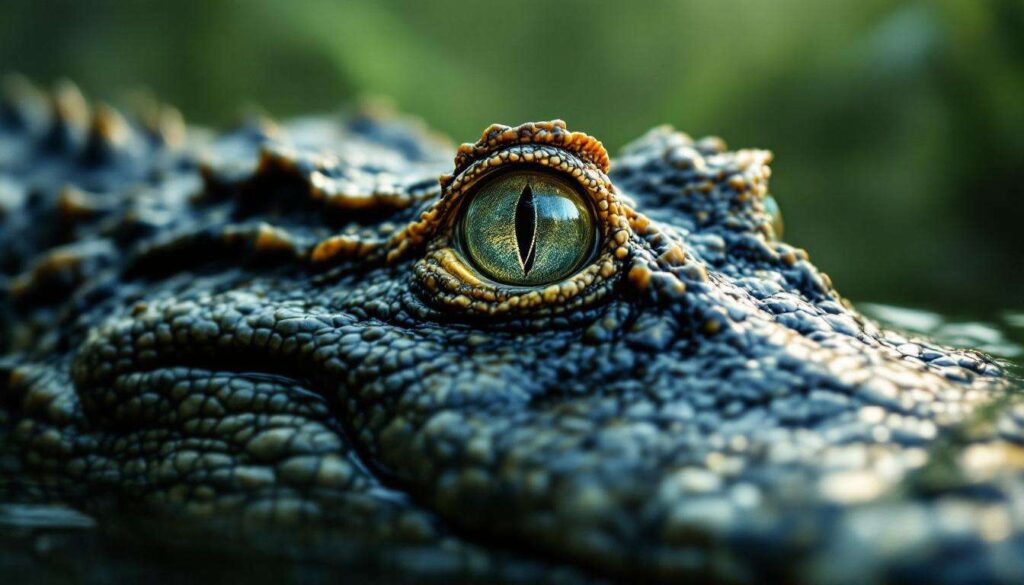
Crocodiles have long been regarded as primitive predators, relics of a bygone era when reptiles dominated the planet. Recent scientific investigations, however, have uncovered remarkable findings within their brains that challenge conventional wisdom about these ancient creatures. What researchers discovered has profound implications not only for our understanding of crocodilian biology but also for broader questions about cognitive evolution, neural complexity and the origins of intelligence across vertebrate species.
The Astonishing Discovery by Researchers
Unexpected Neural Complexity
Scientists examining crocodile brains using advanced imaging techniques made a startling observation: these reptiles possess neural structures far more sophisticated than previously assumed. The cerebral cortex, traditionally considered rudimentary in reptiles, revealed unexpected layers of organisation and connectivity patterns that bear striking resemblance to those found in birds and mammals. This discovery contradicts decades of scientific literature that classified crocodilian brains as simple and unchanging.
The research team identified specific regions responsible for spatial navigation, social recognition and problem-solving, capabilities that were thought to be exclusive to more recently evolved species. These findings emerged from collaborative studies involving neuroscientists, evolutionary biologists and behavioural ecologists working across multiple institutions.
Advanced Imaging Reveals Hidden Structures
Utilising cutting-edge technology such as functional magnetic resonance imaging and diffusion tensor imaging, researchers mapped neural pathways with unprecedented precision. The results showed that crocodiles possess:
- Dense neural networks in the dorsal ventricular ridge, analogous to mammalian neocortex
- Specialised areas for auditory processing that rival those in songbirds
- Complex interconnections between sensory and motor regions
- Evidence of neuroplasticity previously undetected in reptilian species
These structural features suggest that crocodilian brains are far more adaptable and capable than their outward behaviour might indicate. The implications extend beyond anatomy, raising questions about how intelligence manifests across different evolutionary lineages.
Details of the Experiments Conducted
Behavioural Testing Protocols
Researchers designed a series of controlled experiments to assess cognitive abilities in captive crocodiles. The studies involved problem-solving tasks, social interaction observations and response measurements to various stimuli. Crocodiles demonstrated the ability to learn from experience, remember individual handlers and modify behaviour based on environmental changes.
One particularly revealing experiment involved placing food rewards in increasingly complex configurations. Crocodiles not only solved these puzzles but also showed improvement over successive trials, indicating memory retention and learning capacity. Some individuals even displayed what appeared to be tool use, manipulating sticks to attract prey within striking distance.
Neurological Monitoring Techniques
Simultaneous brain activity monitoring during behavioural tasks provided crucial data linking neural activation patterns to specific cognitive functions. The experimental framework included:
- Electrode implantation for direct neural recording
- Non-invasive imaging during problem-solving activities
- Comparative analysis across different age groups
- Longitudinal studies tracking neural development
These methodologies revealed that certain brain regions activated in patterns remarkably similar to those observed in mammals performing analogous tasks. The convergence of neural strategies across vastly different species suggests fundamental principles governing cognitive processing.
The Brain Anatomy of Crocodiles
Structural Organisation
The crocodilian brain, whilst compact compared to mammalian brains of similar body size, exhibits remarkable efficiency in its organisation. The telencephalon, or forebrain, contains the dorsal ventricular ridge, which functions as the primary centre for higher-order processing. This structure, though architecturally distinct from the mammalian cortex, performs comparable roles in sensory integration and decision-making.
| Brain Region | Primary Function | Relative Size |
|---|---|---|
| Telencephalon | Higher cognitive processing | 35% of total brain volume |
| Cerebellum | Motor coordination | 25% of total brain volume |
| Optic tectum | Visual processing | 20% of total brain volume |
| Brainstem | Autonomic functions | 20% of total brain volume |
Neurochemical Composition
Analysis of neurotransmitter systems revealed diversity previously unrecognised in reptilian brains. Crocodiles possess dopaminergic pathways associated with reward processing and serotonergic systems linked to mood regulation, both features once considered hallmarks of mammalian neural evolution. The presence of these sophisticated chemical signalling systems suggests that crocodiles experience more complex internal states than traditionally acknowledged.
Comparison with the Brain of Other Species
Similarities to Avian Brains
Given the close evolutionary relationship between crocodiles and birds, researchers expected some neural similarities. However, the extent of convergence proved surprising. Both groups share highly developed auditory processing centres and similar patterns of neural connectivity in regions governing spatial awareness. These parallels reflect their shared archosaurian ancestry and suggest that sophisticated neural architecture evolved earlier than previously thought.
Unexpected Mammalian Parallels
More intriguing are the functional similarities between crocodilian and mammalian brains despite 300 million years of independent evolution. Key comparisons include:
- Analogous memory consolidation processes during rest periods
- Similar neural responses to social stimuli
- Comparable problem-solving strategies at the neural level
- Parallel development of specialised sensory processing areas
These convergent features indicate that certain cognitive solutions arise independently across lineages when facing similar environmental challenges. Understanding these patterns helps illuminate universal principles of brain function and evolution.
Implications for Understanding Evolution
Rethinking Reptilian Intelligence
The discoveries force a fundamental reassessment of reptilian cognitive capabilities. For decades, the term “reptilian brain” carried connotations of primitive, instinct-driven behaviour. The new findings demonstrate that crocodiles possess neural substrates for complex cognition that have simply been expressed differently than in mammals or birds. This realisation challenges hierarchical models of brain evolution that placed reptiles at a lower tier.
Evolutionary Timelines Reconsidered
If crocodiles inherited sophisticated neural architecture from common ancestors with birds, then advanced cognitive capabilities may have emerged much earlier in vertebrate history than current models suggest. Alternatively, if these features evolved independently, then neural complexity may arise more readily than evolutionary theory previously allowed. Either scenario requires revision of established timelines and mechanisms of brain evolution.
Impacts on Behaviour and Intelligence
Social Complexity
The neural discoveries align with emerging behavioural observations showing that crocodiles engage in sophisticated social interactions. They form long-term pair bonds, communicate through vocalisations and body language, and exhibit cooperative hunting strategies. Mothers provide extended parental care, and juveniles form social hierarchies within their cohorts. These behaviours, now understood to be supported by complex neural circuitry, reveal a social life far richer than previously documented.
Learning and Adaptation
Evidence of neuroplasticity suggests that crocodiles can adapt their behaviour based on experience throughout their lives. This capacity for learning extends beyond simple conditioning to include spatial memory, individual recognition and environmental mapping. Such abilities would have provided significant survival advantages in dynamic ecosystems, explaining their evolutionary persistence across millions of years.
The revelations about crocodilian brain structure and function represent more than isolated findings about a single taxonomic group. They fundamentally alter our comprehension of how intelligence evolves, how neural systems solve cognitive challenges and how we should assess the mental lives of non-mammalian species. As research continues, crocodiles emerge not as evolutionary leftovers but as sophisticated survivors whose brains harbour secrets about the very nature of cognition itself.