


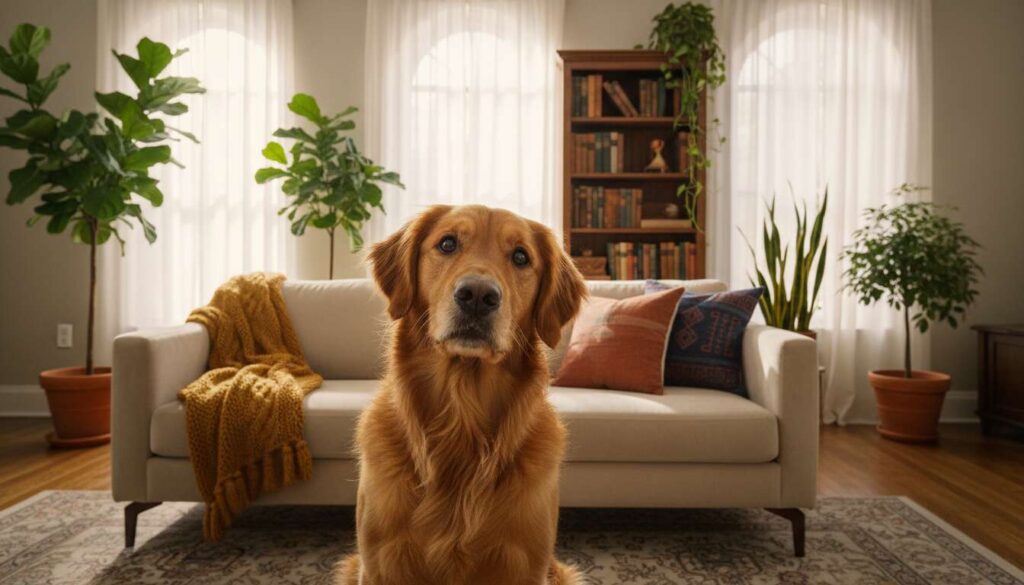
Dogs possess an extraordinary ability to communicate without words, and one of their most powerful tools is eye contact. When your canine companion fixes their gaze upon you with unwavering intensity, they are attempting to convey a message that deserves your attention. Understanding the nuances behind this behaviour can strengthen the bond between you and your pet whilst ensuring their wellbeing remains a priority. From expressions of love to subtle warnings about underlying issues, the reasons behind your dog’s stare are as varied as they are significant.
Why is my dog staring at me intensely ?
The biological foundation of canine eye contact
The practice of dogs staring at their owners has deep evolutionary roots. Research has demonstrated that sustained eye contact between dogs and humans triggers the release of oxytocin, often referred to as the “love hormone”, in both species. This biochemical response mirrors the bonding mechanism between human parents and their children, suggesting that domestication has fundamentally altered canine communication strategies.
Unlike their wolf ancestors, who typically interpret direct eye contact as a threat or challenge, domestic dogs have developed the capacity to use prolonged gazing as a social tool. This adaptation represents thousands of years of co-evolution alongside humans, making dogs uniquely attuned to our facial expressions and emotional states.
Common motivations for intense staring
Dogs stare at their owners for numerous reasons, many of which are entirely benign and even endearing. The context surrounding the behaviour often provides valuable clues about the underlying motivation:
- Anticipation of food, walks, or playtime
- Seeking guidance or permission during uncertain situations
- Attempting to decipher your intentions or emotional state
- Expressing confusion about commands or expectations
- Monitoring your movements to remain close to you
Understanding these basic motivations provides a framework for interpreting more specific behaviours. However, the intensity and accompanying body language can reveal whether the stare represents something more significant than simple curiosity or affection.
The affectionate reasons behind the intense gaze
Love and attachment expressed through eye contact
When your dog gazes at you with soft, relaxed eyes and a calm demeanour, this typically signifies genuine affection. Studies conducted at Azabu University in Japan confirmed that mutual gazing between dogs and their owners creates a positive feedback loop of oxytocin production, reinforcing the emotional bond between both parties.
This affectionate staring often occurs during quiet moments when your dog feels content and secure. You may notice your pet watching you whilst you read, work, or simply relax at home. The absence of tension in their facial muscles and body distinguishes this loving gaze from more urgent forms of communication.
Trust and security signals
Dogs who feel safe and protected in their environment frequently express this security through sustained eye contact. This behaviour demonstrates that your dog views you as their primary source of comfort and guidance. The following table illustrates the differences between affectionate and anxious gazing:
| Characteristic | Affectionate Gaze | Anxious Gaze |
|---|---|---|
| Eye appearance | Soft, relaxed, normal pupil size | Wide, dilated pupils, whites visible |
| Body posture | Relaxed, loose muscles | Tense, rigid, or cowering |
| Tail position | Neutral or gently wagging | Tucked or stiff |
| Ear position | Natural, forward or relaxed | Pinned back or hyperalert |
Recognising these affectionate moments allows you to reciprocate appropriately, further strengthening your relationship. However, not all intense staring stems from positive emotions, making it essential to consider alternative explanations.
Signals of attention seeking or need
Communicating immediate requirements
Dogs quickly learn that staring at their owners can be an effective method for obtaining what they desire. This learned behaviour often begins innocently but can become persistent if consistently rewarded. Your dog may be attempting to communicate specific needs such as:
- Requiring access to outdoor spaces for toileting purposes
- Experiencing hunger or thirst
- Desiring physical exercise or mental stimulation
- Seeking attention after prolonged periods of solitude
- Requesting access to toys or favourite items
The reinforcement cycle
When owners respond immediately to their dog’s stare by providing food, attention, or entertainment, they inadvertently reinforce this behaviour. Over time, dogs become increasingly proficient at using sustained eye contact as a manipulation tool. Whilst meeting your pet’s genuine needs remains important, distinguishing between legitimate requirements and learned attention-seeking behaviour helps maintain healthy boundaries.
Observing the timing and frequency of these stares can reveal patterns. Dogs who stare exclusively around mealtimes or before regular walk schedules are likely communicating anticipated routines rather than urgent concerns. Nevertheless, some stares carry more serious implications that warrant closer examination.
Signs of discomfort or stress in dogs
Physical discomfort indicators
When dogs experience pain or illness, they often attempt to communicate their distress through intense, persistent staring accompanied by unusual behaviours. Unlike affectionate gazing, these stares typically feature visible tension and may be accompanied by:
- Whimpering, whining, or other vocalizations
- Restlessness or inability to settle comfortably
- Changes in appetite or drinking habits
- Altered elimination patterns
- Excessive licking of specific body areas
- Reluctance to move or engage in normal activities
Psychological stress manifestations
Dogs experiencing anxiety, fear, or confusion may stare at their owners whilst displaying other stress signals. Environmental changes, such as moving house, introducing new family members, or alterations to daily routines, can trigger these responses. The stare in such contexts represents a plea for reassurance or guidance.
Separation anxiety particularly manifests through intense staring when dogs sense their owner’s imminent departure. This behaviour often escalates as the dog becomes increasingly distressed about being left alone. Recognising these stress-related stares enables owners to address underlying issues before they develop into more serious behavioural problems.
Behaviours to monitor for detecting a problem
Red flag combinations
Certain behavioural combinations warrant immediate attention and potentially veterinary consultation. When intense staring occurs alongside the following symptoms, professional evaluation becomes advisable:
- Sudden changes in eating or drinking patterns
- Lethargy or unusual tiredness
- Digestive disturbances including vomiting or diarrhoea
- Excessive panting without physical exertion
- Trembling or shaking unrelated to temperature
- Aggressive responses to normal interactions
Cognitive decline in senior dogs
Older dogs may develop canine cognitive dysfunction, a condition similar to dementia in humans. Affected dogs often stare blankly at walls, familiar people, or empty spaces, appearing confused or disoriented. This staring differs markedly from purposeful eye contact, as the dog seems to look through rather than at their target.
| Age Group | Normal Staring Frequency | Concerning Staring Pattern |
|---|---|---|
| Puppies (0-1 year) | Frequent, learning-focused | Accompanied by seizure-like symptoms |
| Adults (1-7 years) | Moderate, context-appropriate | Sudden increase with behavioural changes |
| Seniors (7+ years) | Variable, may increase slightly | Blank staring, disorientation, night waking |
Documenting changes in your dog’s staring behaviour, including frequency, duration, and accompanying symptoms, provides valuable information for veterinary professionals should concerns arise.
How to respond to your dog’s eye contact
Appropriate responses to affectionate gazing
When your dog offers a loving, relaxed stare, reciprocating with gentle eye contact reinforces your bond. However, maintaining prolonged, intense eye contact may overwhelm some dogs, particularly those with anxious temperaments. Brief acknowledgement through soft gazes, gentle words, or physical affection typically suffices.
Addressing attention-seeking behaviour
For dogs who have learned to use staring as a manipulation tactic, selective reinforcement proves most effective. Respond to legitimate needs promptly whilst ignoring stares that occur outside appropriate contexts. This approach requires consistency from all household members to prevent mixed messages.
- Establish regular feeding and exercise schedules to reduce anticipatory staring
- Teach alternative communication methods such as bell-ringing for outdoor access
- Reward calm behaviour rather than persistent staring
- Provide adequate mental stimulation to prevent boredom-related attention seeking
When to seek professional guidance
If your dog’s staring behaviour changes suddenly, intensifies dramatically, or accompanies other concerning symptoms, consulting a veterinarian or certified animal behaviourist becomes essential. Professional evaluation can identify underlying medical conditions or behavioural issues requiring intervention.
The intense gaze of a dog represents a sophisticated form of communication that has evolved alongside the human-canine relationship. Whilst many stares simply express love, anticipation, or basic needs, others signal distress or health concerns requiring attention. By observing the context, accompanying body language, and frequency of this behaviour, owners can accurately interpret their dog’s messages and respond appropriately. Maintaining awareness of changes in staring patterns, particularly when combined with other symptoms, ensures that potential problems receive timely intervention. Ultimately, understanding your dog’s eye contact strengthens the bond you share whilst safeguarding their physical and emotional wellbeing.