


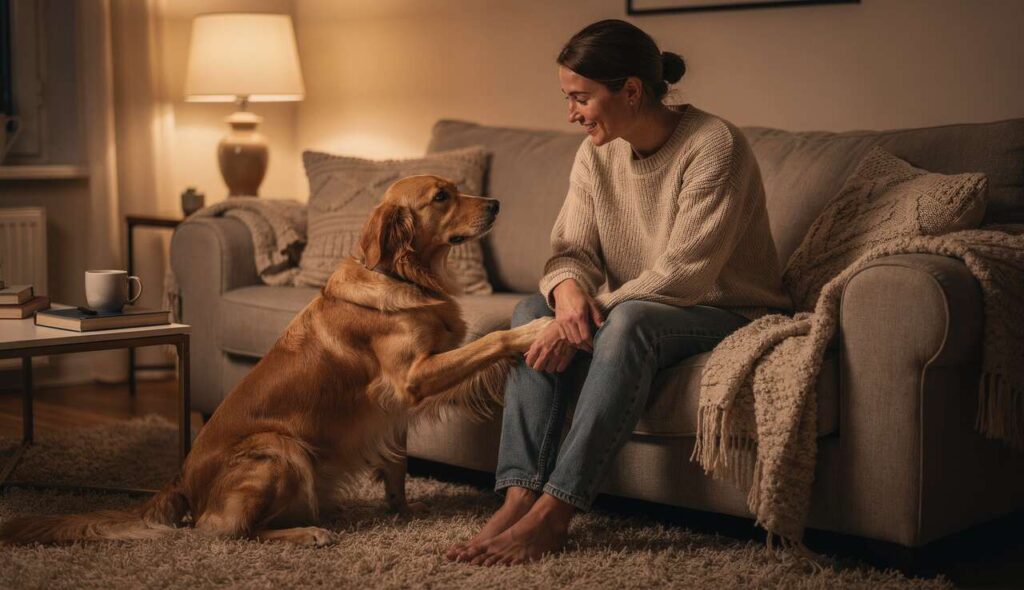
When your dog places their paw on your leg, this seemingly simple gesture carries profound meaning within the complex world of canine communication. This common behaviour, observed by countless dog owners daily, represents far more than a casual touch. Understanding what your dog is trying to convey through this physical contact can significantly enhance your relationship and help you respond appropriately to their needs. From expressing affection to seeking attention or even communicating discomfort, the paw-on-leg gesture serves as a crucial element in the non-verbal language dogs use to interact with their human companions.
Understanding the paw on the leg gesture
Origins of pawing behaviour in dogs
The act of pawing stems from instinctive behaviours that dogs develop from puppyhood. Young puppies naturally paw at their mother to stimulate milk flow during nursing, creating a foundational association between pawing and receiving comfort or sustenance. This early learning experience shapes how dogs use their paws throughout their lives to communicate with both canines and humans.
As dogs mature, they adapt this instinctive behaviour to interact with their human families. The gesture becomes refined and purposeful, serving multiple communicative functions depending on context, body language, and the individual dog’s personality. Recognising this evolutionary aspect helps owners appreciate the depth of meaning behind what might appear as a simple touch.
Common contexts for this behaviour
Dogs typically place their paw on their owner’s leg in specific situations:
- During moments of relaxation when sitting together on the sofa
- When the owner is engaged in activities like reading or working
- At mealtimes or when the dog anticipates receiving treats
- During periods of uncertainty or environmental changes
- When greeting their owner after periods of separation
The frequency and intensity of this behaviour varies considerably between individual dogs, influenced by breed characteristics, training history, and the strength of the human-animal bond. Some dogs paw gently and infrequently, whilst others make it a regular feature of their interaction style.
Understanding these foundational aspects naturally leads to exploring the deeper emotional motivations driving this communicative behaviour.
The emotional meanings behind this behaviour
Affection and bonding
The most common interpretation of the paw-on-leg gesture centres on affection and attachment. When your dog places their paw on you in a calm, gentle manner, they are often expressing love and reinforcing the social bond between you. This behaviour mirrors the way dogs interact with pack members they trust and value, demonstrating that they consider you part of their family unit.
Research into canine behaviour suggests that physical contact releases oxytocin in both dogs and humans, strengthening emotional connections. By initiating this contact, your dog actively participates in building and maintaining your relationship.
Seeking attention and reassurance
Dogs frequently use pawing as a deliberate strategy to capture their owner’s attention. When feeling ignored or desiring interaction, a dog may place their paw on your leg to redirect your focus towards them. This behaviour often intensifies if the initial attempt goes unacknowledged, potentially escalating to more insistent pawing or accompanying vocalisations.
| Emotional state | Associated behaviours | Typical context |
|---|---|---|
| Affection | Gentle pawing, relaxed body, soft eyes | Quiet moments together |
| Attention-seeking | Repeated pawing, direct eye contact | When owner is distracted |
| Anxiety | Persistent pawing, tense posture, panting | Stressful situations |
| Anticipation | Excited pawing, wagging tail | Before walks or meals |
Expressing needs and desires
Beyond emotional expression, pawing serves practical communicative purposes. Your dog may use this gesture to indicate specific needs such as hunger, thirst, or the need to go outside. Dogs learn through experience which behaviours successfully communicate their requirements, and pawing often proves effective in prompting owner responses.
These emotional dimensions form part of a broader communication system that relies heavily on physical interaction.
Canine communication through physical contact
The role of touch in dog language
Physical contact represents a fundamental component of canine communication, complementing vocalisations and body language. Dogs lack the verbal sophistication of human language but compensate through highly developed non-verbal communication systems. Touch allows dogs to convey nuanced messages about their emotional state, intentions, and social relationships.
Within dog packs, physical contact establishes hierarchy, reinforces bonds, and provides comfort during stressful situations. Domesticated dogs transfer these communication patterns to their interactions with humans, using touch to bridge the interspecies communication gap.
Reading accompanying body language
Interpreting the paw-on-leg gesture accurately requires observing concurrent body language signals:
- Tail position and movement indicating emotional state
- Ear position showing alertness or relaxation
- Eye contact patterns revealing confidence or submission
- Overall body tension suggesting comfort or stress
- Facial expressions including mouth position and brow movements
A dog placing their paw on your leg whilst maintaining a relaxed posture and soft facial expression communicates very differently from one exhibiting tense muscles and alert ears. Context matters enormously in accurate interpretation.
However, not all instances of this behaviour carry positive meanings, which brings us to potential warning aspects.
When this gesture becomes a warning signal
Recognising anxiety and stress indicators
Whilst often benign, persistent or intense pawing may signal underlying anxiety or distress. Dogs experiencing fear, pain, or discomfort may paw at their owners seeking reassurance or assistance. Accompanying signs include excessive panting, trembling, avoidance behaviours, or changes in appetite and sleep patterns.
Medical issues can also manifest through increased pawing behaviour. Dogs unable to verbalise pain or illness may use physical contact to alert owners that something feels wrong. Sudden changes in pawing frequency or intensity warrant veterinary attention to rule out health concerns.
Attention-seeking behaviour becoming problematic
When pawing becomes excessive or demanding, it may indicate behavioural imbalances requiring intervention. Dogs that have learned pawing consistently results in desired outcomes may develop overly persistent patterns, potentially including scratching or more forceful contact.
This escalation often reflects inconsistent responses from owners, where pawing sometimes receives attention and other times goes ignored, creating confusion about appropriate communication methods.
Recognising these warning signs naturally leads to considering appropriate responses to this behaviour.
How to respond to this behaviour
Encouraging positive interactions
When your dog paws gently for affection or appropriate attention, positive reinforcement strengthens healthy communication patterns. Responding with calm acknowledgement, gentle petting, or brief interaction validates their communication whilst maintaining boundaries.
The key lies in consistency and timing. Reward gentle, appropriate pawing whilst redirecting excessive or demanding behaviour towards more acceptable alternatives.
Setting appropriate boundaries
Establishing clear boundaries prevents pawing from becoming problematic:
- Ignore demanding or excessive pawing until your dog calms
- Teach alternative behaviours like sitting politely for attention
- Provide attention on your terms rather than always responding immediately
- Ensure your dog receives adequate physical exercise and mental stimulation
- Maintain consistent responses across all family members
Training your dog to understand when pawing is appropriate and when alternative behaviours are expected creates mutual respect within your relationship whilst maintaining open communication channels.
These responsive strategies contribute to building a deeper, more understanding relationship with your canine companion.
Strengthening the bond with your dog through attentive listening
Developing communication awareness
Becoming attuned to your dog’s communication style, including their use of pawing, demonstrates respect and understanding. Observing patterns in when and how your dog uses this gesture provides insights into their personality, preferences, and emotional needs.
This awareness extends beyond pawing to encompass the full range of canine communication signals, creating a richer, more nuanced understanding of your dog’s inner world.
Building trust through responsive interaction
Dogs whose communication attempts receive appropriate and consistent responses develop greater confidence and security within the relationship. When your dog learns that placing their paw on your leg effectively communicates their needs without requiring escalation, they feel heard and valued.
This mutual understanding forms the foundation of a strong human-canine bond characterised by trust, affection, and effective communication.
The simple gesture of a paw on your leg encapsulates the remarkable communication abilities dogs possess and their desire to connect meaningfully with their human families. By understanding the multiple meanings behind this behaviour, from expressions of affection to requests for attention or signals of distress, owners can respond appropriately and strengthen their relationship. Observing accompanying body language, maintaining consistent boundaries, and remaining attentive to changes in behaviour patterns ensures this common gesture remains a positive element of canine communication. Ultimately, recognising and valuing your dog’s attempts to communicate through physical contact deepens the bond between you, creating a relationship built on mutual understanding and respect.