

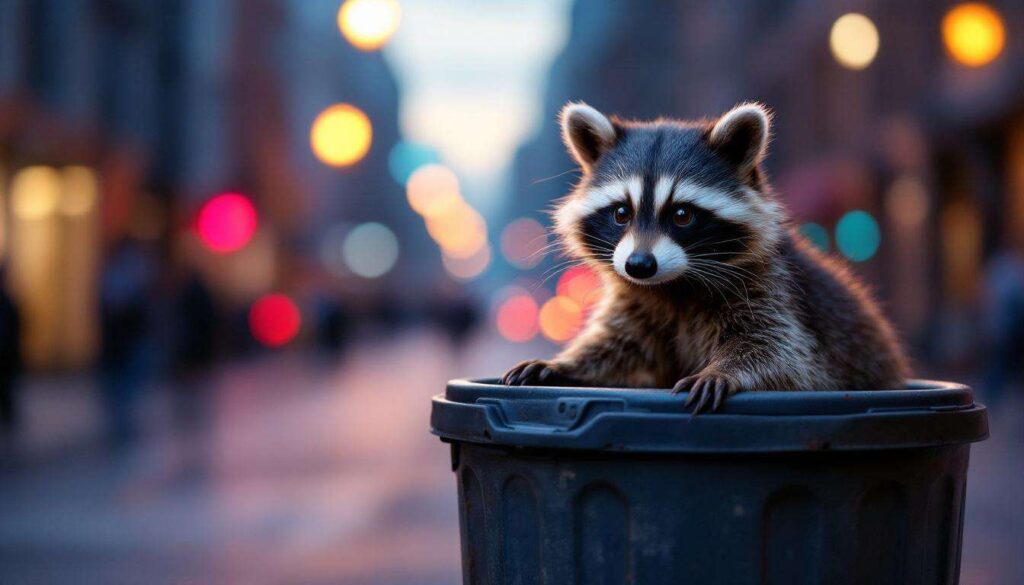
Across cities in North America, an extraordinary transformation is taking place amongst one of the most adaptable urban mammals. Raccoons, those masked bandits of the night, are displaying remarkable evolutionary changes that suggest they may be following a path towards domestication. Scientists have documented physical and behavioural shifts in urban raccoon populations that mirror the early stages of domestication seen in other species throughout history. The phenomenon raises fascinating questions about how human environments shape wildlife and whether these intelligent creatures could one day transition from garden raiders to household companions.
Urban life transforms raccoons
Adapting to the concrete jungle
Urban environments present unique challenges and opportunities for wildlife, and raccoons have proven themselves remarkably adept at exploiting city resources. These opportunistic omnivores have discovered that human settlements provide abundant food sources, reliable shelter, and fewer natural predators than their rural counterparts face. The transformation begins with their dietary habits, as urban raccoons increasingly rely on human refuse rather than traditional foraging.
Research involving analysis of nearly 20,000 photographs has revealed significant morphological differences between urban and rural raccoon populations. The most striking finding concerns snout length reduction in city-dwelling raccoons, a physical change that parallels early domestication patterns observed in dogs and cats. This adaptation may relate to the different feeding strategies required in urban environments, where scavenging from bins demands different physical capabilities than hunting in forests.
Environmental pressures driving change
The urban landscape exerts specific evolutionary pressures that favour certain traits:
- Reduced flight response to human presence
- Enhanced problem-solving abilities for accessing food containers
- Modified foraging patterns aligned with human activity schedules
- Increased tolerance for noise and artificial lighting
- Greater social flexibility when encountering other raccoons in confined spaces
These adaptations demonstrate how rapidly evolution can occur when selection pressures are sufficiently strong. Urban raccoons that display less fear of humans and greater resourcefulness in obtaining food enjoy survival advantages that their more timid relatives lack. These developments set the stage for understanding the deeper biological changes occurring within urban raccoon populations.
Early signs of domestication in raccoons
Parallels with historical domestication
The domestication process that transformed wolves into dogs and wildcats into house cats followed recognisable patterns. Scientists have identified a phenomenon called domestication syndrome, characterised by specific physical and behavioural changes. Urban raccoons are beginning to exhibit several of these hallmark features, suggesting they may be embarking on a similar evolutionary trajectory.
| Domestication trait | Traditional domesticated animals | Urban raccoons |
|---|---|---|
| Reduced snout length | Present in dogs, cats | Documented in urban populations |
| Decreased fear response | Essential for all domesticates | Increasingly observed |
| Extended juvenile behaviour | Common in pets | Under investigation |
| Dietary flexibility | Adaptation to human food | Highly developed |
The rubbish connection
Researchers have emphasised that human-generated waste serves as the primary catalyst for these changes. Access to reliable food sources reduces the need for extensive territories and aggressive competition, potentially favouring more sociable individuals. This “rubbish-based domestication” represents a novel pathway that differs from traditional human-directed breeding programmes yet may produce similar outcomes over time. Understanding these mechanisms provides crucial insights into how domestication begins at the population level.
Urban raccoons become more docile
Behavioural shifts in city populations
Perhaps the most striking change in urban raccoons involves their altered relationship with humans. Whilst rural raccoons typically flee when encountering people, their urban cousins display remarkable boldness. This behavioural transformation extends beyond mere habituation to human presence, suggesting deeper neurological and genetic changes may be occurring.
Observations from cities across North America reveal raccoons engaging in behaviours that would have been unthinkable for wild populations:
- Approaching humans for food without displaying aggression
- Tolerating close proximity to people during feeding
- Exhibiting curiosity rather than fear towards human activity
- Adapting daily rhythms to match human schedules
- Showing reduced stress responses in urban environments
Social media stars and cultural acceptance
The growing comfort between humans and raccoons has manifested in unexpected ways. Some urban raccoons have achieved celebrity status on social platforms, where their intelligent and playful behaviours captivate audiences. These viral moments, from raccoons interrupting sporting events to displaying remarkable problem-solving skills, have shifted public perception. Rather than viewing them solely as pests, many urban residents now regard raccoons with affection and amusement, a cultural shift that could influence their evolutionary future. This changing dynamic between species opens discussions about what the future might hold for these adaptable creatures.
Implications of domestication for raccoons
Genetic and physiological consequences
The evolutionary changes occurring in urban raccoon populations carry significant biological implications. Domestication typically involves alterations to stress hormone systems, reproductive patterns, and social behaviour regulation. If urban raccoons continue along this trajectory, they may develop characteristics that fundamentally distinguish them from their wild relatives, potentially creating distinct subspecies adapted specifically to human environments.
Ecological considerations
The transformation of raccoons raises important ecological questions. As these animals become more dependent on human resources and less fearful of people, their role in urban ecosystems shifts. They may face reduced genetic diversity if urban populations become isolated from rural ones, potentially making them more vulnerable to diseases or environmental changes. Conversely, their adaptability could make them exceptionally resilient urban survivors, filling ecological niches that other species cannot exploit. These ecological ramifications must be considered alongside the social dimensions of increasingly domesticated raccoon populations.
The potential of raccoons as pets
Practical challenges and considerations
Whilst urban raccoons display traits associated with domestication, significant obstacles remain before they could genuinely function as household pets. Unlike dogs and cats, which underwent thousands of years of selective breeding, raccoons retain wild instincts and behaviours that make them challenging companions. Their intelligence, whilst impressive, manifests in destructive curiosity, and their dexterous paws can open cabinets, turn doorknobs, and create household chaos.
Key challenges include:
- Legal restrictions in many jurisdictions prohibiting raccoon ownership
- Specialised dietary and environmental requirements
- Potential for aggression, particularly during mating season
- Zoonotic disease transmission risks
- Lack of established veterinary care protocols
- Destructive behaviours stemming from natural curiosity
Ethical dimensions
The question of whether raccoons should become pets extends beyond practical considerations. Wildlife advocates argue that encouraging raccoon domestication could harm both individual animals and wild populations. Conversely, some researchers suggest that recognising and managing this evolutionary process responsibly might benefit both species by reducing human-wildlife conflict whilst preserving raccoon welfare. These complex ethical questions frame the broader discussion about humanity’s relationship with urban wildlife.
A domestic future for raccoons ?
Evolutionary timescales and uncertainty
Despite the intriguing changes documented in urban raccoon populations, the path to full domestication remains uncertain and lengthy. Traditional domestication required millennia of selective pressure and human intervention. Whilst urban environments may accelerate certain changes, transforming raccoons into truly domesticated animals would demand sustained evolutionary pressure over many generations, assuming such an outcome is even desirable or achievable.
Alternative scenarios
Rather than becoming conventional pets, urban raccoons may evolve into a unique category of commensal species that live alongside humans without full domestication. This relationship, similar to that of urban foxes or pigeons in some cities, would allow raccoons to maintain their wild nature whilst adapting to human-dominated landscapes. Such an outcome might prove more realistic and beneficial than attempting to force these intelligent, independent creatures into the pet paradigm. The future relationship between humans and raccoons will likely depend on continued research, thoughtful policy-making, and evolving cultural attitudes towards urban wildlife.
The evolutionary journey of urban raccoons offers a remarkable window into how wildlife adapts to human-altered environments. Physical changes such as reduced snout length, combined with behavioural shifts towards docility and human tolerance, suggest these masked mammals are experiencing early stages of domestication. However, the path from rubbish-raiding opportunist to household companion remains fraught with practical, ethical, and biological complexities. Whether raccoons ultimately become pets, remain wild neighbours, or evolve into something entirely new will depend on factors ranging from continued environmental pressures to human choices about wildlife management. What remains clear is that these adaptable creatures are reshaping themselves in response to urban life, providing scientists with a unique opportunity to observe evolution in real time.