



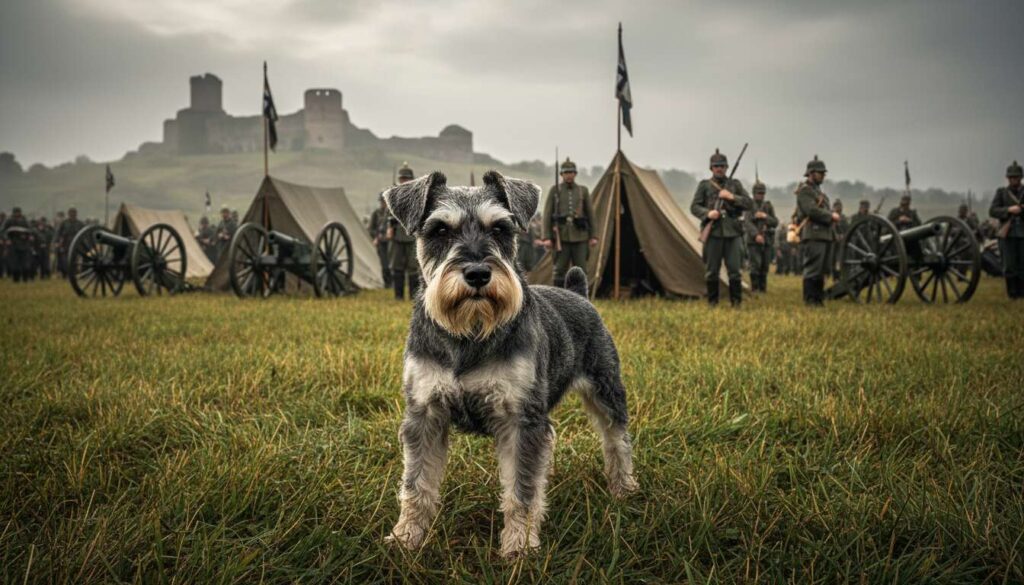
The schnauzer stands as one of Germany’s most distinctive canine exports, recognised instantly by its wiry coat, bushy eyebrows and characteristic beard. Originally bred as versatile farm dogs in the rural regions of Bavaria and Württemberg, these intelligent animals have served humanity in numerous capacities throughout their history. Perhaps most notably, schnauzers were employed during wartime to guard military installations, including the grim confines of prison camps. This chapter of the breed’s history remains a sobering reminder of how canine loyalty and capability have been exploited across different eras. Today, the schnauzer has transitioned from its working origins to become a beloved companion animal, though its protective instincts and sharp intelligence remain firmly intact.
Origins of the schnauzer
Medieval roots in German agriculture
The schnauzer’s ancestry traces back to medieval Germany, where farmers required robust, multi-purpose dogs capable of performing various tasks around the homestead. These early schnauzers were bred primarily from wire-haired pinschers, combined with other local working breeds to create a dog that could guard property, catch vermin and even pull small carts to market. Historical records and artwork from the fifteenth and sixteenth centuries depict dogs bearing a striking resemblance to the modern schnauzer, suggesting the breed’s characteristics have remained remarkably consistent over the centuries.
The development of distinct sizes
As the breed evolved, German breeders developed three distinct size variations to suit different purposes:
- Miniature schnauzer: bred primarily for ratting and companionship
- Standard schnauzer: the original size, used for general farm work and guarding
- Giant schnauzer: developed for cattle driving and later as guard dogs
The standard schnauzer is considered the foundation stock from which the other two sizes were developed through selective breeding programmes. The miniature variety emerged in the late nineteenth century by crossing standard schnauzers with smaller breeds such as the affenpinscher, whilst the giant schnauzer resulted from crosses with larger working breeds including the Great Dane and Bouvier des Flandres.
Recognition and standardisation
The breed received formal recognition in Germany during the 1880s, when the first breed standard was established. The name “schnauzer” derives from the German word for snout or muzzle, a reference to the breed’s distinctive facial features. Early dog shows in Munich and other German cities featured schnauzers prominently, helping to establish the breed’s reputation beyond agricultural circles. This growing popularity would eventually lead to the schnauzer’s recruitment for more specialised roles, including military and security work.
The role of the schnauzer in wartime
Military deployment during the World Wars
The schnauzer’s intelligence, trainability and natural guarding instincts made the breed particularly valuable during both World Wars. German military forces employed schnauzers in various capacities, including messenger dogs, guard dogs and patrol animals. Their medium size allowed them to navigate difficult terrain whilst their weather-resistant coats enabled them to work in harsh conditions. The breed’s alert nature and tendency to bark at unfamiliar sounds or movements made them effective sentries at military installations.
Guard duties at prison camps
Perhaps the most controversial aspect of the schnauzer’s wartime service involved their deployment as guard dogs at prison camps and detention facilities. Historical records indicate that schnauzers, particularly the giant variety, were stationed at various camps throughout German-occupied territories. Their role involved:
- Patrolling perimeter fences to detect escape attempts
- Alerting guards to unusual activity or disturbances
- Accompanying guards during prisoner movements
- Providing psychological deterrence through their imposing presence
This period represents a dark chapter in the breed’s history, as these dogs were instrumental in maintaining the security of facilities where countless individuals suffered. It is important to note that the dogs themselves bore no moral responsibility for these actions; they were simply fulfilling the roles for which they had been trained by their handlers.
Post-war perception and rehabilitation
Following the conclusion of the Second World War, the schnauzer’s association with military and security roles initially affected the breed’s popularity outside Germany. However, breed enthusiasts worked diligently to rehabilitate the schnauzer’s image, emphasising its qualities as a loyal family companion rather than a guard animal. This effort proved successful, and the breed gradually gained acceptance and popularity throughout Europe, North America and beyond. Understanding the schnauzer’s wartime role provides context for appreciating how the breed has evolved in peacetime applications.
Physical and behavioural characteristics
Distinctive physical features
The schnauzer possesses several immediately recognisable physical traits that distinguish it from other breeds. The most notable feature is the breed’s distinctive facial furnishing, comprising bushy eyebrows and a prominent beard that give the schnauzer its characteristic expression. The coat consists of a harsh, wiry outer layer with a softer undercoat, providing excellent protection against the elements. Coat colours include salt and pepper, black and silver, or solid black.
| Size variety | Height (cm) | Weight (kg) |
|---|---|---|
| Miniature | 30-36 | 5-9 |
| Standard | 44-50 | 14-20 |
| Giant | 60-70 | 35-47 |
Temperament and personality
Schnauzers are renowned for their spirited and alert temperament. The breed exhibits high intelligence and a natural suspicion of strangers, making them excellent watchdogs. Despite their guarding heritage, well-socialised schnauzers are affectionate with family members and can be playful companions. Key behavioural characteristics include:
- Strong territorial instincts and protective nature
- High energy levels requiring regular exercise
- Tendency towards stubbornness without consistent training
- Vocal nature, with a propensity to bark at perceived threats
- Good compatibility with children when properly socialised
Health considerations
The schnauzer is generally a robust and healthy breed with a life expectancy ranging from twelve to fifteen years, depending on size. However, like all breeds, schnauzers are predisposed to certain health conditions. These include hip dysplasia in larger varieties, eye problems such as cataracts, and a tendency towards pancreatitis. Regular veterinary check-ups and appropriate diet management can help mitigate many of these concerns. The breed’s wiry coat also requires specific grooming attention to maintain its characteristic texture and appearance. These physical and temperamental qualities have shaped how the schnauzer functions in contemporary settings.
The schnauzer’s role in modern society
Companion animals and family pets
Today, the vast majority of schnauzers serve primarily as companion animals and family pets. Their adaptable nature makes them suitable for various living situations, from rural properties to urban apartments, provided they receive adequate exercise and mental stimulation. The miniature schnauzer has become particularly popular amongst city dwellers due to its manageable size and relatively low shedding coat. Families appreciate the breed’s loyalty and natural protective instincts, which provide a sense of security without the aggression sometimes associated with dedicated guard breeds.
Working roles in contemporary settings
Despite their transition to companion status, schnauzers continue to excel in various working capacities. Their intelligence and trainability make them suitable for:
- Therapy and emotional support work in hospitals and care facilities
- Detection work, particularly in customs and agricultural inspection
- Search and rescue operations in certain specialised units
- Competitive dog sports including agility, obedience and rally
Breed popularity and cultural presence
The schnauzer has achieved significant cultural recognition, appearing in various forms of media and maintaining strong breed clubs worldwide. Registration statistics from kennel clubs indicate consistent popularity, particularly for the miniature variety. The breed’s distinctive appearance has made it a favourite subject for artists and photographers, whilst individual schnauzers have gained social media followings numbering in the hundreds of thousands. This cultural visibility has helped distance the breed from its wartime associations, establishing the schnauzer as a beloved companion rather than a symbol of conflict. With this modern identity firmly established, prospective owners must understand the specific requirements for raising a healthy, well-adjusted schnauzer.
Training and care of the schnauzer
Essential training approaches
Successful schnauzer ownership requires consistent, positive training methods from an early age. The breed’s intelligence can manifest as stubbornness if not properly channelled, making early socialisation and obedience training essential. Effective training strategies include:
- Starting socialisation during the critical puppy period (8-16 weeks)
- Using positive reinforcement techniques rather than punishment-based methods
- Maintaining consistency in commands and expectations across all family members
- Providing mental stimulation through puzzle toys and training exercises
- Addressing territorial barking through appropriate behaviour modification
Professional training classes can be particularly beneficial for first-time schnauzer owners, as experienced instructors can help navigate the breed’s independent streak whilst building a strong foundation of obedience.
Grooming requirements
The schnauzer’s distinctive coat requires regular maintenance to preserve its characteristic texture and appearance. Unlike many breeds, schnauzers do not shed significantly, but their wiry coat grows continuously and requires specific grooming techniques. Professional grooming every six to eight weeks is recommended, involving either hand-stripping (removing dead hair by hand) or clipping. Hand-stripping maintains the proper coat texture but is time-intensive, whilst clipping is more convenient but may soften the coat over time. Between professional grooming sessions, owners should brush their schnauzer several times weekly to prevent matting and maintain coat health.
Exercise and dietary needs
Schnauzers require moderate to high levels of daily exercise to maintain physical health and prevent behavioural problems stemming from boredom. Exercise requirements vary by size, with giant schnauzers needing considerably more activity than miniature varieties. A typical exercise regimen includes:
| Activity type | Recommended duration | Frequency |
|---|---|---|
| Walks | 30-60 minutes | Daily |
| Play sessions | 15-30 minutes | Twice daily |
| Training activities | 10-15 minutes | Daily |
Dietary management is equally important, as schnauzers can be prone to weight gain and pancreatitis. A high-quality diet with appropriate fat content, fed in measured portions rather than free-feeding, helps maintain optimal health. These care requirements, whilst demanding, ensure that schnauzers thrive as the loyal companions they were bred to become.
The schnauzer: a breed with lasting heritage
The schnauzer’s journey from medieval farmyards to modern homes encompasses both admirable achievements and uncomfortable historical associations. The breed’s versatility, intelligence and distinctive appearance have ensured its survival and popularity across centuries of social and economic change. Whilst the schnauzer’s wartime service, particularly in guarding prison camps, remains a sobering aspect of its history, this period represents only one chapter in a much longer story. Today’s schnauzers serve primarily as beloved family companions, their protective instincts channelled towards safeguarding homes and providing loyal companionship rather than military applications.
The breed’s enduring appeal lies in its combination of practical working ability and affectionate temperament. Schnauzer enthusiasts appreciate the breed’s intelligence, which makes training both challenging and rewarding, as well as its distinctive appearance that turns heads wherever these dogs appear. Breed clubs and responsible breeders continue to preserve the schnauzer’s essential characteristics whilst prioritising health and temperament, ensuring that future generations can enjoy these remarkable dogs.
Understanding the schnauzer’s complete history, including its less comfortable chapters, provides important context for appreciating the breed’s complexity. These dogs have served humanity in numerous capacities, sometimes in roles we now recognise as ethically problematic. However, the schnauzer itself remains a testament to canine adaptability and the enduring bond between humans and dogs, regardless of the purposes to which that bond has been applied throughout history.
The schnauzer’s transition from working dog to companion animal reflects broader changes in how society views and utilises dogs. Few breeds can claim such diverse historical roles whilst maintaining consistent popularity across generations. Whether encountered as a miniature variety in an urban flat or a giant schnauzer on a rural property, these distinctive dogs continue to embody the qualities that made them valuable to German farmers centuries ago: loyalty, intelligence, courage and an unwavering devotion to their human families. The breed’s lasting heritage ensures that schnauzers will remain a significant presence in the canine world for generations to come.