



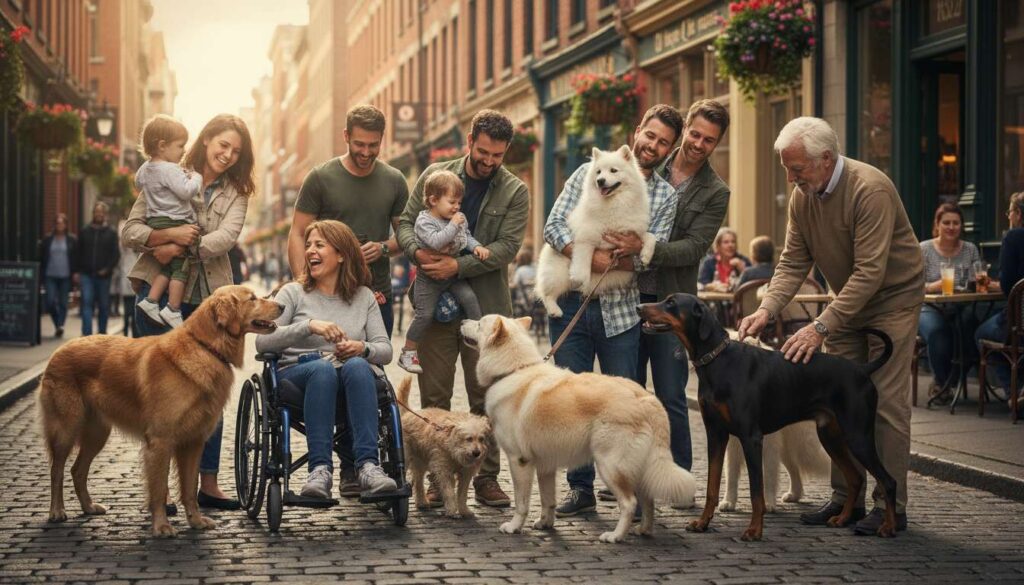
Stopping to pet a dog on the street might seem like a simple, spontaneous act, but this everyday gesture reveals far more about your personality than you might imagine. Recent psychological research has uncovered fascinating connections between our interactions with canines and deeper character traits. Those who pause their busy schedules to engage with a friendly dog display specific psychological characteristics that set them apart. From emotional intelligence to social openness, these seven unexpected traits paint a compelling picture of what your canine encounters say about you.
Why petting a dog immediately soothes
The neurochemical response to canine contact
When your hand makes contact with a dog’s fur, your brain initiates a cascade of neurochemical reactions that produce immediate calming effects. The physical act triggers the release of oxytocin, often called the “bonding hormone”, which simultaneously reduces cortisol levels in your bloodstream. This dual action creates an almost instantaneous sense of relaxation that many people describe as profoundly comforting.
| Hormone | Change during petting | Effect |
|---|---|---|
| Oxytocin | Increases by 30-50% | Promotes bonding and trust |
| Cortisol | Decreases by 25-40% | Reduces stress and anxiety |
| Dopamine | Increases by 15-20% | Enhances pleasure and reward |
Physiological markers of relaxation
Beyond brain chemistry, your body exhibits measurable physical changes when interacting with dogs. Your heart rate typically decreases within minutes, whilst blood pressure drops to healthier levels. These physiological shifts explain why people who stop to pet dogs often report feeling genuinely calmer afterwards. The tactile sensation of stroking soft fur combined with the dog’s warmth creates a sensory experience that activates your parasympathetic nervous system, essentially switching your body into rest mode.
Understanding these biological mechanisms helps explain why this simple interaction carries such weight in revealing your psychological makeup, particularly your capacity for self-regulation and stress management.
The emotional benefits of canine encounters
Developing emotional awareness through animal interaction
People who regularly engage with street dogs demonstrate heightened emotional intelligence compared to those who avoid such interactions. This connection stems from the non-verbal communication required when approaching an unfamiliar animal. You must quickly assess the dog’s body language, mood, and receptiveness, skills that translate directly to improved human relationships. This ability to read subtle emotional cues indicates advanced empathy and social awareness.
Mood elevation and positive affect
The emotional uplift from petting a dog extends well beyond the immediate interaction. Studies show that brief canine encounters can improve mood for several hours afterwards. Those who seek out these moments typically possess:
- Greater openness to positive experiences
- Enhanced capacity for joy in small moments
- Stronger resilience against negative emotions
- Better emotional regulation skills
- Increased mindfulness and present-moment awareness
These characteristics suggest that dog-petters are emotionally flexible individuals who actively cultivate happiness rather than waiting for major events to feel fulfilled.
Such emotional sophistication naturally extends into how these individuals approach challenging situations, particularly in high-pressure environments.
Petting a street dog: a therapeutic gesture
Mindfulness in motion
Choosing to pet a street dog represents a deliberate pause in your daily routine, an act of conscious mindfulness. This decision reveals your ability to disconnect from mental chatter and ground yourself in physical sensation. The texture of fur, the warmth of the animal, and the rhythmic motion of stroking all anchor you firmly in the present moment, a practice that mirrors formal meditation techniques.
Self-care through spontaneous connection
Individuals who stop for these interactions demonstrate sophisticated self-care instincts. Rather than viewing such pauses as time-wasting, they recognise the restorative value of brief, pleasant experiences. This trait indicates:
- Strong self-awareness regarding personal needs
- Healthy boundaries between productivity and wellbeing
- Willingness to prioritise mental health
- Understanding that small actions accumulate into significant benefits
This therapeutic approach to everyday moments suggests a person who values quality of life over mere efficiency, a perspective increasingly recognised as essential for long-term psychological health.
Beyond personal wellbeing, these canine interactions serve another crucial function in modern society.
Social interaction and dogs: a vector of human connection
Breaking social barriers through shared affection
Dogs act as natural social catalysts, and people who engage with street dogs are significantly more likely to initiate conversations with strangers. This willingness reveals comfort with social unpredictability and openness to new connections. When you bend down to pet a dog, you create an invitation for interaction that others feel comfortable accepting, demonstrating your unconscious facilitation of community bonds.
Building micro-communities around canine encounters
Regular dog-petters often form informal networks with other animal lovers in their neighbourhoods. These connections, though sometimes brief, contribute to a sense of belonging and social cohesion. The psychological profile of someone who cultivates these relationships includes:
| Trait | Manifestation |
|---|---|
| Social confidence | Comfortable initiating contact with strangers |
| Community orientation | Values local connections and shared spaces |
| Reduced social anxiety | Uses dogs as comfortable conversation starters |
| Authentic communication | Engages genuinely rather than transactionally |
These social skills become particularly valuable when navigating the isolation and disconnection characteristic of contemporary urban existence.
Relieving urban stress through canine affection
Counteracting the psychological toll of city living
Urban environments impose constant cognitive demands through noise, crowds, and sensory overload. People who pause to pet dogs demonstrate an intuitive understanding of these pressures and actively seek natural stress relief. This behaviour indicates psychological resilience and proactive mental health management, traits that protect against burnout and anxiety disorders.
Creating moments of calm in chaotic environments
The contrast between a bustling street and the peaceful act of petting a dog creates a psychological reset that benefits overall wellbeing. Those who regularly seek these moments show:
- Advanced stress recognition abilities
- Proactive rather than reactive coping strategies
- Appreciation for simple, accessible relief methods
- Resistance to chronic stress accumulation
- Better work-life integration skills
This capacity to find islands of tranquillity within demanding environments marks individuals with exceptional emotional regulation and self-awareness.
These stress-management capabilities directly contribute to broader measures of life satisfaction.
Enhancing a sense of well-being and satisfaction
Cultivating gratitude through small pleasures
People who stop to pet street dogs typically score higher on gratitude assessments and life satisfaction scales. This correlation stems from their ability to recognise and appreciate modest positive experiences. Rather than requiring major achievements or acquisitions for happiness, these individuals extract genuine joy from brief, cost-free interactions, a skill that predicts long-term contentment.
The compounding effect of positive micro-moments
Each canine encounter contributes to an accumulated sense of wellbeing that shapes overall life perspective. Research indicates that frequent small positive experiences create more sustained happiness than occasional major events. Those who pet dogs regularly demonstrate:
- Optimistic outlook and positive expectancy
- Lower rates of depression and anxiety
- Greater life purpose and meaning
- Enhanced social connectedness
- Improved physical health markers
This psychological profile suggests individuals who actively construct happiness rather than passively waiting for circumstances to improve, a distinction that fundamentally shapes life outcomes.
The simple act of petting a street dog serves as a window into your psychological landscape, revealing traits that extend far beyond animal affection. From emotional intelligence and stress management to social openness and life satisfaction, these interactions illuminate fundamental aspects of personality and mental health. Whether you regularly stop for these encounters or typically walk past, understanding what this choice reveals can offer valuable insights into your own psychological makeup and opportunities for personal growth.