


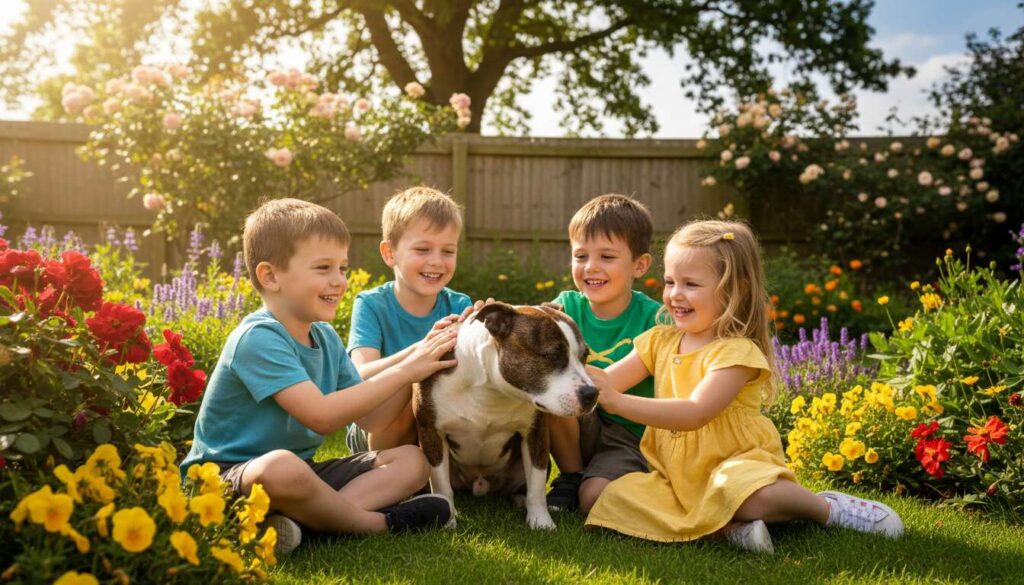
The question of whether a Staffordshire Bull Terrier makes a suitable family pet, particularly in households with young children, continues to spark debate amongst prospective dog owners. This muscular breed, often misunderstood due to misconceptions about its temperament, possesses qualities that can make it an excellent companion for families when properly raised and trained. Understanding the breed’s characteristics, energy requirements, and specific needs proves essential before welcoming one into a home with little ones. The staffie’s reputation as the “nanny dog” in its native England stems from decades of positive interactions with children, yet this nickname alone should not guide the decision-making process. A thorough examination of the breed’s traits, alongside realistic expectations about responsibility and commitment, provides the foundation for determining whether this loyal canine suits your family’s lifestyle.
Introduction to the staffie: a robust and affectionate dog
Physical characteristics and breed origins
The Staffordshire Bull Terrier emerged in nineteenth-century England, originally bred from bulldogs and terriers for strength and agility. This medium-sized dog typically weighs between 11 and 17 kilograms, with a height ranging from 36 to 41 centimetres at the shoulder. The breed displays a muscular and stocky build that belies its relatively compact size, featuring a broad head, strong jaw, and distinctive rose or half-pricked ears. Despite their powerful appearance, staffies possess remarkable gentleness when properly socialised, particularly towards human family members.
Temperament and affectionate nature
Staffordshire Bull Terriers demonstrate an exceptionally affectionate disposition towards their human companions, often seeking physical contact and displaying what owners describe as an almost desperate need for human interaction. This breed thrives on companionship and typically forms intense bonds with all family members. Key temperament traits include:
- Loyalty and devotion to family members
- Playful and energetic personality
- Courage combined with a stable temperament
- Intelligence and eagerness to please
- Patience when properly trained and socialised
The staffie’s robust constitution means they can withstand the sometimes rough handling that young children might inadvertently display, though this should never be encouraged or allowed to continue without correction. Their natural tolerance makes them forgiving companions, yet this characteristic must never be taken for granted.
Understanding these foundational qualities sets the stage for examining how the breed’s personality specifically relates to interactions with young family members.
The personality of the Staffordshire Bull Terrier: compatibility with children
Natural affinity with youngsters
Staffordshire Bull Terriers possess an innate gentleness towards children that has been observed and documented throughout the breed’s history. This characteristic stems partly from selective breeding and partly from their desire to please their human pack. Staffies often display remarkable patience during play sessions, tolerating games that might frustrate other breeds. Their protective instincts naturally extend to younger family members, creating a guardianship dynamic that many families find reassuring.
Playfulness and interactive qualities
The breed’s playful nature aligns perfectly with children’s energy levels and desire for active engagement. Staffies enjoy:
- Fetch games and retrieving activities
- Tug-of-war with appropriate toys
- Outdoor adventures and exploration
- Learning tricks and commands
- Participating in family activities
This interactive personality means that children and staffies can develop mutually beneficial relationships where both parties receive exercise, mental stimulation, and companionship. The dog’s intelligence allows it to adapt its play style to match different ages and abilities within the family unit.
Emotional intelligence and sensitivity
Staffordshire Bull Terriers demonstrate remarkable emotional awareness, often sensing when children feel upset or unwell. This sensitivity enables them to adjust their behaviour accordingly, becoming gentler during vulnerable moments. However, this same sensitivity means they can also pick up on household stress or inconsistent training approaches, which may affect their behaviour negatively if not addressed.
Whilst personality traits favour family life, the breed’s considerable energy reserves require careful management to ensure harmonious coexistence.
Staffordshire Bull Terriers and their energy to channel
Exercise requirements and daily needs
Staffordshire Bull Terriers possess substantial energy levels that demand regular physical activity to prevent boredom and potential behavioural issues. Adult staffies typically require a minimum of one to two hours of exercise daily, distributed across multiple sessions. This exercise should include:
- Brisk walks or jogging sessions
- Off-lead running in secure areas
- Interactive play with toys
- Mental stimulation through training
- Socialisation opportunities with other dogs
| Age group | Daily exercise duration | Activity type |
|---|---|---|
| Puppy (3-6 months) | 15-30 minutes | Gentle play and short walks |
| Young adult (6-18 months) | 45-90 minutes | Moderate walks and supervised play |
| Adult (18 months+) | 60-120 minutes | Vigorous exercise and activities |
Consequences of inadequate exercise
Insufficient physical activity can lead to problematic behaviours that may compromise safety around children. Under-exercised staffies might display excessive jumping, mouthing, or boisterous play that could accidentally knock over small children. They may also develop destructive tendencies, chewing furniture or household items out of frustration and boredom. Ensuring adequate exercise becomes a non-negotiable responsibility for families considering this breed.
Involving children in exercise routines
Older children can participate in the staffie’s exercise regime under appropriate supervision, creating opportunities for bonding whilst teaching responsibility. Activities such as playing fetch in the garden, practising basic commands, or accompanying parents on walks help children develop confidence in handling the dog whilst contributing to the animal’s wellbeing. However, young children should never be solely responsible for exercising a staffie due to the breed’s strength and enthusiasm.
Physical exercise alone cannot guarantee a well-adjusted family pet; proper socialisation forms an equally critical component of responsible staffie ownership.
Socialisation: key for a balanced family staffie
Early socialisation protocols
The critical socialisation period for Staffordshire Bull Terriers occurs between three and fourteen weeks of age, during which puppies should be exposed to diverse experiences, people, and environments. Effective socialisation includes:
- Positive encounters with children of various ages
- Exposure to different household sounds and activities
- Interaction with other vaccinated, friendly dogs
- Familiarisation with grooming and handling procedures
- Introduction to different surfaces, objects, and locations
Families acquiring older staffies must invest additional time in remedial socialisation, working with professional trainers if the dog displays any concerning behaviours or gaps in its social education.
Ongoing socialisation throughout life
Socialisation represents a lifelong commitment rather than a task completed during puppyhood. Regular positive experiences help maintain the staffie’s confidence and appropriate responses to various situations. This ongoing process proves particularly important in households with children, as family dynamics change over time with new babies, visiting friends, or evolving routines.
Professional guidance and training classes
Enrolling in puppy classes and obedience training provides structured socialisation opportunities whilst teaching essential commands. Professional trainers experienced with the breed can identify potential issues early and guide families in addressing them before they become entrenched behaviours. These classes also educate owners about canine body language and communication, skills that prove invaluable when supervising interactions between dogs and children.
Even the best-socialised staffie requires vigilant supervision and specific safety measures when interacting with young children.
Precautions to take with young children
Supervision as a non-negotiable rule
Regardless of the staffie’s temperament or training level, constant adult supervision remains essential during all interactions between dogs and young children. This supervision serves multiple purposes: preventing accidental injuries, teaching children appropriate behaviour, and reinforcing the dog’s training. Even the most patient staffie may react defensively if hurt, startled, or cornered by a toddler who doesn’t yet understand boundaries.
Teaching children appropriate interaction
Children must learn respectful behaviour towards the family staffie from the earliest age possible. Essential lessons include:
- Never disturbing the dog whilst eating or sleeping
- Avoiding pulling ears, tail, or climbing on the dog
- Recognising signs of stress or discomfort in the dog
- Using gentle touches and calm voices
- Respecting the dog’s safe space or crate
Creating safe spaces and boundaries
Establishing designated retreat areas where the staffie can escape from children’s attention prevents the dog from feeling overwhelmed or trapped. A crate, bed in a quiet room, or gated area provides sanctuary when the dog needs rest. Similarly, teaching children that certain areas remain off-limits helps establish clear household rules that benefit everyone.
Managing high-energy situations
Particular caution should be exercised during exciting moments such as arrivals home, mealtimes, or when multiple children play energetically. The staffie’s enthusiasm during these periods may result in accidental knocks or jumps. Training the dog to remain calm during greetings and maintaining separation during chaotic play sessions reduces risk whilst teaching impulse control.
Beyond safety considerations, families must understand the breed’s specific care requirements to ensure the dog’s health and happiness.
The particular needs of Staffordshire Bull Terriers: care and attention
Health considerations and veterinary care
Staffordshire Bull Terriers generally enjoy robust health but remain susceptible to certain breed-specific conditions that require monitoring. Common health concerns include:
- Hip dysplasia affecting mobility
- Hereditary cataracts impacting vision
- L-2-hydroxyglutaric aciduria, a metabolic disorder
- Skin allergies requiring dietary management
- Patellar luxation in some lines
Regular veterinary check-ups, maintaining appropriate weight, and purchasing from health-tested parents minimise these risks. Families should budget for annual health examinations, vaccinations, parasite prevention, and potential emergency care.
Grooming and maintenance requirements
The breed’s short coat requires minimal grooming compared to long-haired breeds, though regular brushing removes dead hair and distributes natural oils. Weekly brushing sessions provide opportunities for children to participate in pet care under supervision whilst checking for skin issues or parasites. Additional maintenance includes:
- Nail trimming every three to four weeks
- Dental care through brushing and appropriate chews
- Ear cleaning to prevent infections
- Bathing as needed, typically monthly
Nutritional requirements and feeding
Staffordshire Bull Terriers require high-quality nutrition to support their muscular build and energy levels. Feeding guidelines vary based on age, activity level, and individual metabolism, but most adults consume between 250 and 400 grammes of dry food daily, divided into two meals. Families must establish feeding routines that keep children away from the dog during mealtimes, preventing resource guarding behaviours and teaching respect for the dog’s needs.
Financial commitment
Responsible staffie ownership entails significant financial investment throughout the dog’s lifespan of twelve to fourteen years. Beyond initial purchase costs, families should anticipate ongoing expenses:
| Expense category | Annual cost estimate |
|---|---|
| Food and treats | £400-£600 |
| Veterinary care | £300-£500 |
| Insurance | £300-£600 |
| Training and socialisation | £200-£400 |
| Accessories and toys | £100-£200 |
The Staffordshire Bull Terrier can indeed prove an exceptional family companion when matched with committed, informed owners who understand the breed’s characteristics and requirements. Their affectionate nature, patience with children, and playful personality create strong foundations for positive family relationships. However, these qualities alone do not guarantee success; families must provide adequate exercise, consistent training, thorough socialisation, and vigilant supervision to ensure safety and harmony. The breed’s energy levels demand active households willing to invest time in daily physical and mental stimulation. Proper socialisation from puppyhood, combined with ongoing reinforcement, shapes a well-adjusted adult dog capable of navigating family life confidently. Safety precautions remain paramount regardless of the individual dog’s temperament, with constant supervision and teaching children appropriate interaction forming non-negotiable aspects of responsible ownership. The staffie’s care requirements, whilst manageable, necessitate financial resources and time commitment that families must honestly assess before acquisition. When these elements align, the Staffordshire Bull Terrier rewards families with unwavering loyalty, protective instincts towards children, and years of companionship that enrich household life immeasurably.