


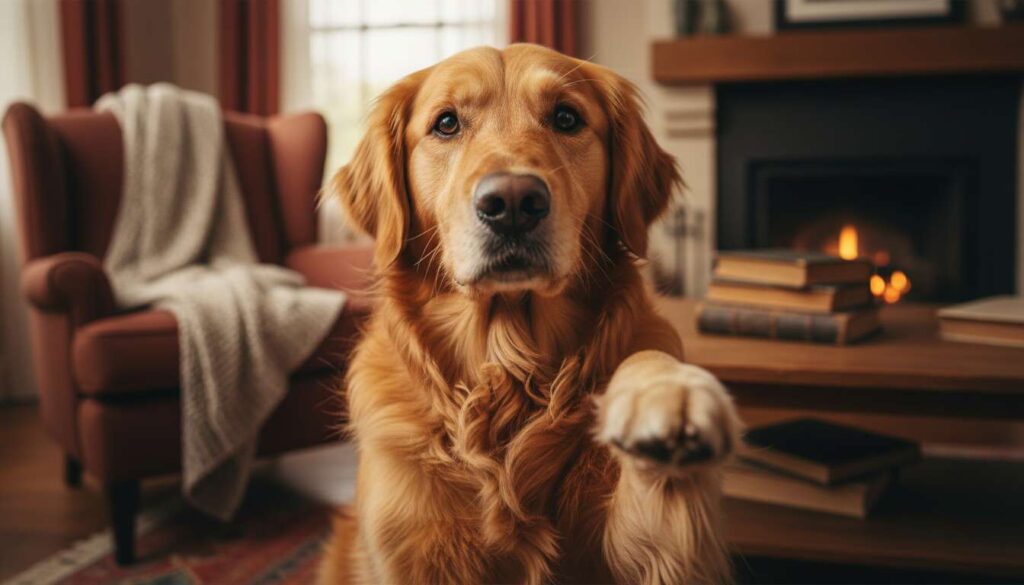
When a dog extends its paw towards you, the instinctive reaction is often to interpret this gesture as a simple greeting or an invitation to play. Yet animal behaviour specialists reveal that this action carries far more complex meanings than most owners realise. Understanding the true motivations behind this seemingly innocent gesture can transform the way you communicate with your canine companion and significantly enhance your relationship. Dogs rely heavily on body language to express their emotions, needs and intentions, making each movement a potential window into their inner world.
What extending a paw from your dog really means
A deliberate form of communication
Contrary to popular belief, when your dog places its paw on you without prior training or command, this behaviour represents a conscious attempt at communication rather than a simple trick. Animal behaviourists emphasise that dogs have developed sophisticated methods of interacting with humans, and the extended paw serves as one of their primary tools for conveying messages. This gesture activates a direct channel of communication that transcends verbal language.
Primary motivations behind the gesture
Experts have identified several fundamental reasons why dogs employ this particular behaviour:
- Attention-seeking behaviour: the most prevalent motivation involves capturing your focus when the dog requires interaction, affection or acknowledgement
- Resource requests: dogs frequently use this gesture to signal desires for food, treats, water or access to outdoor spaces
- Emotional reassurance: the paw placement can indicate a need for comfort, particularly in unfamiliar or stressful situations
- Social bonding: this action reinforces the emotional connection between dog and owner through physical contact
- Learned reinforcement: if previous paw extensions resulted in positive outcomes, the behaviour becomes habitual
The instinctive origins
This behaviour traces back to puppyhood experiences, when young dogs paw at their mothers to stimulate milk production during nursing. As dogs mature, this instinctive action evolves into a versatile communication tool adapted for human interaction. The gesture retains its fundamental purpose of eliciting a response from a caregiver figure, demonstrating the remarkable adaptability of canine behaviour patterns.
Understanding these foundational meanings provides essential context for interpreting your dog’s intentions, yet the appropriate response requires careful consideration of multiple factors.
Responding appropriately to the offer of a paw
Assessing the situation before reacting
Before responding to your dog’s extended paw, evaluate the broader context surrounding the gesture. Observe your dog’s overall body language, including tail position, ear orientation, facial expression and general posture. A relaxed dog with a wagging tail conveys a different message than one displaying tense muscles or anxious behaviours. The environment and timing also provide crucial clues about the underlying motivation.
Recommended response strategies
Animal experts suggest tailored approaches based on the identified motivation:
| Motivation | Recommended response | Actions to avoid |
|---|---|---|
| Attention-seeking | Provide brief acknowledgement, then redirect to appropriate activity | Excessive fussing that reinforces demanding behaviour |
| Genuine need | Address the specific requirement promptly | Ignoring legitimate requests for water, toilet breaks or comfort |
| Anxiety | Offer calm reassurance and remove stressors | Overwhelming with excessive attention |
| Playfulness | Engage in appropriate play if time permits | Encouraging overly excited behaviour indoors |
Establishing healthy boundaries
Whilst acknowledging your dog’s communication attempts remains important, setting consistent boundaries prevents the development of demanding or manipulative behaviours. If your dog constantly paws for attention during inappropriate moments, calmly withdraw your attention until the behaviour ceases, then reward calm behaviour with positive interaction. This approach teaches your dog that polite waiting, rather than persistent pawing, yields desired results.
However, not all paw extensions carry the same emotional weight, and recognising the subtle variations can prevent misunderstandings.
When the paw is a signal of stress, love or testing
Identifying stress-related pawing
Dogs experiencing anxiety or discomfort frequently use pawing as a coping mechanism or distress signal. Stress indicators accompanying this gesture include:
- Flattened ears positioned backwards
- Excessive panting despite comfortable temperatures
- Dilated pupils or whale eye (showing whites of eyes)
- Tucked tail or lowered body posture
- Lip licking, yawning or other displacement behaviours
When these signs accompany the extended paw, your dog likely seeks reassurance or attempts to communicate discomfort with the current situation. Appropriate responses include removing the stressor, providing a safe retreat space, or offering calm, gentle comfort without reinforcing fearful behaviour.
Affectionate pawing expressions
Conversely, dogs also extend their paws as demonstrations of affection and bonding. This loving variation typically occurs during relaxed moments, accompanied by soft eye contact, gentle tail wagging and an overall calm demeanour. The dog may rest its paw on you whilst settling beside you, creating physical connection that strengthens your emotional bond. These moments deserve acknowledgement through reciprocal affection, reinforcing the positive relationship.
Boundary-testing behaviours
Some dogs employ pawing to test household rules and hierarchies, particularly during adolescence or when new routines are established. This testing behaviour often manifests as persistent pawing despite clear signals to stop, or pawing specifically to gain access to forbidden items or areas. Recognising this motivation allows owners to respond with firm but gentle redirection, maintaining consistent household standards whilst preserving the relationship.
These varied motivations highlight the complexity of canine communication, requiring deeper analysis of accompanying signals.
Deciphering the hidden signals behind the paw
Reading complementary body language
The extended paw rarely exists in isolation; it forms part of a comprehensive communication package involving multiple physical signals. Expert observation reveals that tail position, ear angle, facial muscles and overall posture create a complete message. A dog with forward-leaning posture, raised ears and focused gaze communicates differently than one with averted eyes, lowered head and tense muscles, even when both extend their paws.
Vocal accompaniments
Dogs sometimes pair pawing with vocalisations that clarify intent. Whining may indicate urgency or distress, whilst playful barks suggest excitement and desire for interaction. Silence during pawing often reflects calm requests for attention or affection. These auditory cues provide additional context for accurate interpretation.
Environmental and temporal factors
The circumstances surrounding the gesture significantly influence its meaning:
- Timing: pawing at regular feeding times likely requests food, whilst late-night pawing may signal toilet needs
- Location: pawing near doors suggests outdoor access desires, whilst pawing near food storage indicates hunger
- Recent activities: pawing after extended alone time may express relief at reunion, whilst pawing during storms could indicate fear
- Consistency: repeated pawing in specific situations reveals patterns that aid interpretation
Mastering these interpretative skills prevents common misunderstandings that can negatively impact your dog’s wellbeing.
The consequences of misinterpretation on your dog
Emotional impact of ignored signals
When owners consistently misinterpret or dismiss their dog’s communication attempts, emotional consequences can develop. Dogs may experience frustration, anxiety or learned helplessness when their efforts to communicate needs or discomfort go unacknowledged. This breakdown in communication can erode trust and weaken the human-canine bond, potentially leading to behavioural problems as the dog seeks alternative, sometimes inappropriate, methods of expression.
Reinforcement of problematic behaviours
Conversely, inappropriate responses to pawing can inadvertently strengthen undesirable behaviours. If owners consistently reward demanding or manipulative pawing with immediate attention or treats, dogs learn that persistent, intrusive behaviour yields results. This creates a cycle where the dog becomes increasingly demanding, potentially developing dominance-related issues or anxiety when requests aren’t immediately fulfilled.
Physical health implications
Misinterpreting stress-related pawing as playful behaviour can have physical health consequences. Dogs attempting to communicate pain, illness or urgent toilet needs through pawing may suffer if these signals go unrecognised. Delayed responses to genuine distress signals can exacerbate medical conditions or create unnecessary physical discomfort for your companion.
These potential negative outcomes underscore the importance of developing accurate interpretative skills and responding thoughtfully to canine communication.
Strengthening daily bonds through proper understanding of gestures
Building trust through attentive responses
When you consistently demonstrate understanding of your dog’s communication attempts, you establish a foundation of mutual trust and respect. Dogs whose signals are accurately interpreted and appropriately addressed develop confidence in their ability to communicate with their humans. This trust forms the cornerstone of a harmonious relationship, reducing anxiety and promoting emotional security.
Practical daily applications
Integrating this knowledge into everyday interactions creates numerous opportunities for relationship enhancement:
- Observe patterns in your dog’s pawing behaviour to anticipate needs proactively
- Respond promptly to legitimate requests whilst maintaining appropriate boundaries
- Use pawing moments as opportunities for positive reinforcement training
- Create rituals around affectionate pawing that strengthen your bond
- Adjust your responses based on contextual clues and accompanying signals
Long-term relationship benefits
Dogs whose owners understand and appropriately respond to their communication gestures typically display increased confidence, reduced anxiety and stronger attachment. This enhanced communication creates a positive feedback loop where both parties feel heard and understood, leading to a more fulfilling companionship. The time invested in learning to interpret your dog’s signals pays dividends through years of improved interaction and deeper emotional connection.
The seemingly simple act of extending a paw reveals itself as a sophisticated communication tool that deserves thoughtful attention and appropriate response. By recognising the varied motivations behind this gesture, from attention-seeking to stress signalling, and responding with informed sensitivity, owners can transform routine interactions into meaningful exchanges. This deeper understanding not only prevents behavioural problems and emotional distress but actively strengthens the bond between human and canine. Every extended paw represents an opportunity to demonstrate respect for your dog’s voice, fostering a relationship built on mutual understanding and genuine connection that enriches both lives immeasurably.