



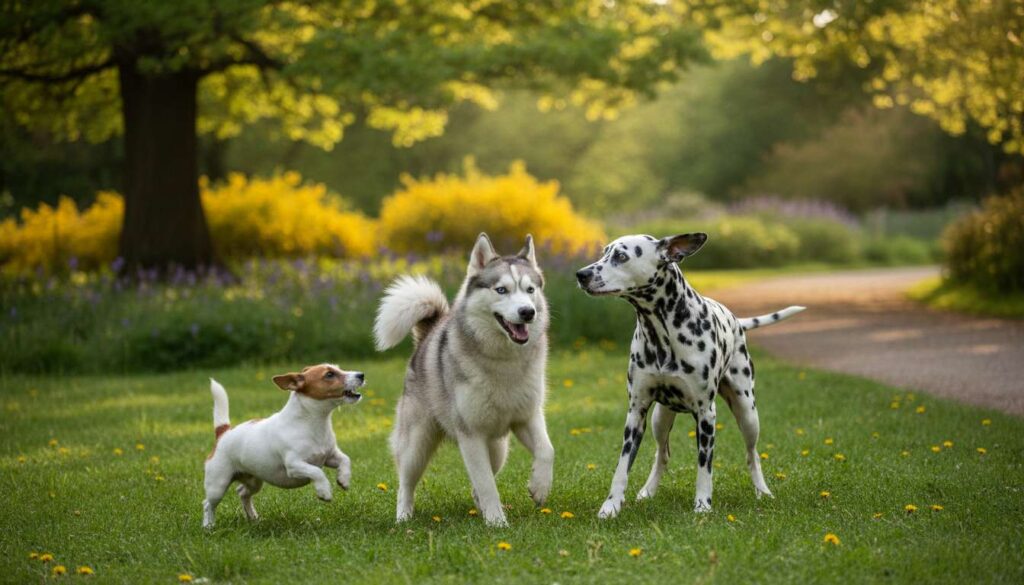
Some canine companions possess an independent streak that makes obedience training a genuine challenge for even experienced handlers. Certain breeds exhibit traits such as stubbornness, high energy levels, or a strong prey drive that require patience, consistency, and specialised techniques. Understanding the underlying characteristics of these dogs proves essential for anyone considering welcoming one into their home. From the arctic endurance of the Husky to the boundless energy of the Jack Russell, these breeds demand commitment and adaptability from their owners.
General characteristics of breeds difficult to train
Independence and strong-willed temperaments
Dogs that present training difficulties often share a common trait: an independent nature that stems from their original breeding purposes. Many were developed to work autonomously, making decisions without constant human guidance. This self-reliance, whilst valuable in their historical roles, translates into a reluctance to follow commands during modern training sessions.
Breeds with strong hunting instincts frequently display selective hearing, particularly when they detect interesting scents or movements. Their prey drive overrides verbal instructions, making recall commands especially challenging in outdoor environments.
High energy requirements
Physical and mental stimulation needs directly impact trainability. Dogs bred for demanding physical tasks require substantial exercise before they can focus on learning. Without adequate outlets for their energy, these breeds become:
- Distracted and unable to concentrate during training sessions
- Prone to destructive behaviours as a displacement activity
- Resistant to commands due to pent-up frustration
- Hyperactive and difficult to settle
Intelligence versus obedience
A widespread misconception equates intelligence with trainability. However, highly intelligent breeds often prove more challenging because they question the purpose of repetitive exercises. These dogs assess whether compliance serves their interests, leading to selective obedience rather than automatic responses.
| Characteristic | Impact on training |
|---|---|
| Independent thinking | Questions commands and seeks purpose |
| High energy levels | Requires extensive exercise before focus |
| Strong prey drive | Distraction from environmental stimuli |
| Stubbornness | Resistance to repetitive tasks |
These fundamental traits create a foundation for understanding why certain breeds require specialised approaches, particularly those developed for specific working roles in harsh environments.
The specific challenges of the Husky
Arctic heritage and working independence
The Siberian Husky was bred to pull sleds across vast frozen landscapes, making independent decisions about pace and direction. This self-sufficient mentality remains deeply embedded in the breed’s psychology. Huskies possess an extraordinary ability to assess situations and act without waiting for human instruction, which directly conflicts with traditional obedience training expectations.
Their pack mentality means they view themselves as equals rather than subordinates, requiring owners to establish leadership through respect rather than dominance.
Escape artist tendencies
Huskies demonstrate remarkable problem-solving abilities when confined, including:
- Digging under fences with impressive speed
- Climbing or jumping over barriers exceeding two metres
- Opening gates and door latches through observation
- Squeezing through surprisingly small gaps
Vocal communication challenges
Unlike many breeds that bark occasionally, Huskies engage in prolonged vocalisations including howling, talking, and singing. This behaviour proves difficult to modify through training as it represents fundamental breed communication. Their vocal nature can create neighbourhood tensions and makes quiet obedience particularly challenging.
Understanding these arctic-bred characteristics helps explain why training approaches must differ significantly from methods used with breeds developed for closer human cooperation, such as those bred for companionship or specific aesthetic purposes.
The peculiarities of training the Dalmatian
Historical coaching dog background
Dalmatians were bred to run alongside horse-drawn carriages for extended periods, protecting passengers and clearing paths. This heritage created a breed with exceptional stamina and an inherent need for constant movement. Their energy reserves far exceed what most modern owners anticipate, making mental focus during stationary training sessions particularly difficult.
Sensitivity and stubbornness combination
Dalmatians present a paradoxical temperament: they are simultaneously sensitive to harsh corrections yet remarkably stubborn when they choose to be. This combination requires handlers to maintain firm consistency without resorting to punitive methods that damage the training relationship.
The breed responds poorly to:
- Repetitive drilling without variation
- Harsh verbal corrections or physical punishment
- Inconsistent rule enforcement
- Boring, predictable training routines
Deafness prevalence
Approximately 30% of Dalmatians experience some degree of hearing loss, with around 8% being completely deaf. This genetic predisposition creates obvious training complications, requiring visual signals and vibration-based communication methods. Even hearing Dalmatians benefit from hand signal training as a backup communication system.
These coaching dogs share certain training challenges with smaller breeds originally developed for hunting vermin, which also combine high energy with determined independence.
The behaviour of the Jack Russell during training
Terrier tenacity and prey drive
Jack Russell Terriers were specifically bred to pursue foxes underground, requiring courage, determination, and the ability to work independently in confined spaces. This fearless tenacity manifests during training as an unwillingness to back down or submit easily. Their prey drive remains exceptionally strong, causing them to fixate on small animals, moving objects, and even shadows.
Intelligence meeting stubbornness
Jack Russells rank among the most intelligent small breeds, quickly understanding commands but equally quickly deciding whether compliance suits their agenda. This selective obedience frustrates owners who mistake initial comprehension for reliable performance.
Their problem-solving abilities include:
- Finding creative ways to access forbidden areas
- Manipulating owners through persistent demanding behaviour
- Learning complex sequences to achieve desired outcomes
- Remembering which family members enforce rules inconsistently
Energy management requirements
Despite their small stature, Jack Russells possess energy levels comparable to much larger working breeds. Without adequate physical and mental exercise, they become virtually untrainable due to hyperactivity. A tired Jack Russell demonstrates significantly improved focus and responsiveness during training sessions.
Successfully managing these compact bundles of determination requires specific strategies that can be adapted across various challenging breeds.
Tips for overcoming training difficulties
Establishing consistent leadership
Difficult breeds require calm, confident leadership rather than authoritarian dominance. Consistency across all family members proves essential, as these intelligent dogs quickly exploit inconsistencies. Establishing clear boundaries from the first day prevents the need for later corrections.
Motivation-based training approaches
Positive reinforcement techniques prove most effective with independent breeds. Identifying what truly motivates each individual dog creates training leverage:
- High-value food rewards for food-motivated dogs
- Favourite toys or play sessions for toy-driven individuals
- Praise and physical affection for socially motivated dogs
- Environmental rewards such as sniffing opportunities
Exercise before training
Physical exhaustion improves mental focus dramatically. Scheduling training sessions after vigorous exercise allows high-energy breeds to concentrate on learning rather than burning excess energy through distraction and misbehaviour.
Short, varied sessions
Intelligent, independent dogs become bored with repetitive exercises. Keeping training sessions brief (5-10 minutes) and incorporating variety maintains engagement. Multiple short sessions throughout the day prove more effective than single lengthy sessions.
Professional guidance
Working with experienced trainers familiar with challenging breeds prevents the establishment of problematic patterns. Professional intervention early in the training process proves more effective than attempting to correct entrenched behaviours later.
Comparing these challenging breeds with their more biddable counterparts highlights the spectrum of canine trainability and helps set realistic expectations.
Comparison with other dog breeds
Breeds with natural obedience
Certain breeds demonstrate inherent eagerness to please and natural responsiveness to training. Border Collies, Golden Retrievers, and German Shepherds were developed specifically to work closely with humans, making them highly receptive to instruction. These breeds actively seek human approval and find satisfaction in performing tasks correctly.
| Difficult breeds | Easily trained breeds |
|---|---|
| Independent decision-making | Seeks human guidance |
| Selective obedience | Consistent responsiveness |
| Questions commands | Eager to please |
| Requires extensive motivation | Praise sufficient reward |
Additional challenging breeds
Beyond the Husky, Dalmatian, and Jack Russell, several other breeds present significant training challenges:
- Afghan Hound: aloof temperament and independent hunting heritage
- Basenji: cat-like independence and strong prey drive
- Beagle: nose-driven distraction and selective hearing
- Chow Chow: naturally suspicious and stubborn disposition
- Bulldog: physical limitations and determined stubbornness
- Shiba Inu: strong-willed nature and escape tendencies
- Bloodhound: scent obsession overriding all commands
These breeds share common threads of independence, original working purposes requiring autonomous decision-making, and strong instinctual drives that compete with obedience training.
Choosing a dog breed requires honest assessment of one’s training experience, available time, and commitment level. Whilst challenging breeds offer rewarding companionship, they demand significantly more patience, consistency, and expertise than naturally obedient breeds. Understanding breed-specific traits before acquisition prevents mismatched expectations and potential rehoming situations. Success with difficult breeds stems from respecting their inherent characteristics whilst establishing clear, consistent boundaries through positive, motivation-based training methods. The investment of time and effort yields loyal, engaging companions whose independent spirits make achievements all the more satisfying.