



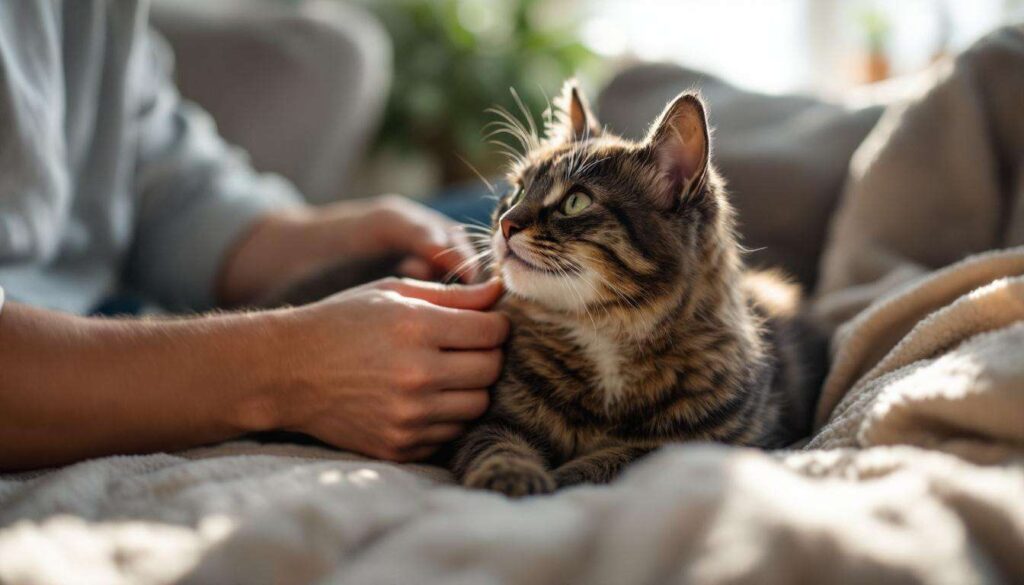
The bond between humans and cats appears so natural today that many assume it stretches back to the dawn of civilisation. Yet recent archaeological discoveries and genetic studies reveal a surprising truth about when felines truly became our companions. Unlike dogs, whose domestication began approximately 15,000 years ago, cats maintained their independence for thousands of years longer. The timeline of this unique relationship challenges common assumptions and offers fascinating insights into how these enigmatic creatures eventually found their place in human households across the globe.
The beginnings of the human-cat relationship
The origins of the human-cat connection differ fundamentally from other domesticated animals. Whilst humans actively sought to tame wolves, horses, and livestock, cats essentially domesticated themselves through a process of mutual benefit rather than deliberate human intervention.
The agricultural revolution as a catalyst
The relationship began approximately 10,000 years ago in the Fertile Crescent, coinciding with the rise of agriculture. As humans established permanent settlements and stored grain, they inadvertently created ideal conditions for rodent populations to flourish. Wild cats, particularly the African wildcat (Felis silvestris lybica), recognised these settlements as abundant hunting grounds. The advantages were clear for both species:
- Humans benefited from natural pest control protecting their food stores
- Cats enjoyed reliable access to prey without expending energy on extensive hunting
- Neither party required significant behavioural changes to maintain the arrangement
- The relationship remained largely utilitarian rather than emotional
This commensal relationship represented the earliest stage of association, where cats lived alongside humans without true domestication. The animals retained their wild instincts and independence whilst exploiting the ecological niche humans had created. This initial phase lasted several millennia before genuine domestication characteristics emerged.
Genetic evidence of late domestication
Modern DNA analysis confirms that cats underwent domestication much more recently than previously believed. Genetic markers indicate that the domestication process accelerated significantly only within the past 4,000 years, with most domestic cat lineages tracing back to populations in the Near East and Egypt. This evidence suggests that the transformation from wild to domestic occurred gradually and incompletely compared to other species.
Understanding these origins helps explain why domestic cats retain more wild characteristics than dogs, including their solitary hunting behaviour and independent temperament. This foundation sets the stage for examining the physical evidence that archaeologists have uncovered.
The first archaeological evidence
Archaeological discoveries provide concrete proof of when cats began living in close proximity to humans, though interpreting this evidence requires careful analysis to distinguish between wild visitors and genuine companions.
The Cyprus burial site
The most significant early evidence comes from a 9,500-year-old grave discovered in Cyprus. Excavations revealed a human buried alongside a cat, with both skeletons deliberately positioned together. This finding is particularly remarkable because Cyprus had no native wild cat population, meaning humans must have transported the animal by boat. The intentional burial suggests an emotional bond rather than mere pest control utility.
Egyptian representations and remains
Egyptian sites provide the most abundant archaeological evidence, though much of it dates to a surprisingly recent period. Whilst cats appear in Egyptian art from around 4,000 years ago, widespread evidence of domestic cats only becomes common after 3,000 years ago. The distinction between venerated wild animals and household companions remains crucial when interpreting these findings.
| Time period | Evidence type | Interpretation |
|---|---|---|
| 9,500 years ago | Cyprus burial | Earliest companion evidence |
| 4,000 years ago | Egyptian artwork | Cultural significance emerging |
| 3,000 years ago | Widespread remains | Common household presence |
These archaeological findings demonstrate that the friendship between humans and cats developed far more gradually than the rapid domestication seen in dogs. The evidence naturally leads to exploring how different ancient cultures incorporated cats into their societies.
The role of cats in ancient civilisations
Once cats established themselves in human settlements, various civilisations developed distinct relationships with these animals, ranging from practical pest controllers to divine beings.
Egyptian reverence and worship
Ancient Egypt elevated cats to unprecedented status in human-animal relationships. The goddess Bastet, depicted with a cat’s head, represented protection, fertility, and motherhood. Killing a cat, even accidentally, could result in severe punishment or death. Wealthy Egyptians mummified their cats and buried them in dedicated cemeteries, demonstrating a level of affection that transcended utilitarian value. However, this reverence primarily flourished during the Late Period of Egyptian history, roughly 2,600 to 2,000 years ago, which is remarkably recent in archaeological terms.
Roman and Greek perspectives
Mediterranean civilisations adopted cats more slowly and pragmatically. Romans initially preferred ferrets and weasels for rodent control, only gradually accepting cats as mousers. Greek literature rarely mentions cats before the Classical period, suggesting their presence remained limited. When cats did appear in Roman contexts, they symbolised independence and liberty rather than receiving the divine status accorded in Egypt.
Asian integration
Eastern civilisations developed their own timelines for cat integration. In China, cats appear in records from approximately 2,500 years ago, valued for protecting silkworm cocoons and grain stores. Japanese culture embraced cats later still, with significant populations only arriving around 1,400 years ago. The famous Japanese “beckoning cat” or maneki-neko emerged as a cultural icon only in recent centuries.
These varied cultural responses highlight how cat-human relationships evolved differently across geographical regions, influenced by local needs and beliefs. This diversity continued to shape how relationships developed through subsequent historical periods.
The evolution of relationships through the centuries
The medieval and early modern periods witnessed dramatic shifts in how humans perceived cats, with attitudes swinging between extremes of affection and persecution.
Medieval Europe and superstition
European attitudes towards cats deteriorated significantly during the Middle Ages. Association with paganism and witchcraft led to widespread persecution, particularly of black cats. This unfortunate period resulted in massive population declines, ironically contributing to rodent-borne diseases including the Black Death. The practical value of cats as pest controllers became tragically apparent only after their numbers had been decimated.
Renaissance rehabilitation
Attitudes gradually improved during the Renaissance as rational thinking displaced superstition. Cats began appearing in domestic portraits and literature as valued household members rather than suspicious creatures. Maritime exploration spread cat populations globally as ships carried them for rodent control, establishing feline populations on previously cat-free continents.
These historical fluctuations demonstrate that human-cat friendship has been neither linear nor inevitable, shaped by cultural, religious, and practical factors. This complex history provides context for understanding the contemporary relationship.
Cats in contemporary society
Modern relationships between humans and cats have reached unprecedented levels of closeness and complexity, transforming these once-independent hunters into cherished family members.
The rise of indoor cats
The twentieth century witnessed a fundamental shift as cats transitioned from primarily outdoor animals to indoor companions. This change reflects evolving attitudes about animal welfare, urban living constraints, and concerns about wildlife predation. Indoor living has created entirely new dynamics in the human-cat relationship, requiring greater interaction and environmental enrichment.
Economic and social impact
The contemporary cat industry represents a significant economic sector encompassing food, healthcare, accessories, and entertainment. Pet ownership studies consistently show that cats now rival or exceed dogs in popularity in many developed nations. Social media has amplified cat culture, with feline content dominating online platforms and creating celebrity animals with millions of followers.
Scientific understanding of cat behaviour
Recent decades have brought unprecedented scientific attention to understanding cat cognition, communication, and emotional capacity. Research reveals that cats possess sophisticated social intelligence, can form secure attachments to humans, and communicate through complex vocalisations developed specifically for human interaction. These findings validate what cat owners have long believed about their companions’ emotional depth.
This modern intimacy raises important questions about the nature of the relationship itself and whether friendship accurately describes the bond between species.
The differences between friendship and domestication
Distinguishing between genuine friendship and domestication requires examining the unique characteristics of the human-cat relationship compared to other domestic animals.
Defining true domestication
Domestication typically involves genetic modification through selective breeding, behavioural changes favouring human interaction, and physical alterations distinguishing domestic from wild populations. Cats exhibit these traits to a lesser degree than dogs, sheep, or cattle. Domestic cats can readily survive and reproduce without human support, and their behaviour remains remarkably similar to their wild ancestors.
The concept of mutual friendship
Friendship implies voluntary association, mutual benefit, and emotional connection. Modern research suggests cats do form genuine attachments to humans, displaying separation anxiety and preferring human company to food rewards in experimental settings. However, this capacity emerged only recently in evolutionary terms and varies significantly between individual animals. Key characteristics of this friendship include:
- Voluntary proximity seeking by cats towards familiar humans
- Development of unique communication signals used specifically with humans
- Demonstrated preference for human interaction over solitary activities
- Evidence of secure attachment patterns similar to human infant-parent bonds
The incomplete domestication
Cats occupy a unique position amongst domestic animals, sometimes described as “semi-domesticated”. They retain hunting instincts, territorial behaviour, and reproductive patterns largely unchanged from wild ancestors. This incomplete domestication suggests that the relationship remains a relatively recent development in evolutionary terms, supporting the premise that true human-cat friendship began far more recently than commonly assumed.
The archaeological, genetic, and behavioural evidence collectively demonstrates that meaningful bonds between humans and cats developed within the past few thousand years rather than ancient prehistory. Whilst initial associations began around 10,000 years ago, true companionship characterised by mutual affection and deliberate cohabitation emerged much later. The relationship continues evolving today as cats adapt to indoor living and humans develop deeper understanding of feline cognition and emotional needs. This relatively recent friendship explains why cats maintain more independence than other domestic animals and why their integration into human society varies considerably across cultures and individuals. The human-cat bond represents an ongoing process rather than a completed transformation, making it one of the most fascinating and dynamic relationships in the history of animal domestication.