



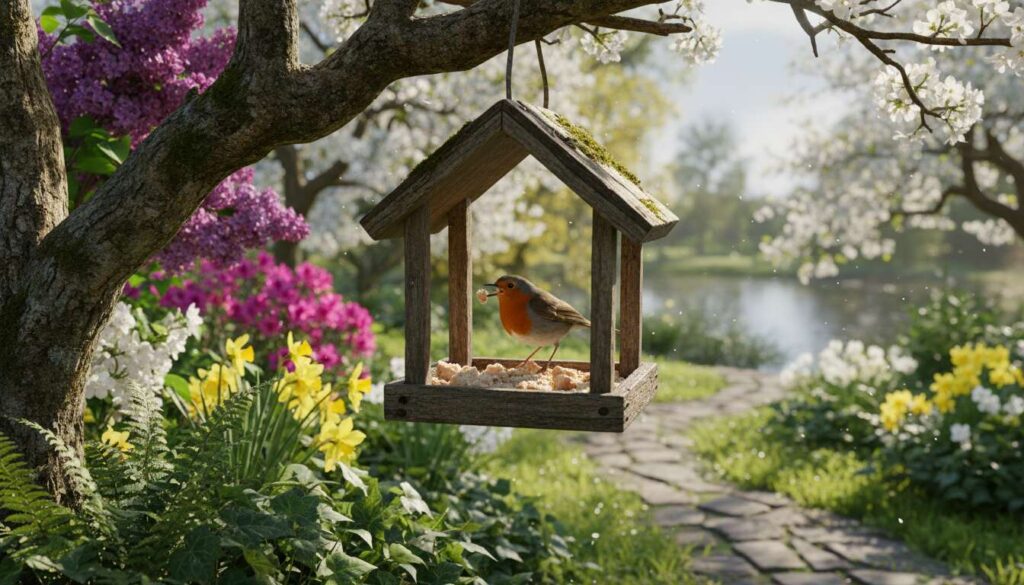
The robin, with its distinctive red breast and cheerful demeanour, remains one of Britain’s most cherished garden visitors. These delightful birds bring life and colour to outdoor spaces throughout the year, and their presence offers significant ecological advantages. Whilst many gardening enthusiasts understand the basics of bird feeding, a lesser-known technique involving stale bread has proven remarkably effective in attracting these feathered friends. This method, combined with proper garden management, can transform any outdoor space into a welcoming haven for robins.
Why do robins like stale bread ?
The nutritional appeal of bread for robins
Robins possess a varied diet that extends beyond their primary preference for insects and earthworms. Stale bread offers these birds a convenient source of carbohydrates, particularly during periods when natural food sources become scarce. The texture of stale bread proves especially attractive, as it crumbles easily into manageable pieces that suit the robin’s beak structure.
However, it is essential to understand that bread should serve as a supplementary food source rather than a primary dietary component. Robins require protein-rich foods for optimal health, making bread an occasional treat rather than a staple. The appeal lies in its accessibility and the energy boost it provides during colder months.
When robins seek alternative food sources
During winter and early spring, when insects become scarce, robins actively search for alternative sustenance. This period represents the ideal time to offer stale bread as a supplementary feeding option. The birds’ territorial nature means they will quickly identify reliable food sources within their established ranges.
- Winter months present the greatest food scarcity
- Early morning feeding times prove most effective
- Consistent provision encourages regular visits
- Territorial robins will defend productive feeding sites
Understanding these seasonal patterns helps gardeners time their feeding strategies effectively, ensuring robins receive support precisely when they need it most.
How to prepare stale bread for robins
The proper preparation method
Preparing stale bread correctly ensures maximum safety and appeal for visiting robins. Fresh bread should be avoided, as its soft texture can become sticky and potentially dangerous for birds. Instead, allow bread to dry naturally for several days until it achieves a firm, crumbly consistency.
The preparation process involves several straightforward steps. Break the stale bread into small, pea-sized pieces that robins can easily manage. Avoid offering large chunks, as these present choking hazards. The crumbs should be dry but not mouldy, as mould produces toxins harmful to birds.
Presentation and placement strategies
| Feeding method | Effectiveness | Best conditions |
|---|---|---|
| Ground scattering | High | Sheltered areas near cover |
| Open feeding trays | Very high | 1-2 metres from ground level |
| Hanging feeders | Low | Not recommended for robins |
Position bread crumbs in open feeding trays situated near natural cover, allowing robins to approach cautiously whilst maintaining escape routes. Scatter small amounts rather than large piles, preventing waste and reducing attraction of less desirable visitors.
These preparation techniques form just one element of creating an inviting environment, which extends to broader garden conditions.
The best conditions for attracting robins
Creating the ideal habitat structure
Robins favour gardens that mirror their natural woodland edge habitat. These birds thrive in spaces offering a combination of open ground for foraging and dense vegetation for shelter. Establishing this balance requires thoughtful garden design that incorporates varied height levels and vegetation density.
Key environmental features include:
- Areas of bare or lightly mulched soil for ground foraging
- Dense shrubs providing protective cover from predators
- Trees offering elevated perching and singing posts
- Water sources for drinking and bathing
- Compost heaps attracting invertebrate prey
Seasonal considerations for robin attraction
The effectiveness of attraction methods varies throughout the year. During breeding season, typically between March and June, robins become highly territorial and focus on protein-rich foods for their young. Winter months see increased competition for resources, making supplementary feeding particularly valuable.
Maintaining consistent food availability throughout these periods encourages robins to establish territories within your garden. Once a robin claims an area, it will defend this space vigorously, providing regular viewing opportunities for garden enthusiasts.
Beyond structural elements, the specific plants chosen significantly influence robin attraction and retention.
What plants to grow to entice robins
Berry-producing plants for year-round interest
Strategic planting of berry-producing species provides natural food sources that complement supplementary feeding. Robins particularly favour plants offering autumn and winter berries when insect populations decline. These plantings create a self-sustaining ecosystem that reduces reliance on human-provided foods.
Recommended berry-producing plants include:
- Cotoneaster species providing abundant red berries
- Pyracantha offering dense cover and bright fruits
- Holly bushes supplying winter berries and nesting sites
- Rowan trees producing clusters of orange-red berries
- Ivy providing late-season berries and nesting opportunities
Ground cover and insect-attracting species
Establishing diverse ground cover encourages the invertebrate populations that form the robin’s primary diet. Native wildflowers and grasses support complex food webs, ensuring year-round prey availability. Allow certain areas to develop naturally, creating the slightly unkempt conditions where insects thrive.
These plantings work synergistically with physical structures designed specifically for robin occupation.
The ideal shelters for welcoming robins into your garden
Natural nesting opportunities
Robins demonstrate remarkable flexibility in nesting site selection, utilising everything from traditional tree cavities to unusual human-made structures. Encouraging natural nesting opportunities involves maintaining mature shrubs, particularly those with dense branching patterns that provide concealment and structural support.
Creating deliberate nesting opportunities requires minimal intervention. Retain old sheds, garden tools, and decorative items that offer sheltered ledges. Robins have famously nested in watering cans, coat pockets, and even vehicle bonnets, demonstrating their adaptability.
Purpose-built nest boxes
Installing purpose-designed nest boxes significantly increases the likelihood of attracting breeding pairs. Robin nest boxes differ from those intended for other species, featuring an open front rather than a small entrance hole. Position these boxes approximately 1.5 metres above ground level, preferably camouflaged with climbing plants.
| Nest box feature | Specification | Purpose |
|---|---|---|
| Front opening | Wide, open design | Suits robin entry preferences |
| Height placement | 1-2 metres | Predator protection |
| Orientation | North or east facing | Temperature regulation |
These structural provisions complement ongoing management practices that sustain robin populations.
Additional tips for keeping robins in your garden
Maintaining year-round appeal
Sustaining robin populations requires consistent effort beyond initial attraction. Establish feeding routines that robins can depend upon, particularly during harsh weather when natural food sources become inaccessible. Clean feeding stations regularly to prevent disease transmission, and vary food offerings to provide nutritional diversity.
Water provision proves equally important as food. Robins require fresh water for drinking and bathing throughout the year. Shallow dishes or purpose-built bird baths, maintained ice-free during winter, become focal points for robin activity.
Creating a pesticide-free environment
Chemical pesticides eliminate the invertebrate populations upon which robins depend. Adopting organic gardening practices allows natural pest control through predator-prey relationships. Robins themselves provide valuable pest management services, consuming aphids, caterpillars, and other garden pests.
- Eliminate chemical pesticide use entirely
- Encourage natural predator populations
- Accept minor pest damage as ecosystem cost
- Celebrate robins as natural pest controllers
These practices create sustainable gardens where robins thrive alongside diverse wildlife communities.
Attracting and retaining robins requires a multifaceted approach combining supplementary feeding, habitat creation, and sustainable gardening practices. Whilst stale bread offers a useful supplementary food source, success depends upon establishing comprehensive conditions that meet robins’ year-round needs. Strategic planting, appropriate shelter provision, and pesticide-free management create gardens where these beloved birds flourish. The rewards extend beyond simple observation, as robins contribute to pest control and pollination whilst adding immeasurable charm to outdoor spaces. By implementing these evidence-based strategies, gardeners can establish thriving robin populations that return year after year, enriching both the garden ecosystem and human experience.