



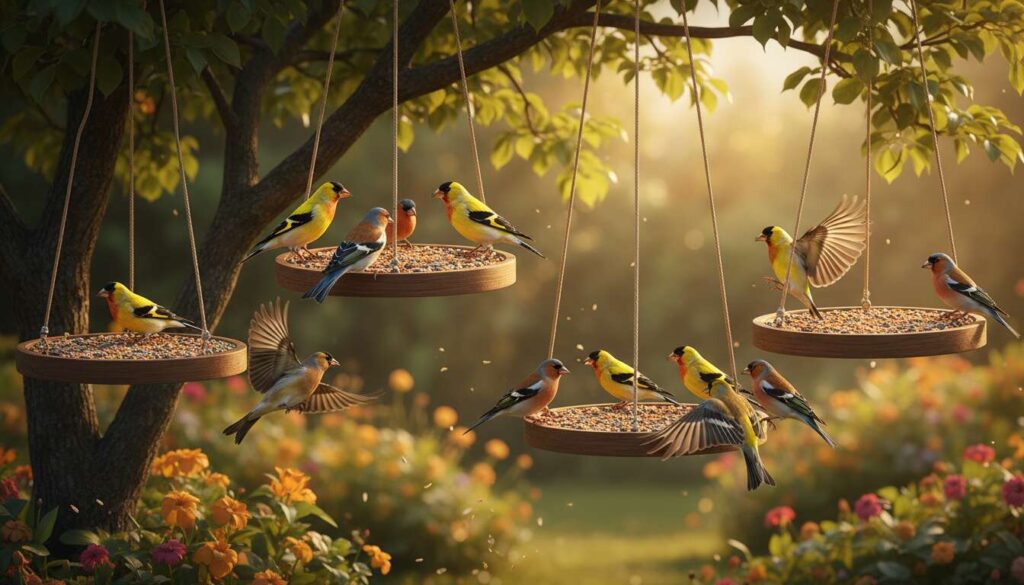
Garden bird feeding, a cherished pastime for millions across Britain, has come under scrutiny following an urgent warning from wildlife conservation authorities. The connection between certain feeding practices and the spread of fatal diseases among wild bird populations has prompted significant action, with flat bird feeders being identified as a primary concern. As finch numbers continue to plummet, the need for responsible feeding methods has never been more critical.
The peril of flat bird feeders
Why flat surfaces pose unique risks
Flat bird feeders, including traditional bird tables and feeding trays, have long been popular amongst garden bird enthusiasts. However, these seemingly innocuous feeding stations present serious health hazards to visiting birds. The primary issue lies in their design: flat surfaces allow multiple birds to feed simultaneously in close proximity, creating ideal conditions for disease transmission.
When infected birds deposit saliva-contaminated food or droppings onto these surfaces, healthy birds subsequently consume the contaminated material. This direct contact with infectious agents significantly increases the likelihood of disease spread throughout local bird populations. The problem becomes particularly acute during periods of high feeding activity, when numerous birds congregate around limited food sources.
The accumulation problem
Another critical concern with flat feeders involves the accumulation of waste material. Seed remnants, uneaten food and bird droppings collect on these surfaces, creating breeding grounds for harmful bacteria. The following factors compound this issue:
- Moisture retention on flat surfaces promotes bacterial growth
- Decomposing food attracts additional pathogens
- Difficult cleaning access in certain table designs
- Weather conditions that accelerate contamination
Expert opinion from avian specialists emphasises that these conditions create perfect environments for Salmonella and other dangerous bacteria to flourish. The persistence of these pathogens on feeding surfaces means that even after infected birds have departed, the risk remains for subsequent visitors. This understanding of disease dynamics has led to fundamental reassessments of traditional feeding practices.
The deadly disease affecting finches
Understanding Trichomonosis
Trichomonosis, caused by the microscopic parasite Trichomonas gallinae, has emerged as one of the most devastating diseases affecting British finch populations. This parasitic infection primarily targets the upper digestive tract, causing lesions in the throat and crop that prevent birds from swallowing food effectively. Infected birds exhibit distinctive symptoms including lethargy, fluffed-up plumage and an inability to feed properly, often remaining near feeding stations despite their condition.
The transmission mechanism of this disease makes flat feeding surfaces particularly dangerous. Birds infected with Trichomonosis regurgitate food contaminated with the parasite, which can survive for several hours on moist surfaces. When healthy birds consume this contaminated material, the infection cycle continues, spreading rapidly through local populations.
The devastating impact on greenfinches
The statistics surrounding greenfinch decline paint a stark picture of the disease’s impact. Between 2008 and 2018, greenfinch populations experienced a catastrophic 69% reduction, making them one of the fastest-declining garden bird species in Britain. This dramatic collapse coincides directly with the emergence and spread of Trichomonosis across the country.
| Species | Population change | Primary threat |
|---|---|---|
| Greenfinch | -69% | Trichomonosis |
| Chaffinch | Moderate decline | Disease susceptibility |
| Goldfinch | Variable | Secondary infection risk |
The broader context reveals an even more troubling trend, with Britain having lost over 38 million birds in the past half-century. This alarming biodiversity loss underscores the urgency of addressing preventable disease transmission at garden feeding stations.
The RSPB’s call for vigilance
Decisive action in response to evidence
The Royal Society for the Protection of Birds took the unprecedented step of removing flat bird feeders from its online retail presence. This decision, implemented at the start of 2025, represents a significant policy shift based on accumulating scientific evidence. The organisation’s willingness to discontinue sales of popular products demonstrates the severity of the disease threat and the need for immediate action.
This move forms part of a wider campaign to educate the public about safer feeding practices. By removing these products from their platform, conservation authorities send a clear message about the risks associated with traditional feeding methods. The decision also reflects growing consensus within the ornithological community regarding disease prevention strategies.
Timing with the Big Garden Birdwatch
The emphasis on proper feeding practices gains particular importance during the annual Big Garden Birdwatch, held at the end of January. This citizen science initiative, which engages thousands of participants nationwide, provides an ideal opportunity to promote awareness of bird health issues. Experts utilise this platform to encourage the following practices:
- Regular cleaning and disinfection of all feeding equipment
- Immediate removal of feeders if sick birds are observed
- Rotation of feeding locations to prevent pathogen build-up
- Monitoring of local bird populations for signs of disease
The combination of public engagement and scientific monitoring during this event creates valuable opportunities for both education and data collection. Understanding these patterns helps inform future conservation strategies and feeding recommendations.
Recommendations for gardeners
Essential hygiene protocols
Maintaining proper hygiene standards represents the cornerstone of responsible bird feeding. Gardeners must adopt rigorous cleaning schedules to minimise disease risks. Weekly cleaning of all feeding equipment using hot water and appropriate disinfectants should be considered the minimum standard. During disease outbreaks, this frequency should increase to every few days.
The cleaning process itself requires attention to detail. Simply rinsing feeders proves inadequate; thorough scrubbing to remove all organic material is essential. After cleaning, feeders should be completely dried before refilling, as moisture facilitates bacterial growth. Gloves should be worn during cleaning, and hands washed thoroughly afterwards to prevent zoonotic disease transmission.
Strategic feeding approaches
Beyond hygiene, the strategic placement and management of feeding stations significantly impacts disease risk. The following guidelines help create safer feeding environments:
- Position feeders away from areas where droppings accumulate
- Provide multiple feeding stations to reduce crowding
- Remove uneaten food daily to prevent spoilage
- Cease feeding immediately if diseased birds are spotted
- Allow a two-week break before resuming after disease detection
These measures work synergistically to reduce pathogen transmission whilst still supporting garden bird populations. The temporary cessation of feeding following disease detection proves particularly crucial, as it prevents further spread and allows infected individuals to disperse from the area.
Alternatives to traditional feeders
Hanging and tube feeder advantages
Hanging feeders and tube designs offer significantly safer alternatives to flat feeding surfaces. These designs limit the number of birds that can feed simultaneously whilst preventing contamination of food supplies with droppings. Tube feeders, in particular, protect seeds from weather exposure and reduce waste accumulation.
The vertical orientation of these feeders means that droppings fall away from feeding ports rather than contaminating food supplies. Additionally, the individual feeding ports on tube feeders prevent the close contact between birds that facilitates disease transmission. Many modern designs incorporate features specifically intended to enhance hygiene and reduce infection risks.
Specialised feeding solutions
Innovation in bird feeding equipment continues to address health concerns. Newer designs incorporate antimicrobial materials, self-cleaning mechanisms and improved drainage systems. Some options worth considering include:
- Mesh feeders that allow only small amounts of food exposure
- Weight-activated feeders that limit access to smaller species
- Designs with removable components for thorough cleaning
- Feeders with protective covers against rain and contamination
Ground feeding, when necessary, should be conducted by scattering small amounts of food across wide areas rather than concentrating it in single locations. This approach reduces competition and contact between birds whilst allowing natural feeding behaviours.
The market response to the alert
Retailer adaptations
The conservation sector’s warnings have prompted responses across the bird feeding industry. Retailers are reassessing their product ranges, with some following the lead in removing or reducing flat feeder offerings. This shift reflects growing awareness amongst suppliers about their role in promoting bird health through product selection.
Manufacturers have responded by developing improved feeder designs that prioritise hygiene alongside functionality. Investment in research and development has increased, with companies seeking to create products that meet both consumer demands and conservation requirements. The market increasingly favours designs that incorporate easy-clean features and disease-prevention mechanisms.
Consumer education initiatives
Alongside product changes, retailers have expanded educational efforts to inform customers about proper feeding practices. Point-of-sale materials, online resources and packaging information now frequently include guidance on disease prevention. This represents a significant shift from purely commercial considerations towards a more holistic approach that balances business interests with conservation goals.
The availability of information empowers consumers to make informed decisions about bird feeding equipment and practices. As awareness grows, demand increasingly favours products that support bird health, creating market incentives for continued innovation in feeder design and functionality.
The urgent warnings about flat bird feeders highlight the complex relationship between human activities and wildlife health. The dramatic decline in finch populations, particularly greenfinches affected by Trichomonosis, demonstrates the serious consequences of seemingly benign feeding practices. Conservation authorities’ decisive action in removing problematic products signals the severity of the threat whilst providing clear guidance for concerned gardeners. By adopting safer feeding methods, maintaining rigorous hygiene standards and choosing appropriate equipment, bird enthusiasts can continue supporting garden birds whilst minimising disease risks. The collective response from conservation organisations, retailers and the public will prove crucial in reversing population declines and preserving Britain’s cherished garden bird communities for future generations.