



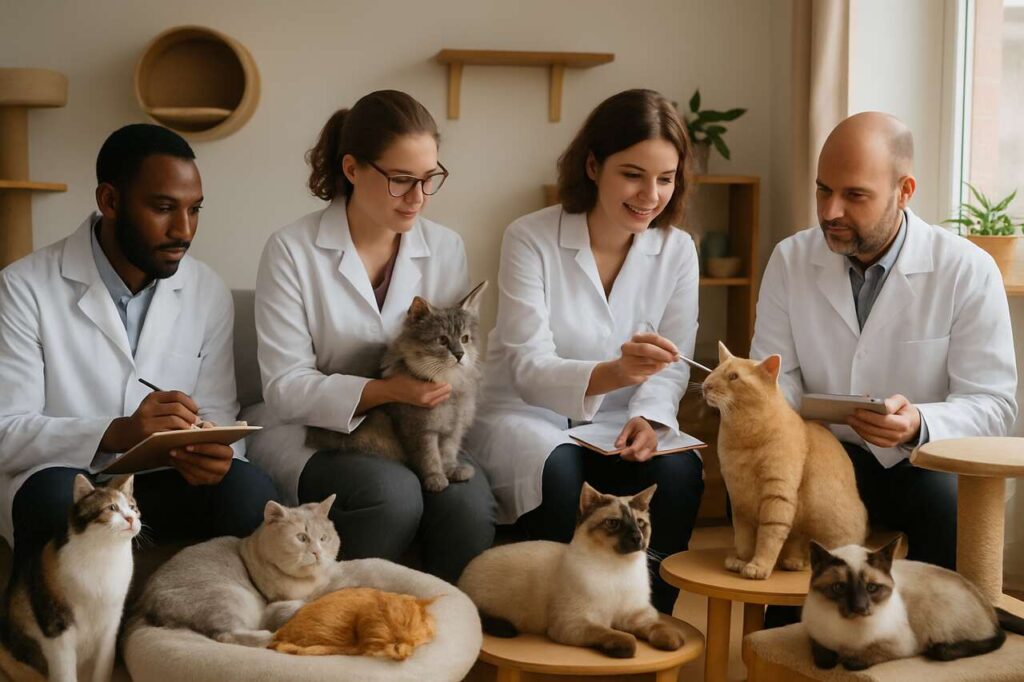
Scientists have embarked on an unprecedented endeavour to decode the genetic mysteries of domestic cats through the most ambitious feline DNA study ever attempted. The initiative seeks to enrol 100,000 cats from diverse backgrounds, creating a comprehensive genetic database that promises to revolutionise our understanding of feline health, behaviour, and evolution. This collaborative effort between leading research institutions marks a significant milestone in veterinary science and opens new avenues for improving the lives of cats worldwide.
The largest feline DNA project in history
Unprecedented scale and ambition
The project represents a quantum leap in feline genetic research, dwarfing previous studies in both scope and ambition. Unlike earlier initiatives that focused on specific breeds or limited populations, this endeavour aims to capture the full spectrum of feline genetic diversity. The target of 100,000 participants by June 2026 would create a dataset of extraordinary magnitude, providing researchers with unprecedented statistical power to identify genetic patterns and associations.
The scale of this undertaking offers several distinct advantages:
- Enhanced ability to detect rare genetic variants affecting health and behaviour
- Improved statistical confidence in identifying gene-trait associations
- Comprehensive representation of both purebred and mixed-breed populations
- Inclusion of stray and feral cats, often overlooked in genetic studies
- Global participation enabling cross-population comparisons
Collaborative research framework
The initiative brings together expertise from the Broad Institute of MIT and Harvard alongside UMass Chan Medical School, creating a powerhouse of genetic research capability. This collaboration ensures that the project benefits from cutting-edge sequencing technology and sophisticated analytical tools developed for human genomic research. The open data approach adopted by the researchers means that findings will be shared with the broader scientific community, accelerating discoveries and fostering international cooperation.
| Milestone | Target | Status |
|---|---|---|
| Project launch | Mid-2024 | Completed |
| Current enrolment | 5,000 cats | Ongoing |
| Target enrolment | 100,000 cats | June 2026 |
This framework distinguishes itself from traditional veterinary genetic databases by prioritising population-wide diversity rather than breed-specific characteristics, ensuring more broadly applicable findings.
The groundbreaking initiative of Darwin’s Ark
Origins and scientific vision
Darwin’s Ark emerged from a recognition that existing feline genetic databases suffered from significant limitations. Most previous collections focused narrowly on purebred cats or specific health conditions, leaving vast gaps in our understanding of the general cat population. The chief scientist leading this initiative identified an opportunity to create something fundamentally different: a truly representative genetic resource that reflects the diversity of cats living alongside humans globally.
The project’s name pays homage to evolutionary biology whilst emphasising its comprehensive approach to cataloguing feline genetic variation. By casting a wide net across breeds, backgrounds, and geographical locations, researchers aim to construct a genetic archive of unprecedented richness and utility.
Distinctive research methodology
What sets this initiative apart is its innovative combination of citizen science participation with professional genetic analysis. The methodology encompasses multiple data streams that together create a multidimensional picture of each participating cat. Owners provide detailed behavioural and environmental information through structured surveys, whilst DNA samples undergo rigorous laboratory sequencing and analysis.
Key methodological innovations include:
- Non-invasive fur-based DNA collection eliminating stress for cats
- Comprehensive behavioural questionnaires capturing personality traits
- Environmental data collection contextualising genetic findings
- Longitudinal follow-up enabling study of age-related changes
- Integration of veterinary health records where available
This multifaceted approach ensures that genetic data exists within a rich contextual framework, enabling more sophisticated analyses than DNA sequences alone could provide.
Understanding feline behaviour through genetics
Decoding personality and temperament
One of the most intriguing aspects of the project involves unravelling the genetic basis of feline behaviour. Cat owners frequently wonder why their pets exhibit particular personality traits, from extreme sociability to pronounced independence. The database aims to identify genetic variants associated with behavioural characteristics, potentially explaining why some cats are naturally more affectionate whilst others remain aloof.
Researchers are particularly interested in exploring the heritability of traits such as playfulness, aggression, fearfulness, and sociability. By correlating genetic markers with owner-reported behaviours, the study may reveal which aspects of feline personality are hardwired and which are more influenced by environmental factors.
Health implications of behavioural genetics
Understanding the genetic underpinnings of behaviour extends beyond satisfying curiosity; it has significant clinical applications. Certain behavioural patterns may indicate underlying health vulnerabilities or predispositions to stress-related conditions. For instance, excessive grooming or anxiety behaviours might have genetic components that, once identified, could inform preventive care strategies.
The research may illuminate connections between:
- Genetic variants and stress response patterns
- Hereditary factors in compulsive behaviours
- Biological basis of hunting drive variations
- Genetic influences on sleep patterns and activity levels
- Molecular mechanisms underlying social bonding capacity
These insights could transform how veterinarians approach behavioural problems, moving from purely environmental interventions towards more holistic, genetically-informed treatment plans.
Citizen science in the service of cats
Democratising scientific participation
The project exemplifies the power of citizen science to tackle research questions impossible for traditional academic teams alone. By engaging cat owners as active participants rather than passive subjects, the initiative taps into a vast reservoir of observational expertise. Cat owners possess intimate knowledge of their pets’ behaviours, quirks, and health histories—information that proves invaluable when paired with genetic data.
This participatory model offers mutual benefits: scientists gain access to an enormous sample size, whilst participants contribute to meaningful research that may ultimately improve feline welfare. The approach also fosters scientific literacy, helping the public understand how genetic research progresses from data collection through analysis to practical applications.
Global reach and accessibility
Whilst DNA sampling kits currently remain limited to United States residents, the online survey component welcomes international participation. This global dimension enriches the dataset with diverse environmental contexts and management practices, enabling researchers to disentangle genetic effects from cultural differences in cat care. The suggested donation of £150 for DNA sequencing reflects the substantial costs of high-quality genetic analysis, though the project seeks funding to reduce barriers to participation.
| Participation level | Requirements | Availability |
|---|---|---|
| Survey completion | Online questionnaire | Global |
| DNA sample submission | Fur collection kit | US residents |
| Suggested donation | £150 for sequencing | Optional |
The tiered participation structure ensures that geographical or financial constraints need not prevent cat owners from contributing valuable observational data.
The importance of contributions from cat owners
Essential observational insights
Cat owners serve as the primary observers of feline behaviour in natural home environments, providing data impossible to capture in laboratory settings. Their daily interactions reveal patterns that might escape even trained researchers during brief clinical encounters. Details about sleeping preferences, social interactions, dietary habits, and response to environmental changes create a comprehensive behavioural profile that contextualises genetic findings.
The quality and completeness of owner-reported information directly impacts research outcomes. Detailed, accurate responses to survey questions enable more precise correlations between genetic variants and observable traits. This partnership between professional scientists and dedicated pet owners represents a collaborative knowledge creation that neither group could achieve independently.
Advancing feline welfare through participation
Beyond contributing to scientific knowledge, participants play a role in potentially improving veterinary care for all cats. The insights generated from this database may lead to:
- Earlier detection of hereditary health conditions
- Personalised nutrition recommendations based on genetic profiles
- Breed-specific care guidelines informed by genetic data
- Improved understanding of medication responses and sensitivities
- Enhanced breeding practices that prioritise health and temperament
Each participating cat contributes to a legacy of knowledge that will benefit future generations of felines and their human companions, making involvement in the project a meaningful act of stewardship.
Technological advances in feline genetic research
Innovative DNA collection methods
The project employs fur-based DNA sampling, a technique that represents a significant advancement over traditional blood draws or cheek swabs. This non-invasive approach eliminates veterinary visits specifically for sample collection, reducing stress for cats and logistical barriers for owners. Remarkably, the methodology captures high-quality DNA without requiring hair roots, overcoming a limitation that previously made shed fur unsuitable for genetic analysis.
This technological innovation reflects broader trends in genetic research towards more accessible, less invasive sampling methods. The ability to extract sufficient DNA from collected fur opens possibilities for studying feline populations that would be difficult to sample otherwise, including semi-feral cats or those with veterinary anxiety.
Sequencing and analytical capabilities
The partnership with leading genomic institutions ensures access to state-of-the-art sequencing platforms capable of processing thousands of samples efficiently. Modern sequencing technology can now generate comprehensive genetic profiles at costs unimaginable even a decade ago, making large-scale studies like this financially feasible. Advanced bioinformatic tools enable researchers to identify subtle genetic associations that would remain hidden in smaller datasets.
The analytical framework incorporates:
- Whole-genome sequencing for comprehensive genetic coverage
- Machine learning algorithms to detect complex genetic patterns
- Comparative genomics linking feline and human health research
- Population genetics methods tracking evolutionary relationships
- Functional genomics approaches connecting genes to biological mechanisms
These technological capabilities transform raw genetic data into actionable insights, bridging the gap between molecular biology and practical veterinary applications that improve feline health outcomes.
The ambitious Darwin’s Cats project stands poised to transform our understanding of feline genetics, behaviour, and health through the creation of an unprecedented genetic database. By combining citizen science participation with cutting-edge sequencing technology, researchers are building a comprehensive resource that promises to benefit cats worldwide. The initiative’s inclusive approach, welcoming diverse feline populations from purebreds to strays, ensures findings will have broad applicability across the entire spectrum of domestic cats. As enrolment progresses towards the target of 100,000 participants, each contribution from cat owners adds valuable pieces to this genetic puzzle, advancing veterinary science whilst deepening our appreciation for the remarkable animals sharing our homes.