


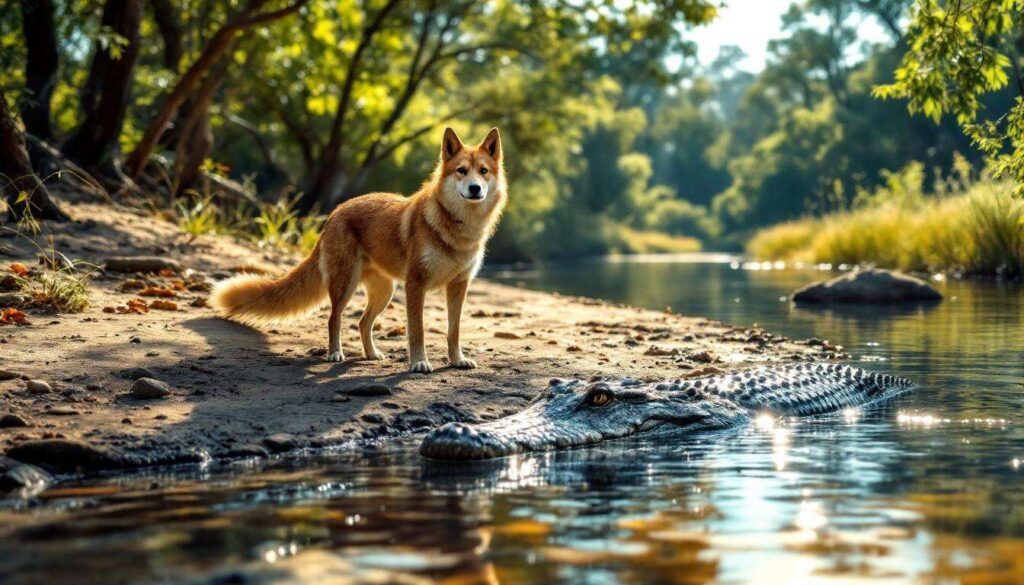
Crocodiles reign as some of nature’s most fearsome predators, capable of overpowering virtually any creature that ventures into their domain. Their powerful jaws, lightning-fast reflexes and prehistoric hunting instincts have earned them a reputation as indiscriminate killers. Yet remarkably, there exists one animal that appears immune to their aggression, a creature that crocodiles consistently avoid attacking despite ample opportunity. This peculiar relationship challenges our understanding of predator behaviour and reveals fascinating insights into the complex dynamics of the animal kingdom.
The remarkable power of crocodiles
Evolutionary perfection in predatory design
Crocodiles have remained largely unchanged for over 200 million years, a testament to their evolutionary success. Their bodies represent a masterclass in predatory efficiency, combining brute strength with surprising agility. The bite force of a saltwater crocodile can exceed 3,700 pounds per square inch, making it the most powerful bite in the animal kingdom. This crushing force allows them to overpower prey ranging from fish to large mammals with devastating effectiveness.
Physical attributes that dominate ecosystems
The physical characteristics that make crocodiles such formidable hunters include:
- Armoured scales providing near-impenetrable protection
- Eyes and nostrils positioned atop their heads for stealthy surveillance
- Powerful tails capable of propelling them through water at remarkable speeds
- Razor-sharp teeth designed to grip and tear flesh
- Exceptional patience and ability to remain motionless for extended periods
These adaptations have secured crocodiles’ position at the apex of their food chains across multiple continents, establishing them as virtually unchallenged predators in their aquatic territories.
The aquatic predators of the animal kingdom
Hunting strategies that guarantee success
Crocodiles employ ambush tactics that have been refined over millennia. They submerge themselves almost entirely underwater, leaving only their eyes and nostrils exposed whilst they wait for unsuspecting prey to approach. When the moment arrives, they explode from the water with shocking speed, clamping their jaws around their victim before dragging it beneath the surface. This death roll technique disorients prey and tears flesh from bone with brutal efficiency.
Territorial dominance and hunting grounds
Crocodiles establish territories that they defend aggressively against intruders, including other crocodiles. These territories typically encompass prime hunting locations such as river bends, watering holes and estuaries where prey animals must inevitably appear. Their ability to regulate body temperature by basking in sunlight and cooling in water allows them to maintain optimal hunting readiness throughout the day. This combination of strategic positioning and physical prowess makes them exceptionally dangerous predators.
The common prey of crocodiles
Diverse dietary preferences across species
The crocodilian diet varies considerably depending on species, size and geographical location. Smaller crocodiles primarily consume fish, crustaceans and amphibians, whilst larger specimens target more substantial prey. The following table illustrates typical prey animals across different crocodile species:
| Crocodile Species | Primary Prey | Opportunistic Targets |
|---|---|---|
| Nile Crocodile | Wildebeest, zebras, antelope | Birds, domestic livestock |
| Saltwater Crocodile | Wild boar, monkeys, water buffalo | Sharks, sea turtles |
| American Crocodile | Fish, turtles, birds | Small mammals, crabs |
Opportunistic feeding behaviour
Crocodiles demonstrate remarkable opportunism in their feeding habits, rarely passing up an easy meal regardless of the prey species. They have been documented attacking and consuming virtually every type of animal that enters their habitat, from insects to elephants. This indiscriminate appetite contributes to their fearsome reputation and ecological significance as population regulators within their ecosystems.
A formidable enemy
Few natural predators challenge adult crocodiles
Adult crocodiles face remarkably few natural threats, occupying the pinnacle of their respective food webs. Large cats such as jaguars and leopards occasionally prey upon juvenile crocodiles, whilst certain snake species may consume hatchlings. However, fully grown crocodiles possess such formidable defences that even the most powerful predators typically avoid confrontation. Their armoured hides resist most attacks, and their aggressive temperament ensures they respond violently to any perceived threat.
Interspecies conflicts and territorial disputes
The most significant dangers to crocodiles often come from other crocodiles. Territorial males engage in brutal combat, inflicting serious injuries or death upon rivals. These confrontations demonstrate the species’ inherent aggression and willingness to attack virtually anything perceived as competition or prey. This aggressive nature makes their selective avoidance of certain animals all the more intriguing.
This creature that crocodiles spare
The Egyptian plover: an unlikely ally
The Egyptian plover, also known as the crocodile bird, maintains an extraordinary relationship with these apex predators. This small bird fearlessly approaches basking crocodiles and walks directly into their open mouths, where it feeds on parasites, leeches and food remnants lodged between the reptiles’ teeth. Remarkably, crocodiles not only tolerate this intrusion but appear to actively facilitate it, remaining perfectly still with jaws agape whilst the birds perform their dental hygiene services.
Documented observations and scientific study
Whilst this relationship has been referenced since ancient times, including descriptions by the Greek historian Herodotus, modern scientific observation has confirmed these interactions occur regularly in the wild. Researchers have documented numerous instances of plovers entering crocodile mouths without suffering harm, a behaviour that would prove instantly fatal for virtually any other creature. This unique arrangement represents one of nature’s most remarkable examples of interspecies cooperation.
The reasons for a fascinating exception
Mutualistic symbiosis benefits both parties
The relationship between crocodiles and Egyptian plovers exemplifies mutualistic symbiosis, where both species derive significant benefits. The plovers gain access to an abundant food source with minimal competition, whilst crocodiles receive valuable dental cleaning services that promote oral health and prevent infections. This arrangement demonstrates that even the most fearsome predators can recognise and preserve beneficial relationships.
Evolutionary advantages and learned behaviour
Several factors contribute to this remarkable exception:
- Crocodiles possess sufficient intelligence to distinguish beneficial interactions from threats
- The cleaning services provided reduce harmful bacterial growth and parasitic infestations
- Plovers may serve as early warning systems, alerting crocodiles to approaching danger
- The behaviour appears to be learned and passed between generations of both species
- The small size of plovers presents no nutritional value worth sacrificing the cleaning benefit
This complex relationship reveals that crocodilian behaviour encompasses more nuance than their fearsome reputation might suggest, demonstrating capacity for restraint when evolutionary advantages favour cooperation over predation.
The relationship between crocodiles and Egyptian plovers stands as a remarkable testament to nature’s complexity. Despite their reputation as ruthless predators that attack virtually anything, crocodiles consistently spare these small birds, recognising the mutual benefits of their arrangement. This exception highlights the sophisticated behavioural capabilities of crocodiles and reminds us that even the most fearsome predators operate within intricate ecological relationships that transcend simple predator-prey dynamics. The crocodile’s selective restraint demonstrates that survival sometimes depends not on what you attack, but on what you choose to spare.