



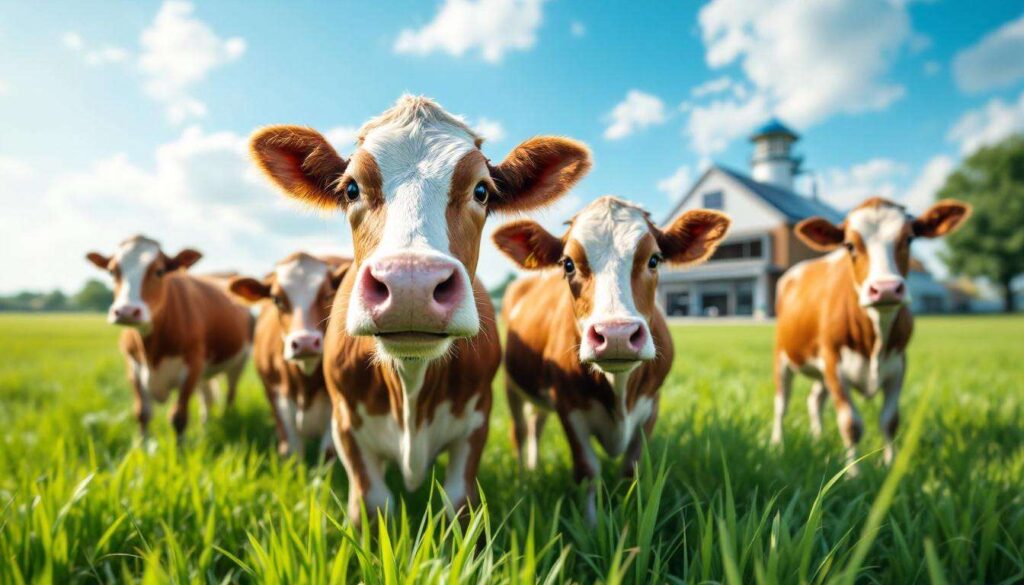
Modern dairy farming stands at a crossroads between productivity demands and growing concerns about animal welfare. Across farms worldwide, researchers and producers are exploring how giving cows greater control over their environment could transform both their wellbeing and the sustainability of milk production. The concept of freedom of choice for dairy cattle represents a fundamental shift from traditional management practices, where farmers make virtually all decisions about feeding times, milking schedules, and housing arrangements. By integrating sophisticated technology with animal behaviour science, the dairy barn of the future promises to create environments where cows can express natural preferences whilst maintaining efficient production systems.
Introduction to the concept of freedom of choice for cows
The principle of freedom of choice in dairy farming centres on allowing cows to make decisions about their daily activities rather than imposing rigid schedules upon them. This approach recognises that cattle are sentient beings with individual preferences, rhythms, and needs that vary throughout the day and across different life stages.
Core principles of bovine autonomy
At its foundation, this concept acknowledges that cows possess innate decision-making capabilities regarding when to eat, rest, socialise, or seek milking. Traditional dairy systems typically dictate these activities according to human convenience and labour availability. The freedom of choice model reverses this dynamic by creating environments where cows can exercise preferences whilst technology monitors and facilitates their choices.
- Voluntary milking systems that allow cows to determine milking frequency
- Free-access feeding stations where cattle choose meal timing and composition
- Climate-controlled zones enabling temperature preference selection
- Social grouping options that respect herd hierarchies and friendships
Scientific basis for choice-based systems
Research in animal behaviour and welfare science demonstrates that providing choices reduces physiological stress markers in dairy cattle. Studies measuring cortisol levels, heart rate variability, and behavioural indicators show that cows exhibit lower stress when permitted to control aspects of their environment. This biological evidence supports the ethical argument that autonomy contributes meaningfully to quality of life for farm animals.
Understanding these foundational concepts sets the stage for examining the specific technologies that make such systems practically viable on commercial dairy operations.
Technological innovations in the dairy barn of the future
The transformation of dairy barns into choice-enabled environments relies heavily on precision livestock farming technologies that monitor individual animals and respond to their behaviours in real-time.
Automated milking systems
Robotic milking units represent perhaps the most visible innovation in choice-based dairy farming. These systems allow cows to enter milking stalls voluntarily, typically two to four times daily according to their physiological needs rather than fixed schedules. Sensors identify each animal, assess udder readiness, and provide individualised attention without human intervention.
| Technology | Function | Welfare benefit |
|---|---|---|
| RFID identification | Individual cow recognition | Personalised care protocols |
| Teat detection sensors | Automated attachment | Reduced handling stress |
| Milk quality analysers | Real-time health monitoring | Early disease detection |
Environmental control systems
Advanced climate management technologies enable cows to select preferred microclimates within the barn. Zoned cooling and heating systems create gradients that accommodate individual thermal preferences, particularly important given that heat stress significantly impacts welfare and productivity. Automated brushes, positioned throughout facilities, allow cattle to groom themselves on demand, fulfilling a natural behavioural need whilst promoting skin health.
Sensor networks and data analytics
Wearable devices and environmental sensors generate continuous streams of data about movement patterns, rumination time, feeding behaviour, and social interactions. Machine learning algorithms analyse these datasets to detect deviations from normal patterns that might indicate illness, injury, or distress before visible symptoms appear. This predictive capability enables proactive interventions that prevent welfare problems rather than merely reacting to them.
These technological tools create the infrastructure necessary for cows to exercise meaningful choices, which directly influences their welfare outcomes.
Impact on animal welfare through autonomy
Granting cows greater control over their daily activities produces measurable improvements across multiple welfare dimensions, from physical health to psychological wellbeing.
Behavioural expression and natural rhythms
When freed from imposed schedules, dairy cows demonstrate distinct individual patterns in their activities. Some prefer early morning milking, whilst others consistently choose afternoon sessions. This variability underscores that uniform management fails to accommodate natural diversity within herds. Choice-based systems permit expression of species-typical behaviours including selective feeding, social grooming, and rest periods aligned with circadian rhythms.
Physical health outcomes
Research comparing conventional and choice-enabled systems reveals tangible health benefits. Lameness rates often decrease when cows control their movement and resting schedules, as they naturally avoid overexertion and seek comfortable lying areas when needed. Mastitis incidence may also decline with voluntary milking, as overfull udders receive attention more promptly than fixed schedules might allow.
- Reduced lameness through self-paced activity levels
- Lower metabolic disorders from individualised feeding
- Decreased injuries from flexible social groupings
- Improved reproductive performance through stress reduction
These welfare improvements connect directly to production efficiency, as healthier animals naturally perform better.
Feed efficiency and comfort enabled by technology
Precision feeding systems represent a crucial component of choice-based dairy farming, optimising both nutritional outcomes and resource utilisation.
Individualised nutrition programmes
Automated feeding stations equipped with recognition technology deliver customised rations based on each cow’s production stage, body condition, and health status. High-producing cows receive energy-dense concentrates, whilst dry cows access formulations supporting gestation. This targeted approach eliminates the waste inherent in group feeding whilst ensuring every animal receives appropriate nutrition.
Comfort-enhancing infrastructure
Modern barn designs prioritise cow comfort through features that animals can access according to preference. Deep-bedded resting areas with various substrates allow cows to select preferred lying surfaces. Ventilation systems with adjustable airflow create zones accommodating different comfort thresholds. Water stations positioned throughout facilities ensure hydration access without competition or travel stress.
| Comfort feature | Choice enabled | Efficiency gain |
|---|---|---|
| Multiple bedding types | Surface preference | Increased resting time |
| Varied feeding stations | Meal timing control | Reduced feed waste |
| Climate zones | Temperature selection | Lower energy expenditure |
By aligning comfort with productivity, these systems demonstrate that welfare and efficiency need not conflict.
Reducing stress and improving milk productivity
The relationship between stress reduction and milk production forms a compelling economic argument for choice-based dairy systems alongside the ethical imperatives.
Stress pathways and milk synthesis
Chronic stress triggers hormonal cascades that directly inhibit milk production. Elevated cortisol levels interfere with prolactin and oxytocin, the primary hormones governing milk synthesis and letdown. By minimising stressors through autonomy, choice-enabled systems maintain optimal endocrine environments for lactation. Studies document production increases of five to fifteen percent when cows transition from conventional to voluntary systems.
Social stress mitigation
Herd dynamics create significant stress, particularly for subordinate animals that may face aggression during feeding or movement through handling facilities. Flexible grouping strategies and multiple resource access points reduce competition and allow lower-ranking cows to avoid confrontation. This social consideration improves welfare for all herd members whilst ensuring every animal achieves genetic potential.
These productivity gains, achieved through welfare improvements rather than intensification, point towards more sustainable production models.
Towards sustainable and ethical dairy production
The dairy barn of the future represents more than technological advancement; it embodies a philosophical shift towards production systems that respect animal sentience whilst meeting human nutritional needs.
Consumer expectations and market positioning
Growing public concern about farm animal welfare creates market opportunities for producers adopting higher welfare standards. Choice-based systems provide verifiable welfare credentials that resonate with consumers willing to pay premiums for ethically produced dairy products. Transparency enabled by monitoring technologies allows farms to document welfare outcomes with data rather than mere assertions.
Environmental sustainability synergies
Precision management inherent in choice-enabled systems often yields environmental benefits. Optimised feeding reduces nitrogen excretion and methane emissions per litre of milk produced. Healthier, longer-lived cows require fewer replacements, decreasing the environmental footprint of heifer rearing. These ecological advantages complement welfare improvements, addressing multiple sustainability dimensions simultaneously.
The convergence of animal welfare science, agricultural technology, and evolving societal values suggests that dairy farming centred on bovine autonomy represents not merely an idealistic vision but an emerging practical reality. Farms implementing these systems demonstrate that respecting animal preferences enhances rather than compromises productive efficiency. As technologies become more accessible and evidence of benefits accumulates, the dairy barn of the future may well become the standard rather than the exception, fundamentally reshaping humanity’s relationship with the animals that provide our food.