



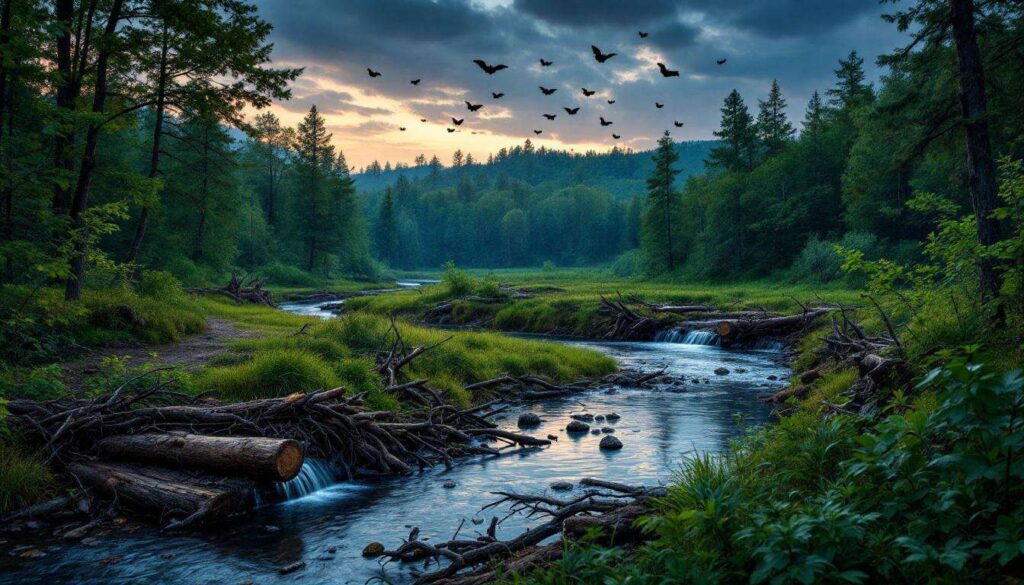
Beavers have long been recognised as ecosystem engineers, but recent research reveals their remarkable influence extends far beyond their immediate surroundings. These industrious rodents create complex wetland habitats that benefit numerous species, including bats and other endangered wildlife. Through their dam-building activities, beavers transform landscapes, generating diverse ecological niches that support thriving biodiversity. Understanding these interconnected relationships highlights the importance of beaver conservation in maintaining healthy ecosystems.
The role of beavers in creating natural environments
Landscape transformation through dam construction
Beavers possess an extraordinary ability to reshape entire landscapes through their construction activities. By felling trees and building dams across streams and rivers, they create extensive wetland systems that fundamentally alter the surrounding environment. These structures slow water flow, causing rivers to spread across floodplains and form shallow ponds and marshes. The resulting habitat complexity provides essential resources for countless organisms.
Wetland creation and water management
The wetlands generated by beaver activity serve multiple ecological functions. These areas act as natural water storage systems, reducing downstream flooding whilst maintaining water availability during dry periods. The standing water created behind beaver dams supports aquatic vegetation, whilst the surrounding saturated soils promote the growth of diverse plant communities. This habitat mosaic includes:
- Open water areas for aquatic species
- Shallow margins supporting amphibians and invertebrates
- Dead standing trees providing nesting sites
- Dense shrub growth offering shelter and food sources
These transformed landscapes become hotspots of biological activity, attracting species that would otherwise struggle to survive in unmodified river systems. The environmental changes initiated by beavers set the stage for broader ecosystem benefits.
How dams influence biodiversity
Increased species richness around beaver ponds
Scientific studies demonstrate that beaver-modified habitats support significantly higher biodiversity than comparable unmodified areas. The structural complexity created by dams provides numerous microhabitats, each supporting distinct communities of organisms. Aquatic invertebrates flourish in the varied water depths and flow conditions, whilst amphibians benefit from breeding sites protected from predators.
Nutrient cycling and productivity
Beaver ponds function as nutrient traps, capturing sediments and organic matter that would otherwise flow downstream. This accumulation creates highly productive environments where decomposition processes release nutrients, supporting abundant plant growth. The increased primary productivity cascades through food webs, sustaining larger populations of herbivores, predators, and decomposers.
| Ecosystem parameter | Before beaver activity | After beaver colonisation |
|---|---|---|
| Plant species diversity | 12-15 species | 35-45 species |
| Invertebrate abundance | Moderate | High (3-5× increase) |
| Bird species observed | 8-12 species | 25-40 species |
These biodiversity gains extend to aerial insectivores, creating the foundation for unexpected ecological connections.
The bat habitat: an ecosystem supported by beavers
Insect abundance attracts bat populations
The wetlands created by beavers generate exceptionally high densities of flying insects, particularly aquatic species such as midges, caddisflies, and mayflies. These insects emerge from beaver ponds in vast numbers, providing abundant food resources for insectivorous bats. Research indicates that bat foraging activity increases substantially around beaver-modified landscapes, with some species showing preference for hunting over beaver ponds.
Roosting opportunities in beaver-created deadwood
Beyond providing food, beaver activity creates essential roosting habitat for bats. When beavers flood areas, they kill standing trees, producing extensive deadwood that remains upright for years. These dead trees develop cracks, loose bark, and cavities that serve as ideal bat roosts. Species requiring tree roosts benefit particularly from this habitat creation, with several bat populations showing increased abundance in beaver-influenced areas.
Landscape connectivity for bat movement
Beaver wetlands function as ecological stepping stones across fragmented landscapes. Bats use these areas as navigational landmarks and foraging stops during migration or nightly movements. The linear nature of river systems enhanced by beaver dams creates corridors that facilitate bat dispersal, connecting otherwise isolated populations and maintaining genetic diversity.
The benefits beavers provide to bats represent just one aspect of their broader conservation value.
Beavers’ contribution to the preservation of endangered species
Supporting threatened amphibian populations
Numerous endangered amphibian species depend on the breeding habitat created by beaver ponds. The stable water levels and predator-free zones these environments provide prove crucial for species struggling with habitat loss elsewhere. Great crested newts, natterjack toads, and various frog species have shown population recoveries in areas where beaver reintroduction has occurred.
Rare plant communities in beaver wetlands
The unique hydrological conditions created by beaver dams support specialist plant communities that have declined dramatically in managed landscapes. Fen and marsh vegetation, including several nationally scarce species, colonises beaver wetlands. These plants, in turn, support specialised invertebrates, creating complete ecological communities of conservation concern.
Fish species benefiting from habitat complexity
Contrary to historical assumptions, beaver dams can benefit fish populations, including endangered species. The habitat diversity created by dams provides:
- Refuge areas during drought conditions
- Spawning grounds with appropriate substrate
- Nursery habitat for juvenile fish
- Temperature regulation through shading and deep pools
These multi-species benefits demonstrate how beaver conservation serves broader ecological objectives.
Positive interactions between beavers and other species
Waterfowl and wading birds
Beaver ponds attract diverse bird communities, particularly waterfowl and wading species. Ducks, geese, and swans utilise these areas for feeding, nesting, and rearing young. Herons, egrets, and kingfishers exploit the concentrated fish populations, whilst the shallow margins provide feeding grounds for waders.
Mammalian diversity increases
Beyond bats, numerous mammal species benefit from beaver-modified habitats. Otters establish territories around beaver ponds, utilising the abundant fish resources. Water voles find refuge in the complex bank structures, whilst deer and other herbivores feed on the lush vegetation. This cascading effect demonstrates how one species can enhance conditions for entire ecological communities.
Recognising these ecological benefits has informed conservation strategies worldwide.
Protection measures and environmental initiatives
Beaver reintroduction programmes
Numerous countries have implemented beaver reintroduction schemes after recognising their ecological value. These programmes carefully select suitable sites, monitor population establishment, and assess ecosystem responses. Success stories from Scotland, England, and various European nations demonstrate that strategic beaver restoration can achieve multiple conservation objectives simultaneously.
Managing human-beaver coexistence
Effective beaver conservation requires addressing potential conflicts with human land use. Modern approaches include:
- Flow devices preventing unwanted flooding
- Tree protection measures in sensitive areas
- Stakeholder engagement and education programmes
- Compensation schemes for agricultural impacts
Legal protection and habitat conservation
Many jurisdictions now provide legal protection for beavers, recognising their status as keystone species. These protections often extend to their habitats, ensuring that beaver-created wetlands receive conservation designation. Such measures guarantee long-term benefits for the associated biodiversity, including endangered species dependent on these ecosystems.
The evidence overwhelmingly supports beaver conservation as a cost-effective approach to landscape-scale habitat restoration. Their activities create complex ecosystems that support remarkable biodiversity, from bats exploiting insect abundance to endangered amphibians finding refuge in stable wetlands. As understanding of these ecological relationships deepens, beavers increasingly feature in conservation strategies aimed at reversing biodiversity decline. Protecting and restoring beaver populations delivers multiple environmental benefits, demonstrating how single-species conservation can generate far-reaching positive outcomes across entire ecological communities.