



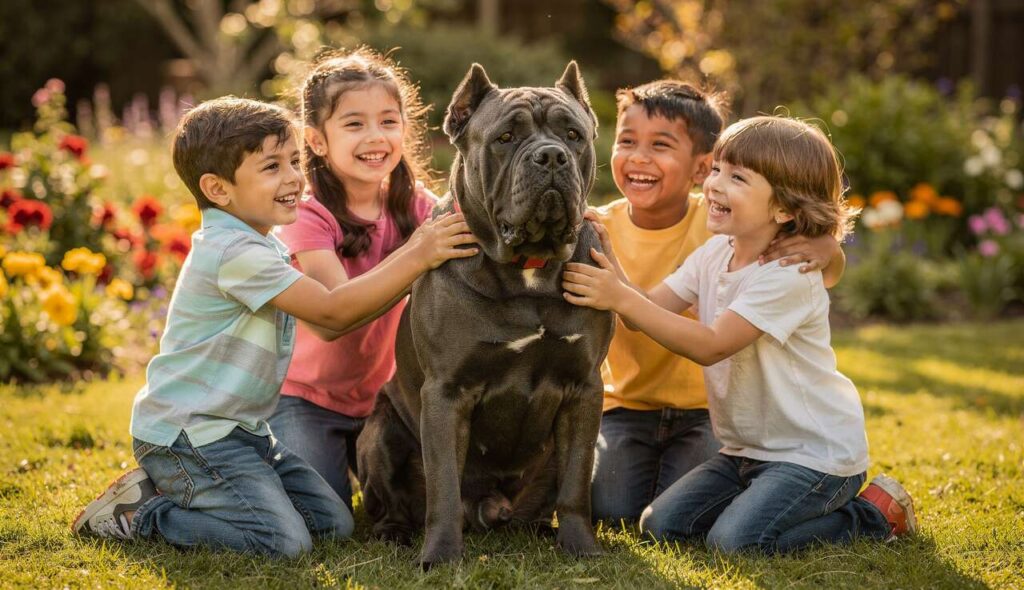
The Cane Corso, a magnificent Italian mastiff breed, has captured the attention of families worldwide with its imposing stature and loyal nature. This ancient guardian dog, originally bred for protection and hunting, presents both remarkable qualities and significant responsibilities for prospective owners. For families with young children, the decision to welcome a Cane Corso into the household requires careful consideration of the breed’s characteristics, temperament, and specific needs. Understanding whether this powerful canine companion can thrive in a family environment with little ones is essential before making such an important commitment.
History and characteristics of the Cane Corso
Origins and historical purpose
The Cane Corso descends from ancient Roman war dogs known as canis pugnax, which accompanied legions into battle. Following the fall of the Roman Empire, these dogs transitioned to rural working roles in southern Italy, where they guarded property, drove livestock, and hunted wild boar. The breed’s name derives from the Latin “cohors”, meaning guardian or protector, reflecting its primary function throughout history.
Physical attributes and appearance
This large, muscular breed exhibits distinctive physical characteristics that command respect:
- Males typically weigh between 45 and 50 kilograms, whilst females range from 40 to 45 kilograms
- Height at the withers measures 64 to 68 centimetres for males and 60 to 64 centimetres for females
- Short, dense coat appearing in black, grey, fawn, or red colourings
- Broad, square head with a pronounced stop and powerful jaw structure
- Athletic build designed for strength, agility, and endurance
The Cane Corso’s imposing presence serves as a natural deterrent, making it an effective guardian without necessarily displaying aggression. These physical traits, combined with the breed’s historical background, establish a foundation for understanding how the Cane Corso might interact within a family setting.
The Cane Corso and its temperament with children
Natural protective instincts
The Cane Corso possesses deeply ingrained protective tendencies towards its family members, including children. When properly socialised, these dogs often form extraordinarily strong bonds with youngsters in their household, viewing them as part of their pack to defend and cherish. This protective nature can manifest as gentle watchfulness, with the dog positioning itself between children and perceived threats.
Temperamental considerations
Whilst individual dogs vary, the breed generally displays certain temperamental traits relevant to families:
| Trait | Description | Impact on families |
|---|---|---|
| Intelligence | Highly trainable and quick to learn | Responds well to consistent guidance |
| Loyalty | Devoted to family members | Forms strong attachments to children |
| Calmness | Generally composed indoors | Can coexist peacefully in home environments |
| Assertiveness | Confident and self-assured | Requires experienced handling |
The breed’s stable temperament when properly raised makes it capable of distinguishing between genuine threats and normal childhood activities. However, their size and strength necessitate careful management around young children who may inadvertently provoke or startle the dog. Understanding these temperamental nuances leads naturally to the critical role that proper socialisation and training play in developing a family-friendly Cane Corso.
Importance of socialisation and training
Early socialisation requirements
Introducing a Cane Corso puppy to diverse experiences during the critical socialisation period between 3 and 14 weeks of age proves essential for developing appropriate behaviour around children. This exposure should include:
- Controlled interactions with children of various ages
- Different household environments and noise levels
- Various textures, sounds, and movements associated with family life
- Positive experiences with toys, games, and typical childhood activities
- Supervised encounters with other pets and animals
Training fundamentals for family life
Consistent, positive reinforcement training establishes the foundation for safe coexistence with young children. Essential commands include reliable recall, controlled greetings, gentle mouth behaviour, and appropriate play boundaries. Professional guidance from experienced trainers familiar with guardian breeds often proves invaluable for families new to the Cane Corso.
Training must address the breed’s natural assertiveness whilst preserving its protective instincts in appropriate contexts. Children should also receive instruction on respectful dog interaction, including recognising stress signals and maintaining appropriate boundaries. These educational efforts create a harmonious household where both dog and children understand expectations, which connects directly to meeting the breed’s substantial exercise requirements.
The Cane Corso’s exercise needs for a family
Daily activity requirements
The Cane Corso demands substantial physical exercise to maintain physical health and mental equilibrium. Families must commit to providing:
- Minimum 60 to 90 minutes of daily exercise
- Structured walks providing both physical exertion and mental stimulation
- Secure areas for off-lead running and play
- Age-appropriate activities that protect developing joints in puppies
- Varied routines incorporating training, exploration, and socialisation
Mental stimulation and engagement
Beyond physical exercise, this intelligent breed requires mental challenges to prevent boredom and potential behavioural issues. Interactive toys, puzzle feeders, scent work, and training sessions provide cognitive engagement that complements physical activity. Families with active lifestyles who enjoy outdoor pursuits often find the Cane Corso an enthusiastic companion for hiking, jogging, or supervised play in secure environments.
Meeting these exercise needs requires significant time commitment from families, particularly those with young children who themselves demand attention and supervision. Balancing these competing demands whilst ensuring the dog receives adequate stimulation forms part of the broader safety considerations families must address.
Safety and supervision around young children
Size and strength considerations
The Cane Corso’s substantial size and power create inherent risks in households with young children, regardless of temperament. An enthusiastic greeting or playful movement can easily knock over small children, whilst the dog’s strength makes physical control challenging during unexpected situations. These realities necessitate constant vigilance and appropriate management strategies.
Supervision protocols
Responsible ownership demands implementing strict safety measures:
- Never leaving young children unsupervised with the dog, regardless of trust level
- Teaching children appropriate interaction methods and respecting the dog’s space
- Providing the dog with a safe retreat area away from children’s activities
- Monitoring play sessions for signs of over-excitement or stress
- Establishing household rules that both children and dog understand
- Recognising and responding to canine body language indicating discomfort
Creating physical boundaries through baby gates or designated areas allows management of interactions whilst maintaining household harmony. These safety protocols, whilst demanding, enable families to enjoy the benefits of Cane Corso ownership whilst minimising risks, leading to the broader considerations families must evaluate before adoption.
Adopting a Cane Corso: considerations for a family
Assessing family readiness
Families contemplating Cane Corso ownership must honestly evaluate their capacity to meet the breed’s demands. Critical questions include whether family members possess the physical strength to control the dog, the time to provide adequate exercise and training, the financial resources for food and veterinary care, and the experience to handle a powerful guardian breed. Homes with very young children may benefit from waiting until children reach school age before introducing such a substantial dog.
Selecting the right individual dog
Not all Cane Corsos suit family life equally well. Working with reputable breeders who prioritise temperament testing and socialisation increases the likelihood of obtaining a dog predisposed to family compatibility. Adult dogs with demonstrated child-friendly behaviour may prove safer choices than puppies for families lacking experience with the breed. Thorough evaluation of individual temperament, rather than relying solely on breed generalisations, proves essential for successful placement.
The decision to welcome a Cane Corso into a family with young children represents a significant commitment requiring careful preparation, ongoing education, and unwavering dedication to safety and training. Families who approach this responsibility with realistic expectations and proper support can develop rewarding relationships with these magnificent dogs. However, those uncertain about meeting the breed’s substantial needs should consider alternative breeds better suited to households with young children. The Cane Corso can indeed thrive in family environments, but only when matched with owners possessing the knowledge, resources, and commitment to provide appropriate guidance and care throughout the dog’s life.