



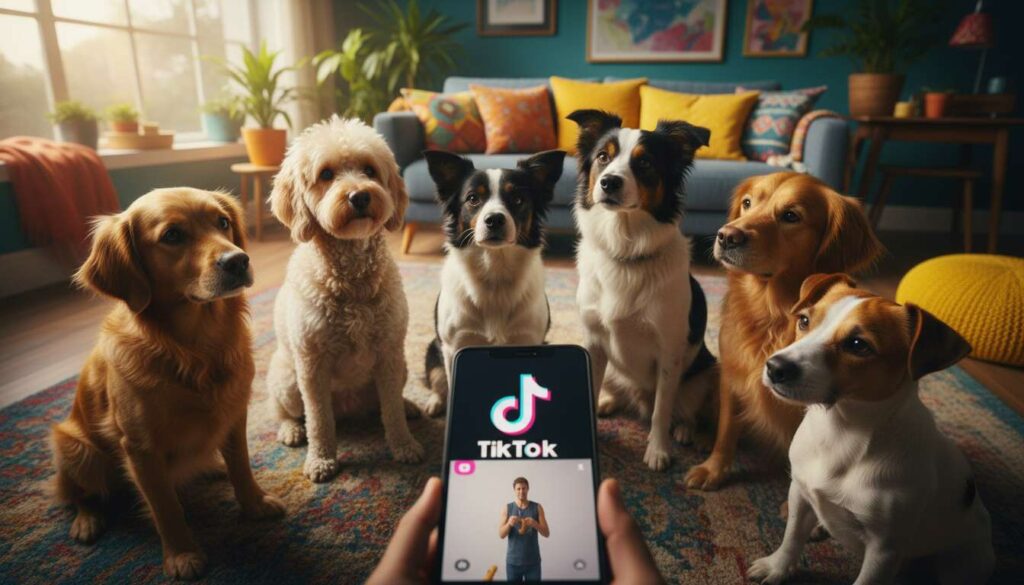
Social media platforms have transformed how we share content about our pets, with millions of dog owners posting videos that claim to reveal their companions’ cognitive abilities. From puzzle-solving challenges to obedience tests, these viral clips promise quick insights into canine intelligence. Yet as these trends proliferate across platforms like TikTok, questions arise about their scientific validity and whether a brief video can truly measure something as complex as a dog’s mental capacity.
What is canine intelligence ?
The three dimensions of dog cognition
Understanding canine intelligence requires recognising that dogs possess multiple forms of cognitive ability. Research pioneered by psychologist Stanley Coren identifies three distinct types: instinctive intelligence, which encompasses breed-specific behaviours developed through selective breeding; adaptive intelligence, reflecting a dog’s problem-solving capabilities and ability to learn from environmental experiences; and working intelligence, which measures how quickly dogs learn commands and respond to training.
- Instinctive intelligence varies dramatically between breeds, with herding dogs naturally understanding flock management whilst retrievers instinctively carry objects
- Adaptive intelligence manifests when dogs navigate novel situations or devise creative solutions to challenges
- Working intelligence determines training ease and command retention
Breed variations and individual differences
Whilst breed characteristics provide general guidelines, individual variation remains substantial within any breed population. A Border Collie may rank highly in working intelligence studies, yet individual dogs within this breed demonstrate vastly different cognitive profiles. Factors including early socialisation, environmental enrichment, training history, and genetic variation all contribute to cognitive development. Additionally, motivation plays a crucial role: a dog may possess considerable intelligence but show little interest in performing tasks that humans value.
| Intelligence Type | Measurement Focus | Example Breeds |
|---|---|---|
| Instinctive | Breed-specific tasks | Border Collies (herding), Bloodhounds (tracking) |
| Adaptive | Problem-solving ability | Varies by individual |
| Working | Training responsiveness | German Shepherds, Poodles |
This multifaceted understanding of canine cognition sets the foundation for evaluating whether simplified social media tests can capture such complexity.
TikTok trends and their dog IQ tests
Popular viral challenges
The blanket challenge represents one of TikTok’s most widespread canine intelligence tests, where owners drape a blanket over their dog’s head and time how quickly the animal removes it. Another common trend involves the cup test, where treats are hidden beneath cups and owners observe whether their dogs can track which container holds the reward. The barrier test places a transparent obstacle between dog and treat, measuring whether the animal attempts to go through the barrier or navigates around it.
- The “find the treat” challenge tests scent discrimination and memory
- Name recognition tests evaluate vocabulary comprehension
- The “human pointing” test assesses social cognition
- Puzzle toy videos demonstrate problem-solving approaches
The appeal of quick assessments
These tests gain traction partly because they offer immediate gratification and shareable content. Dog owners naturally want to believe their companions possess exceptional intelligence, and these brief challenges provide seemingly objective validation. The entertainment value combined with competitive elements—comparing results with other users—drives engagement. However, the simplicity that makes these tests appealing also raises questions about their reliability and whether they measure what they claim to assess.
As these viral trends continue gaining popularity, examining their scientific foundations becomes increasingly important.
Can TikTok tests be trusted ?
Lack of standardisation
A fundamental problem with social media intelligence tests lies in their complete absence of standardisation. Unlike validated psychological assessments, these challenges lack controlled conditions, consistent administration protocols, or established scoring criteria. Variables including environmental distractions, owner behaviour, prior exposure to similar tasks, and the dog’s current motivational state all influence outcomes yet remain uncontrolled. One owner might conduct the blanket test in a familiar, quiet room whilst another attempts it in a stimulating environment with multiple distractions.
Measurement validity concerns
Even when administered consistently, these tests may not measure genuine intelligence. The blanket challenge, for instance, might reflect temperament, anxiety levels, or previous experience with similar situations rather than cognitive ability. A dog who remains calm under the blanket isn’t necessarily less intelligent than one who removes it quickly; the former might simply possess a calmer disposition or greater trust in their owner. Similarly, failure on the cup test could indicate poor eyesight, lack of food motivation, or disinterest rather than cognitive deficiency.
| Test Type | Claimed Measure | Alternative Explanations |
|---|---|---|
| Blanket Challenge | Problem-solving speed | Anxiety levels, prior experience, temperament |
| Cup Test | Memory and tracking | Vision quality, motivation, attention span |
| Barrier Test | Spatial reasoning | Impulsivity, frustration tolerance, training history |
The role of editing and selection bias
Social media content undergoes significant curation before reaching viewers. Owners typically film multiple attempts, selecting only the most entertaining or flattering results. This selection bias creates misleading impressions about typical canine performance. Additionally, video editing can compress timeframes, omit contextual information, or emphasise particular reactions, further distorting the apparent results of these informal assessments.
These validity concerns highlight why professional approaches to canine cognition differ substantially from viral trends.
The limits of intelligence assessments on social media
Context and environmental factors
Authentic intelligence assessment requires controlled environments that minimise confounding variables. Social media tests typically occur in homes with countless uncontrolled factors: other pets, family members, ambient noise, time of day, and the dog’s recent activities all influence performance. A dog tested immediately after exercise might respond differently than one tested whilst hungry or tired. These contextual variables make comparing results between different dogs essentially meaningless.
The anthropomorphism trap
Social media encourages anthropomorphic interpretation of canine behaviour, attributing human-like reasoning to actions that may have simpler explanations. When a dog appears to “fail” a test, owners might interpret this as low intelligence rather than recognising that dogs perceive and interact with the world differently than humans. A dog’s priorities—scent investigation, social interaction, play—often differ from the goals humans set in these challenges. Judging canine intelligence through an exclusively human lens fundamentally misunderstands species-specific cognition.
- Dogs rely heavily on olfactory information that videos cannot capture
- Social cues from owners inadvertently influence dog behaviour
- Breed-specific traits may appear as intelligence differences
- Individual personality affects test performance independently of cognitive ability
Ethical considerations
Some viral challenges potentially cause stress or confusion for participating dogs. Repeatedly testing animals, creating frustrating situations for content, or comparing dogs publicly may impact animal welfare. Additionally, labelling dogs as “smart” or “dumb” based on arbitrary tests can influence how owners interact with their pets, potentially reducing enrichment opportunities for animals deemed less intelligent or creating unrealistic expectations for those labelled as highly intelligent.
Recognising these limitations naturally leads to exploring more rigorous assessment methods.
Alternatives for measuring canine intelligence
Scientifically validated assessments
Researchers have developed standardised protocols for evaluating canine cognition that address the shortcomings of informal tests. The Dog Intelligence Test, created by cognitive scientists, includes multiple subtests examining different cognitive domains under controlled conditions. These assessments measure social cognition, problem-solving, memory, and inhibitory control through carefully designed tasks with established reliability and validity. Professional evaluation typically occurs in neutral environments with trained administrators who follow strict protocols.
Working with canine behaviourists
Certified animal behaviourists and veterinary behaviourists possess expertise in assessing canine cognition within broader behavioural contexts. These professionals conduct comprehensive evaluations considering the dog’s history, breed characteristics, health status, and environmental factors. Rather than assigning a single intelligence score, they provide nuanced profiles identifying cognitive strengths and areas requiring support or training.
- Behaviourists assess learning speed through structured training sessions
- Problem-solving abilities are evaluated using progressive difficulty tasks
- Social intelligence is measured through interaction observations
- Memory tests occur over multiple sessions with controlled variables
Citizen science projects
Several research initiatives invite dog owners to participate in cognitive studies through structured protocols. Projects like Dognition offer scientifically designed games that owners administer at home whilst following detailed instructions. These programmes collect data systematically, allowing researchers to analyse canine cognition across large populations whilst providing owners with meaningful insights about their individual dogs. Unlike viral challenges, these projects maintain scientific rigour whilst remaining accessible to non-specialists.
| Assessment Method | Advantages | Accessibility |
|---|---|---|
| Professional evaluation | Standardised, comprehensive, expert interpretation | Requires specialist access |
| Citizen science | Scientifically valid, convenient, contributes to research | Moderate—requires following protocols |
| Behavioural consultation | Individualised, contextualised, actionable insights | Professional fees apply |
As understanding of canine cognition advances, assessment methods continue evolving.
The future of intelligence tests for dogs
Technological innovations
Emerging technologies promise more sophisticated approaches to canine cognitive assessment. Researchers are developing digital platforms that administer standardised tests through interactive touchscreens, automatically recording response times and accuracy whilst minimising human influence. Wearable sensors may eventually track physiological indicators during cognitive tasks, providing insights into arousal, attention, and emotional states that influence performance. These innovations could make rigorous assessment more accessible whilst maintaining scientific standards.
Broader understanding of intelligence
Future research increasingly recognises that intelligence manifests diversely across individuals and species. Rather than ranking dogs on a single scale, emerging frameworks acknowledge multiple cognitive domains where different dogs excel. This approach values the scent-tracking prowess of a Beagle as equally valid as the obedience aptitude of a German Shepherd, recognising that cognitive diversity reflects evolutionary adaptations rather than superior or inferior intelligence.
Responsible use of social media
Social platforms needn’t abandon canine content but could promote more responsible approaches. Educational content explaining cognitive science, celebrating diverse abilities, and discouraging simplistic comparisons would benefit both dogs and owners. Influencers and content creators have opportunities to partner with researchers, sharing scientifically informed perspectives whilst maintaining entertainment value. As public understanding of canine cognition deepens, social media trends may evolve beyond superficial tests toward genuine appreciation of canine mental complexity.
Whilst TikTok challenges offer entertainment and foster engagement with our canine companions, they cannot replace scientifically validated assessments of intelligence. The viral tests lack standardisation, fail to control confounding variables, and often measure factors unrelated to cognitive ability. True canine intelligence encompasses multiple dimensions that brief social media clips cannot capture. For owners genuinely interested in understanding their dogs’ cognitive abilities, professional evaluations, citizen science projects, and consultations with certified behaviourists provide meaningful alternatives. As technology advances and scientific understanding deepens, future assessment methods will likely become more accessible without sacrificing rigour. Meanwhile, appreciating our dogs’ unique cognitive profiles—regardless of their performance on arbitrary internet challenges—remains the most valuable approach to celebrating canine intelligence in all its diverse forms.