


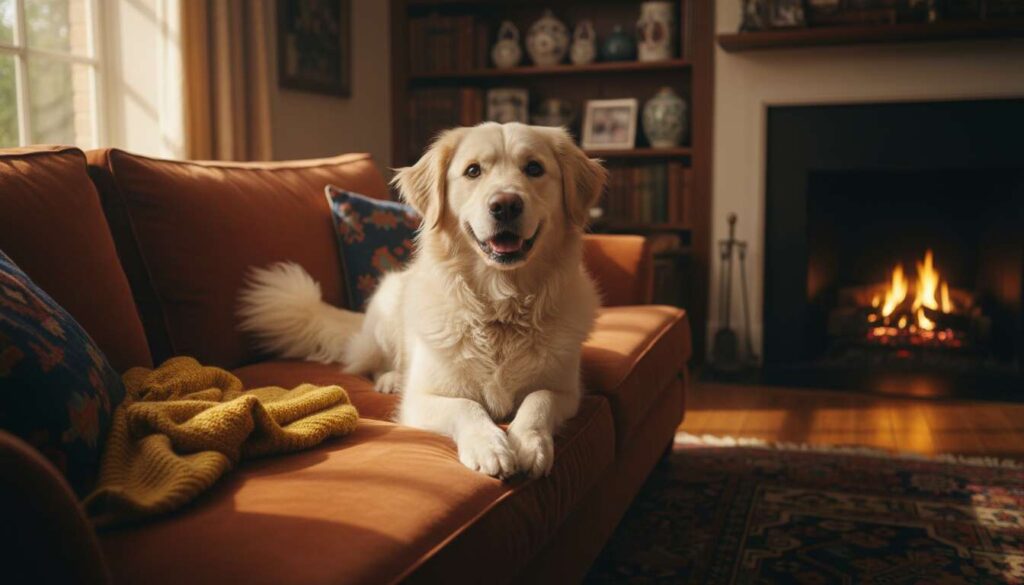
When you rise from your favourite armchair or leave the sofa to fetch a cup of tea, your dog immediately claims the warm spot you’ve just vacated. This common canine behaviour puzzles many owners, who wonder whether their pet is being cheeky, dominant, or simply opportunistic. The reality behind this habit reveals fascinating insights into canine psychology, the bond between dogs and their humans, and the instinctive drives that govern our four-legged companions’ actions. Understanding why dogs exhibit this behaviour can strengthen the relationship you share with your pet and help you respond appropriately to what might initially seem like territorial conduct.
Understanding the dog’s natural behaviour
Pack mentality and social structures
Dogs are pack animals by nature, descended from wolves that lived in highly organised social groups. Within these structures, certain behaviours developed to maintain harmony and establish hierarchy. When your dog takes your spot, this action connects to ancestral instincts that governed pack dynamics for thousands of years. However, modern interpretations of dominance theory have evolved significantly, and experts now recognise that resource acquisition doesn’t always signal a power struggle.
Contemporary animal behaviourists emphasise that dogs view their human families as social units rather than strict hierarchies. The act of claiming a recently vacated spot often reflects:
- Comfort-seeking behaviour rooted in survival instincts
- Social bonding through scent association
- Temperature regulation strategies
- Opportunistic resource management
Scent-driven motivations
A dog’s sense of smell is 10,000 to 100,000 times more acute than that of humans, making scent a primary means of experiencing the world. When you leave your seat, you deposit your unique scent on the fabric, creating an olfactory signature that your dog finds deeply comforting. This scent-driven behaviour isn’t about claiming territory but rather about surrounding themselves with the familiar smell of their beloved owner. The warmth you leave behind carries your scent more intensely, making the spot particularly attractive to your canine companion.
These instinctive behaviours form the foundation for understanding more complex emotional motivations that drive your dog’s actions.
The affectionate reasons behind this gesture
Bonding through proximity
The most heartwarming explanation for this behaviour centres on affection and attachment. When your dog immediately occupies your spot, they’re seeking the closest possible connection to you, even in your temporary absence. This action demonstrates the profound bond between canine and human, reflecting your pet’s desire to maintain contact with you through the sensory experience of your lingering presence.
| Behaviour | Affection Indicator | Frequency |
|---|---|---|
| Taking your spot immediately | High attachment | Very common |
| Circling before settling | Comfort-seeking | Common |
| Bringing toys to your spot | Extreme bonding | Less common |
Separation anxiety indicators
Whilst spot-stealing often indicates healthy attachment, excessive versions of this behaviour might signal separation anxiety. Dogs experiencing anxiety may frantically claim your spot the moment you stand, displaying distress when you leave the room. They might also exhibit additional symptoms such as:
- Whining or barking when you move away
- Following you from room to room constantly
- Destructive behaviour when left alone
- Physical symptoms like panting or drooling
Distinguishing between affectionate behaviour and anxiety requires observing your dog’s overall demeanour and emotional state. Beyond emotional connections, practical considerations also influence this common canine habit.
Communication and the dog-owner relationship
Non-verbal signals between species
Dogs communicate primarily through body language and behaviour rather than vocalisation. Taking your spot represents a form of communication, conveying messages about your dog’s emotional state, needs, and relationship with you. This action might communicate trust, as your dog feels secure enough to occupy your space, or it might signal a desire for continued closeness even when you’re momentarily absent.
Reading your dog’s intentions
Understanding what your dog communicates through this behaviour requires contextual observation. Consider accompanying signals such as tail position, ear placement, and overall body tension. A relaxed dog settling contentedly into your warm spot differs significantly from an anxious dog frantically claiming territory. The former suggests comfortable bonding, whilst the latter might indicate insecurity requiring attention.
These communication patterns reflect the sophisticated relationship humans have developed with dogs over millennia of domestication. Physical comfort factors also play a significant role in motivating this behaviour.
Comfort and warmth as motivations
Temperature regulation needs
Dogs possess different thermoregulatory requirements than humans, and they actively seek comfortable temperatures throughout the day. Your recently vacated spot offers immediate warmth, particularly appealing during colder months or for breeds with shorter coats. This practical motivation combines with emotional factors to make your spot irresistibly attractive.
Texture and softness preferences
Beyond temperature, the physical comfort of your spot appeals to dogs. Your weight creates indentations in cushions and upholstery, forming a pre-shaped nest that requires no circling or pawing to perfect. This ready-made comfort zone saves energy whilst providing optimal cosiness. Additionally, fabrics warmed by body heat become softer and more pliable, enhancing the tactile experience for your dog.
Understanding these practical motivations helps owners respond appropriately to behaviour that stems from multiple overlapping causes.
Tips for responding to this behaviour
When to allow the behaviour
In most cases, allowing your dog to take your spot represents harmless behaviour that strengthens your bond. If your dog settles calmly, shows no signs of possessiveness, and willingly moves when asked, there’s no reason to discourage this habit. Consider it a compliment that your dog finds comfort in your presence, even your residual warmth.
Addressing problematic patterns
However, if your dog displays resource guarding by growling, snapping, or refusing to move from your spot, intervention becomes necessary. Address this through:
- Training your dog to respond to “off” or “move” commands
- Rewarding voluntary departures from furniture
- Providing equally comfortable alternative spots
- Consulting a professional behaviourist for persistent issues
Creating positive alternatives
Offer your dog their own special spaces that rival your seating in comfort and warmth. Heated pet beds, memory foam cushions, or blankets carrying your scent provide attractive alternatives. Position these near your usual spots so your dog can remain close whilst respecting boundaries.
Your dog’s habit of claiming your spot the moment you vacate it typically reflects a combination of affection, comfort-seeking, and instinctive behaviour rather than dominance or disrespect. This endearing quirk demonstrates the deep bond between you and your canine companion, showing that your dog values your presence so highly that even your lingering warmth and scent provide comfort. Whether motivated by temperature preferences, pack instincts, or pure devotion, this behaviour generally requires no correction unless accompanied by possessive aggression. Embrace this charming habit as evidence of the special relationship you share with your four-legged friend.