


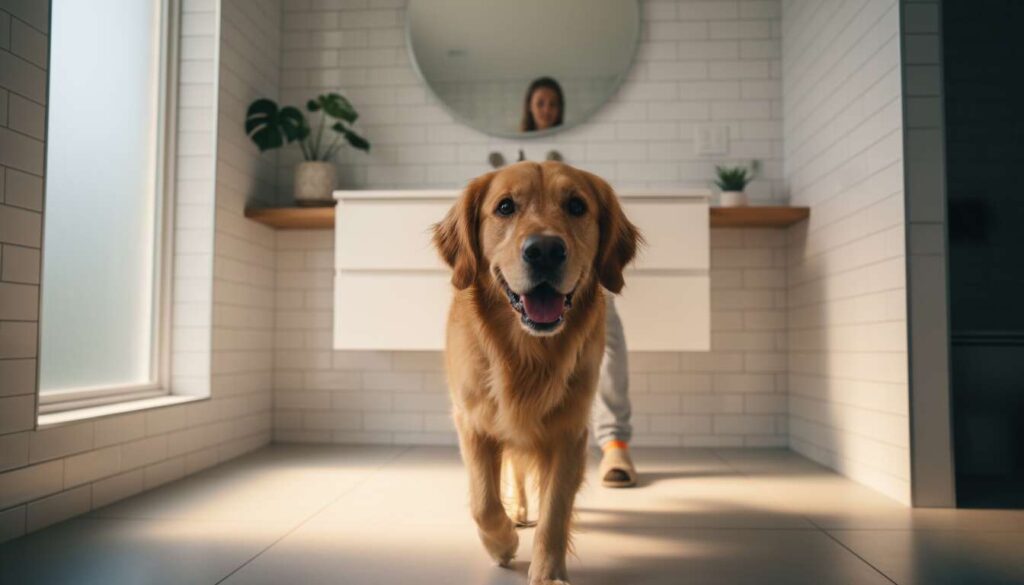
Many dog owners share the same curious experience: their faithful companion refuses to let them out of sight, shadowing their every move from room to room and even sitting patiently outside the bathroom door. This behaviour, whilst endearing to some and slightly overwhelming to others, stems from deeply rooted canine instincts and emotional bonds. Understanding why your dog follows you everywhere requires examining the complex interplay between evolutionary drives, attachment patterns, and individual personality traits that shape your pet’s behaviour.
Understanding your dog’s behaviour
The evolutionary context of following behaviour
Dogs have evolved alongside humans for thousands of years, developing behaviours that strengthen their bond with us. This constant shadowing isn’t simply about neediness; it’s a natural expression of canine social structure. Wild canids, such as wolves, maintain close proximity to their pack members for survival, and domestic dogs have retained this fundamental trait.
Behavioural scientists recognise several key motivations behind following behaviour:
- Resource anticipation: dogs learn that humans provide food, walks, and entertainment
- Social bonding: proximity strengthens emotional connections
- Learned reinforcement: previous experiences teach dogs that staying close yields positive outcomes
- Breed-specific traits: certain breeds were developed specifically to work closely with humans
Individual personality differences
Not all dogs exhibit the same level of following behaviour. Personality variations play a significant role in determining how closely your dog shadows you. Some dogs display independent temperaments, whilst others demonstrate what behaviourists call hyper-attachment. Factors influencing these differences include early socialisation experiences, breed characteristics, and individual temperament.
| Personality type | Following frequency | Typical breeds |
|---|---|---|
| Independent | Occasional | Huskies, Basenjis, Chow Chows |
| Moderately attached | Regular | Beagles, Bulldogs, Spaniels |
| Highly attached | Constant | Labradors, German Shepherds, Vizslas |
These behavioural patterns connect directly to the ancestral origins of canine social structures.
The pack instinct in dogs
Social hierarchy and belonging
Despite ongoing debate about the applicability of wolf pack dynamics to domestic dogs, the concept of social cohesion remains relevant. Your dog views you as part of their social group, and maintaining proximity to group members is instinctive. In the wild, pack members who wander off face increased vulnerability to predators and reduced access to resources.
Modern research suggests that dogs don’t necessarily see humans as “pack leaders” in the traditional sense, but rather as important social partners whose presence provides comfort and security. This perspective explains why your dog might follow you to the bathroom: they’re simply maintaining group cohesion in their own understanding.
The role of selective breeding
Human selective breeding has intensified following behaviour in many dog breeds. Working dogs, particularly herding and sporting breeds, were specifically developed to maintain close contact with handlers. These genetic predispositions manifest as:
- Heightened awareness of human movement and location
- Increased anxiety when separated from primary caregivers
- Strong desire to participate in human activities
- Enhanced responsiveness to human emotional states
These inherited traits work in tandem with the emotional connections dogs form with their owners.
The importance of the emotional bond
Attachment theory in canine relationships
The relationship between dogs and their owners mirrors attachment patterns observed in human parent-child relationships. Research demonstrates that dogs experience genuine emotional bonds with their caregivers, releasing oxytocin (the “bonding hormone”) during positive interactions. This biochemical response reinforces following behaviour, creating a self-perpetuating cycle of proximity-seeking.
Studies using functional MRI scans reveal that dogs’ brains activate reward centres when exposed to their owner’s scent, suggesting that your presence is genuinely pleasurable for your dog. This neurological evidence supports the observation that following behaviour often intensifies after positive shared experiences.
Trust and dependency
Your dog follows you because they trust you implicitly. You represent safety, food, comfort, and entertainment in their world. This dependency isn’t unhealthy in moderate amounts; it reflects successful bonding. However, the line between healthy attachment and problematic separation anxiety requires careful consideration.
Dogs with secure attachments typically:
- Follow their owners but can settle when asked
- Show pleasure at reunions without excessive distress
- Explore environments confidently when owners are present
- Tolerate brief separations without destructive behaviour
Understanding these emotional foundations helps identify when normal following behaviour crosses into territory requiring intervention.
Security and attention needs
Safety-seeking behaviour
Dogs are naturally vigilant creatures who monitor their environment for potential threats. By following you, your dog maintains awareness of your location and ensures they can quickly reach you if danger arises. This behaviour intensifies in anxious or insecure dogs who view you as their primary source of protection.
Environmental factors that increase following behaviour include:
- Unfamiliar surroundings or recent house moves
- Loud noises such as thunderstorms or fireworks
- Presence of unfamiliar people or animals
- Changes in household routine or family composition
Attention-seeking and learned behaviour
Sometimes following behaviour stems from operant conditioning: your dog has learned that shadowing you leads to positive outcomes. If following you to the kitchen results in treats, or trailing you to the sofa earns petting, your dog develops an association between proximity and rewards. This isn’t manipulation; it’s simply intelligent learning.
Dogs are also remarkably perceptive of pre-activity cues. They learn to recognise signals that indicate interesting events: picking up keys means a walk, opening the treat cupboard means snacks, putting on shoes means outdoor adventures. Following ensures they don’t miss these opportunities.
Recognising when these natural behaviours become excessive helps maintain a balanced relationship with your dog.
When behaviour becomes problematic
Identifying separation anxiety
Whilst following behaviour is typically benign, it can indicate separation anxiety when accompanied by distress signals. True separation anxiety is a serious condition requiring professional intervention. Warning signs include:
- Destructive behaviour when left alone
- Excessive vocalisation (barking, howling, whining)
- House soiling despite being housetrained
- Attempts to escape confinement
- Excessive drooling or panting when you prepare to leave
- Inability to settle even when you’re home
Impact on quality of life
Constant following can become disruptive for both dog and owner. Owners may feel suffocated by the lack of privacy, whilst dogs experience chronic stress from their inability to relax independently. This situation affects household dynamics and can strain the human-animal bond that both parties value.
| Behaviour severity | Characteristics | Action required |
|---|---|---|
| Normal | Follows occasionally, settles easily | None |
| Moderate | Follows constantly but remains calm | Independence training |
| Severe | Distressed when separated, destructive | Professional consultation |
Fortunately, practical strategies can help dogs develop healthier independence whilst maintaining strong bonds.
Encouraging independence in your dog
Gradual desensitisation techniques
Teaching your dog to feel comfortable alone requires patience and systematic training. Begin with brief separations whilst you remain home, gradually increasing duration as your dog’s confidence grows. Place your dog in a separate room with an engaging activity, such as a food-stuffed toy, and return before they become anxious.
Key principles for successful independence training:
- Start with separations lasting just seconds
- Reward calm behaviour, not excited greetings
- Avoid dramatic departures or arrivals
- Provide mental stimulation through puzzle toys
- Establish a consistent routine to reduce uncertainty
- Create positive associations with alone time
Environmental management strategies
Modifying your home environment can support independent behaviour. Designate a comfortable space where your dog can relax with visual barriers that gently discourage following. Baby gates work excellently for this purpose, allowing your dog to see you’re nearby whilst physically preventing shadowing.
Consider implementing:
- Multiple comfortable resting areas throughout your home
- Background noise (radio or television) to mask your movements
- Scheduled alone time during which you’re home but unavailable
- Regular exercise to reduce excess energy and anxiety
When to seek professional help
If following behaviour persists despite consistent training, or if your dog shows signs of genuine distress, consult a qualified animal behaviourist or veterinary behaviourist. They can assess whether underlying anxiety disorders require intervention and develop tailored behaviour modification programmes. Some cases benefit from temporary pharmaceutical support alongside behaviour therapy.
Your dog’s constant companionship reflects the deep bond you share, rooted in evolutionary history and emotional attachment. Whilst this behaviour is generally harmless, maintaining balance ensures both you and your dog enjoy a healthy, fulfilling relationship built on security rather than anxiety.