

The miniature dachshund combines the charm of a compact companion with the tenacity of a born hunter. This diminutive yet spirited breed has captured hearts worldwide with its distinctive elongated body, short legs, and bold personality. Originally bred in Germany to pursue small game through underground burrows, the miniature dachshund retains all the hunting instincts of its standard-sized counterpart whilst fitting perfectly into modern family life. Whether you’re considering adding one to your household or simply curious about this remarkable breed, understanding its unique characteristics, needs, and temperament is essential for appreciating what makes these little dogs so special.
Origins and history of the miniature dachshund
German hunting heritage
The miniature dachshund’s roots trace back to 15th-century Germany, where breeders developed the standard dachshund to hunt badgers. The name itself derives from the German words “dachs” (badger) and “hund” (dog). As hunting practices evolved, breeders recognised the need for an even smaller variant capable of pursuing rabbits and other diminutive prey through narrow tunnels and dense undergrowth.
Development of the miniature variety
The miniature dachshund emerged in the late 19th century through selective breeding programmes. German hunters required dogs that could:
- Navigate tighter burrows than standard dachshunds
- Maintain the breed’s hunting prowess and courage
- Possess sufficient stamina for extended hunts
- Retain the distinctive physical characteristics of the breed
Breeders achieved this by crossing the smallest standard dachshunds, occasionally introducing toy terrier and pinscher bloodlines to reduce size whilst preserving temperament. By the early 20th century, the miniature dachshund had become established as a distinct variety, recognised by kennel clubs across Europe.
Transition to companion status
Whilst originally bred for hunting, the miniature dachshund’s endearing personality and manageable size quickly made it popular as a companion animal. The breed gained international recognition, spreading throughout Europe and America, where it became particularly fashionable during the Victorian era. This historical foundation explains why these dogs retain such strong hunting instincts despite their current role as beloved family pets.
Physical characteristics of the miniature dachshund
Size and weight specifications
The miniature dachshund is defined by specific measurements that distinguish it from standard and rabbit varieties. According to breed standards, these dogs should weigh between 4 and 5 kilograms when fully grown, with a chest circumference of 30 to 35 centimetres measured at 15 months of age.
| Characteristic | Measurement |
|---|---|
| Weight | 4-5 kg |
| Chest circumference | 30-35 cm |
| Height at withers | 13-18 cm |
| Body length | Approximately twice the height |
Coat varieties and colours
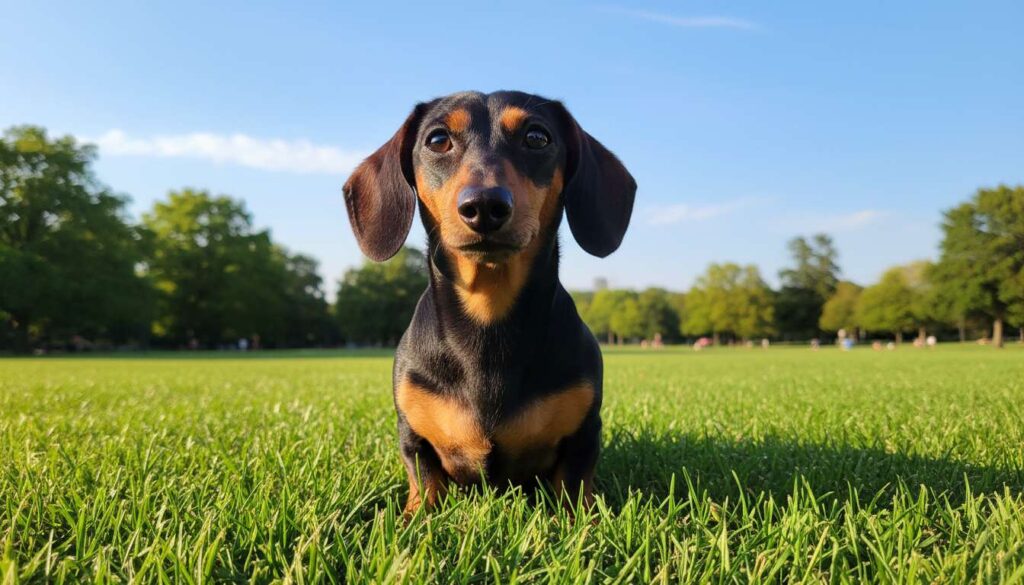
Miniature dachshunds come in three distinct coat types, each requiring different grooming approaches. The smooth-haired variety features short, glossy fur lying close to the body. The long-haired type displays flowing, silky coats with feathering on the ears, legs, and tail. Wire-haired miniature dachshunds possess rough, dense outer coats with softer undercoats and distinctive facial furnishings.
Colour variations include:
- Solid colours: red, cream, black
- Two-colour combinations: black and tan, chocolate and tan
- Dapple patterns: merle-like markings over base colours
- Brindle: striped patterns
- Piebald: large white patches with coloured markings
Distinctive body structure
The breed’s most recognisable feature is its elongated body supported by short, muscular legs. This unique conformation, whilst charming, served a practical purpose for underground hunting. The deep chest provides ample lung capacity, whilst the paddle-shaped front paws are ideal for digging. The long, tapered muzzle houses powerful jaws with a scissor bite, and the almond-shaped eyes convey an alert, intelligent expression. Understanding these physical traits helps explain both the breed’s capabilities and its specific care requirements.
Personality and behaviour of the miniature dachshund
Temperament fundamentals
Miniature dachshunds possess outsized personalities that belie their small stature. These dogs exhibit remarkable confidence, often displaying a fearlessness that can border on recklessness. Their independent thinking stems from centuries of breeding for autonomous decision-making whilst hunting underground, where they couldn’t rely on handler guidance.
Social characteristics
Despite their independent streak, miniature dachshunds form intensely loyal bonds with their families. They typically select one or two favourite people, though they remain affectionate with all household members. Key behavioural traits include:
- Strong attachment to owners, sometimes leading to separation anxiety
- Wariness of strangers requiring proper socialisation
- Variable compatibility with other dogs, particularly larger breeds
- High prey drive towards small animals
- Protective nature resulting in alert barking
Intelligence and stubbornness
The miniature dachshund’s intelligence is undeniable, but it manifests alongside a determined stubbornness. These dogs understand commands perfectly well but may choose to ignore them if they perceive something more interesting. This selective obedience reflects their breeding for independent hunting rather than blind obedience. Owners must employ patience, consistency, and positive reinforcement rather than harsh corrections, which typically prove counterproductive with this sensitive yet strong-willed breed. These behavioural tendencies directly influence how owners should approach training and exercise routines.
Exercise and training needs
Daily exercise requirements
Miniature dachshunds require moderate daily exercise despite their small size. Two walks of 20 to 30 minutes each typically suffice, supplemented with play sessions. However, their exercise routine must account for their vulnerable spinal structure. Activities to incorporate include:
- Leashed walks on flat surfaces
- Gentle indoor play with appropriate toys
- Mental stimulation through puzzle feeders
- Supervised garden exploration
Activities to avoid include jumping from heights, navigating stairs frequently, and rough play that could injure their backs. Using ramps for furniture access and supporting their spine when lifting prevents injury.
Training approaches
Training a miniature dachshund demands patience and creativity. Their intelligence means they learn quickly, but their independent nature requires motivation. Effective training strategies include:
| Training aspect | Recommended approach |
|---|---|
| Motivation | Food rewards and enthusiastic praise |
| Session length | Short, frequent sessions (5-10 minutes) |
| Consistency | Same commands and rules from all family members |
| Socialisation | Early, positive exposure to various situations |
House training considerations
Miniature dachshunds can be challenging to house train, partly due to their small bladder capacity and stubborn streak. Establishing a consistent routine with frequent outdoor opportunities, rewarding success immediately, and avoiding punishment for accidents yields the best results. Crate training often helps, as dogs naturally avoid soiling their sleeping areas. These training foundations support the breed’s overall wellbeing and longevity.
Health and care of the miniature dachshund
Common health concerns
The miniature dachshund’s distinctive body shape predisposes it to specific health issues. Intervertebral disc disease (IVDD) represents the most significant concern, affecting approximately 25% of dachshunds during their lifetime. This condition occurs when the cushioning discs between vertebrae herniate or rupture, potentially causing pain, nerve damage, or paralysis.
Additional health considerations include:
- Patellar luxation: kneecap displacement
- Progressive retinal atrophy: gradual vision loss
- Dental issues due to small jaw size
- Obesity, which exacerbates spinal problems
- Epilepsy in some genetic lines
Preventative care measures
Maintaining optimal health requires proactive management. Weight control proves crucial, as excess pounds place additional strain on the spine. Feeding measured portions of high-quality food and limiting treats helps maintain ideal body condition. Regular veterinary check-ups, typically twice yearly, enable early detection of developing issues.
Grooming requirements
Grooming needs vary by coat type. Smooth-haired miniature dachshunds require minimal maintenance beyond weekly brushing and occasional baths. Long-haired varieties need brushing several times weekly to prevent matting, particularly around the ears and legs. Wire-haired dogs benefit from hand-stripping twice yearly to maintain coat texture, though many pet owners opt for professional grooming.
All coat types require:
- Regular nail trimming every 3-4 weeks
- Dental care including brushing and dental chews
- Ear cleaning to prevent infections
- Eye cleaning to remove discharge
Understanding these health and care requirements prepares prospective owners for the commitment involved in bringing one of these dogs home.
Tips for adopting a miniature dachshund
Finding a reputable source
Acquiring a healthy, well-adjusted miniature dachshund begins with selecting the right breeder or rescue organisation. Responsible breeders conduct health testing on parent dogs, particularly for IVDD indicators, eye conditions, and genetic disorders. They provide documentation of health clearances, allow visits to see puppies with their mother, and ask prospective owners detailed questions about their lifestyle and experience.
Assessing suitability for your lifestyle
Miniature dachshunds thrive in various living situations but aren’t ideal for every household. Consider whether this breed suits your circumstances:
- They adapt well to apartment living if exercised adequately
- Their barking tendency may concern noise-sensitive neighbours
- Households with young children require supervision to prevent back injuries
- Homes with many stairs present challenges
- They cope better with part-time rather than full-time absences
Initial costs and ongoing expenses
Financial preparation ensures you can provide appropriate care throughout the dog’s life. Initial costs include the purchase price (£800-£2,000 from reputable breeders), initial veterinary care, microchipping, and essential equipment. Ongoing expenses encompass:
| Expense category | Approximate annual cost |
|---|---|
| Food and treats | £300-£500 |
| Routine veterinary care | £200-£400 |
| Pet insurance | £300-£600 |
| Grooming | £100-£400 |
| Accessories and toys | £100-£200 |
Preparing your home
Before bringing your miniature dachshund home, make necessary modifications to protect their spine. Install ramps beside furniture they’ll access, block off stairs initially, and remove hazards they might jump from. Establish a designated space with a comfortable bed, food and water bowls, and appropriate toys. Puppy-proofing involves securing electrical cables, removing toxic plants, and storing harmful substances safely.
The miniature dachshund offers a unique combination of hunting heritage and companion suitability, making it a distinctive choice for those prepared to meet its specific needs. Their bold personalities, manageable size, and devoted nature create rewarding relationships for owners who understand their requirements. From their German hunting origins to their modern role as beloved family members, these dogs demonstrate remarkable adaptability whilst retaining their characteristic determination and courage. Prospective owners who commit to proper exercise, consistent training, vigilant health management, and spinal protection will find themselves rewarded with a loyal, entertaining companion whose spirit far exceeds its diminutive stature. The investment of time, resources, and patience required to care for a miniature dachshund properly yields years of companionship from a dog whose personality and charm make it truly unforgettable.