



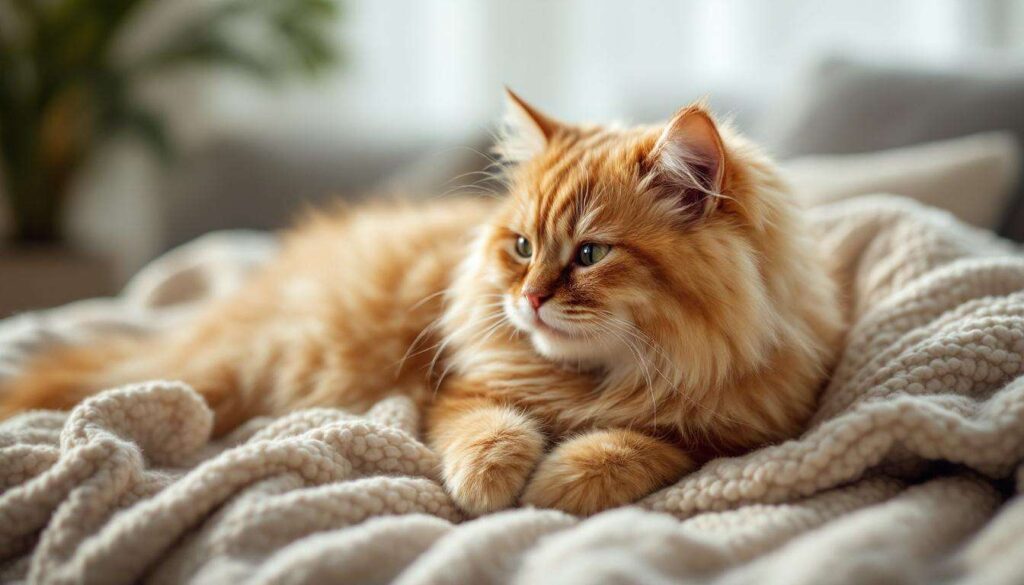
Cats possess an array of curious behaviours that captivate their owners, yet few actions prove as endearing and mysterious as kneading. This rhythmic motion, where felines alternately push their front paws against soft surfaces, appears almost meditative. Observing a cat engaged in this ritual often raises questions about its purpose and origin. The behaviour, deeply rooted in early feline development, reveals fascinating insights into the emotional lives of our domestic companions and their enduring connection to kittenhood experiences.
Understanding the kneading motion in cats
The physical mechanics of kneading
Kneading involves a distinctive alternating pattern where cats press their front paws against a surface in a rhythmic sequence. This motion typically occurs on soft materials such as blankets, cushions, or even their owner’s lap. The action resembles the process of preparing dough, which explains the popular nickname “making biscuits”. During this behaviour, cats often extend and retract their claws, though some felines perform the motion with claws sheathed.
Common contexts for kneading behaviour
Cats typically engage in kneading when experiencing positive emotional states. The behaviour frequently accompanies other contentment indicators:
- purring with varying intensity
- half-closed or fully closed eyes
- a relaxed body posture
- slow, deliberate movements
- drooling in some cases
The action serves multiple purposes beyond simple comfort, incorporating both instinctive survival mechanisms and emotional expression. Understanding these physical aspects provides the foundation for exploring the behaviour’s deeper origins.
The roots of kneading: a behaviour inherited from kittenhood
The nursing connection
The origins of kneading trace directly to the earliest days of a kitten’s life. Newborn kittens instinctively knead their mother’s mammary area whilst nursing, a behaviour that stimulates milk flow. This critical action ensures adequate nutrition during the vulnerable neonatal period. The motion creates pressure that encourages milk production and release, making it essential for survival.
Retention into adulthood
As cats mature, this infantile behaviour persists despite no longer serving its original nutritional purpose. Feline behaviour scientists observe that neonatal behaviours frequently continue into adulthood when associated with positive emotional states. The retention of kneading demonstrates how deeply ingrained early experiences become in feline psychology. Adult cats essentially revert to kitten-like behaviour when feeling particularly content or secure.
The comfort memory association
Kneading evokes powerful memories of warmth, security, and maternal care. The behaviour becomes linked to:
- the sensation of fullness after nursing
- physical warmth from the mother’s body
- safety within the litter environment
- the soothing rhythm of early bonding
This emotional imprinting explains why cats seek soft, warm surfaces for kneading, unconsciously recreating the conditions of their kittenhood. These foundational experiences shape how cats express contentment throughout their lives.
Why your cat kneads on you: a sign of affection
The trust factor
When a cat chooses to knead on a human, it represents a significant expression of trust and affection. By engaging in this vulnerable, instinct-driven behaviour, cats demonstrate they perceive their owner as a source of security comparable to their mother. This action indicates the cat feels sufficiently relaxed to exhibit infantile behaviours, a privilege not extended to those outside their trusted circle.
Scent marking through paw glands
Beyond emotional bonding, kneading serves a territorial function. Cats possess scent glands located in their paw pads, which release pheromones during the kneading motion. This biological mechanism allows cats to:
- mark their favourite resting spots with their unique scent
- claim ownership of comfortable spaces
- create familiar scent profiles in their environment
- strengthen their bond with specific individuals
When your cat kneads you, they simultaneously deposit their scent, essentially identifying you as part of their territory and social group. This dual-purpose behaviour combines emotional expression with practical territorial maintenance.
The bonding ritual
Regular kneading sessions strengthen the human-feline relationship. These moments of physical closeness, accompanied by purring and relaxed body language, facilitate mutual bonding. The behaviour indicates your cat associates you with positive emotions and safety, mirroring the security they experienced with their mother. Whilst kneading represents affection, cats also exhibit other distinctive behaviours that communicate their emotional states.
Kneading compared to other feline behaviours
Distinguishing kneading from similar actions
Several feline behaviours share superficial similarities with kneading but serve different purposes. Understanding these distinctions helps owners interpret their cat’s communications accurately:
| Behaviour | Purpose | Key differences |
|---|---|---|
| Kneading | Comfort, affection, scent marking | Rhythmic, alternating paw motion on soft surfaces |
| Scratching | Claw maintenance, territory marking | Downward dragging motion on vertical or horizontal surfaces |
| Pawing | Attention-seeking, play initiation | Single-paw tapping without rhythmic pattern |
| Treading | Nest preparation, comfort adjustment | Circular motion whilst preparing sleeping area |
Complementary comfort behaviours
Kneading frequently occurs alongside other contentment indicators. Cats often combine kneading with purring, slow blinking, and head rubbing. These behaviours collectively signal a relaxed, happy feline. Some cats also exhibit suckling behaviour on blankets or clothing whilst kneading, particularly those weaned early or separated prematurely from their mothers. This combination represents an even stronger connection to kittenhood experiences.
Intensity variations
The vigour and frequency of kneading vary considerably between individual cats. Factors influencing kneading intensity include:
- early weaning experiences
- individual temperament and personality
- current emotional state
- strength of bond with the owner
- environmental stress levels
Some cats knead vigorously with fully extended claws, whilst others perform gentle, claw-retracted motions. Neither approach indicates greater or lesser affection; rather, they reflect individual expression variations. Despite its positive associations, kneading sometimes presents challenges for owners.
Should you stop your cat from kneading ?
The psychological importance of allowing kneading
Preventing cats from kneading can negatively impact their emotional wellbeing. This behaviour serves as a crucial stress-relief mechanism and self-soothing ritual. Discouraging kneading may lead to increased anxiety, as cats lose an important outlet for expressing contentment and managing emotions. The action represents a fundamental aspect of feline psychology that should generally be accommodated rather than suppressed.
The benefits of permitting the behaviour
Allowing your cat to knead provides multiple advantages:
- reinforces the human-animal bond
- provides emotional comfort for the cat
- reduces stress and anxiety levels
- maintains healthy psychological development
- encourages trust and security
Cats that freely express natural behaviours typically demonstrate better overall emotional health and stronger attachments to their owners. Suppressing instinctive actions can create confusion and stress, potentially leading to behavioural problems.
When intervention might be necessary
Whilst kneading should generally be encouraged, certain circumstances warrant gentle redirection. Excessive kneading accompanied by compulsive behaviours, distress signals, or self-harm requires veterinary consultation. Similarly, if kneading occurs exclusively on inappropriate surfaces or causes household damage, redirecting the behaviour to acceptable locations proves more effective than complete prohibition. However, for most owners, the primary concern involves managing the physical discomfort that vigorous kneading can cause.
When kneading becomes painful: solutions for owners
Understanding the claw problem
The most common complaint regarding kneading involves sharp claws penetrating skin or clothing. Enthusiastic kneaders with extended claws can inadvertently cause scratches, punctures, or damage to furniture and fabrics. This physical discomfort sometimes strains the human-feline relationship, despite the behaviour’s positive intentions.
Practical management strategies
Several approaches effectively minimise kneading discomfort without discouraging the behaviour:
- maintain regular claw trimming to reduce sharpness
- place thick blankets or towels on your lap before settling
- use protective clothing layers during known kneading times
- apply vinyl claw caps as a temporary solution
- gently reposition the cat to padded surfaces when kneading becomes uncomfortable
Redirecting without discouraging
When kneading becomes too intense, gentle redirection proves more effective than punishment. Simply lift and relocate your cat to a nearby cushion or blanket, maintaining physical contact to preserve the bonding moment. This approach communicates boundaries whilst respecting the cat’s emotional needs. Never use harsh corrections, as these create negative associations with natural behaviours.
Long-term accommodation
Creating designated kneading zones helps satisfy your cat’s instincts whilst protecting vulnerable areas. Provide soft blankets, fleece materials, or dedicated cat beds in favourite resting spots. Many cats readily adopt these alternatives, particularly when they retain the owner’s scent. Consistency in offering appropriate kneading surfaces gradually shapes behaviour without causing distress.
Kneading represents far more than a quirky feline habit; it embodies a profound connection to early life experiences and emotional security. This behaviour, rooted in the survival instincts of kittenhood, evolves into a complex expression of trust, affection, and comfort. Understanding the origins and significance of kneading allows owners to appreciate these moments as meaningful communications from their cats. Rather than discouraging this natural behaviour, implementing practical management strategies preserves both the cat’s emotional wellbeing and the owner’s physical comfort. The rhythmic motion of making biscuits serves as a reminder of the deep bonds cats form with those they trust, bridging the gap between their wild ancestry and domestic companionship.