



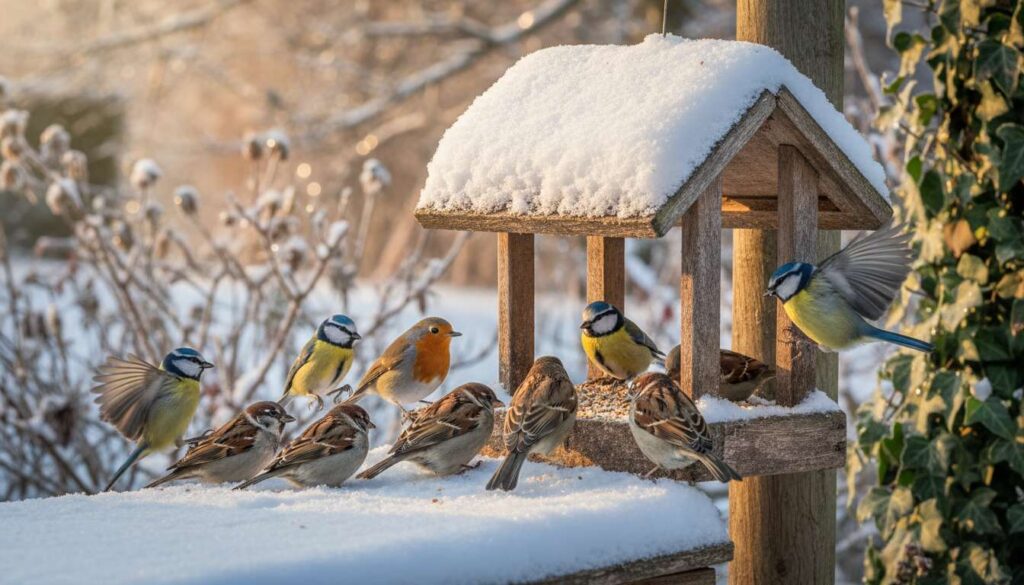
Garden birds face their most challenging period during late winter, when natural food supplies dwindle to critically low levels. February sits at the heart of what ornithologists call the hungry gap, a time when berry stocks have been exhausted, insects remain dormant beneath frozen ground, and seeds lie buried under frost or snow. Yet this same month marks the beginning of the breeding season for many species, demanding substantial energy reserves precisely when food is hardest to find.
What is the winter food shortage ?
Understanding the hungry gap phenomenon
The winter food shortage, commonly referred to as the hungry gap, describes the period between January and March when natural food sources reach their annual nadir. During autumn and early winter, birds rely on abundant berries, fruits, and seeds. However, by February, these resources have been largely consumed or have deteriorated beyond nutritional value. Simultaneously, invertebrates remain hidden in soil and bark, inaccessible to foraging birds.
Ecological factors contributing to scarcity
Several environmental conditions exacerbate food scarcity during this period:
- Frozen ground prevents access to earthworms and soil-dwelling insects
- Snow cover conceals remaining seeds and ground vegetation
- Reduced daylight hours limit foraging time to approximately eight hours
- Cold temperatures increase metabolic demands, requiring birds to consume up to 30% more food
Competition intensifies as resident birds vie with winter visitors from continental Europe. Species such as fieldfares and redwings, which migrate from Scandinavia, add pressure to already strained resources. This convergence of factors creates a survival bottleneck that tests the resilience of garden bird populations.
These harsh conditions make February particularly perilous, but understanding why this month matters so greatly requires examining the biological imperatives driving bird behaviour at this time.
The importance of feeding birds in February
Breeding season preparation
February represents a critical preparatory phase for the breeding season. Many common garden species, including robins, blackbirds, and song thrushes, begin nest-building activities as early as late February or early March. Females require substantial energy reserves to produce eggs, with some species laying clutches that represent up to 50% of their body weight. Without adequate nutrition during February, egg production suffers, resulting in smaller clutches, thinner eggshells, and reduced hatching success.
Survival statistics and population concerns
Research demonstrates the stark reality facing British bird populations:
| Category | Population decline since 1970 |
|---|---|
| Overall bird species | 18% |
| Farmland birds | 60% |
| Woodland birds | 29% |
These declines reflect habitat loss, agricultural intensification, and climate change impacts. However, supplementary feeding has proven effective in mitigating winter mortality. Studies indicate that consistent feeding programmes can increase winter survival rates by up to 40% for small passerine species.
The role of garden feeding stations
Gardens have become increasingly vital refuges for birds. With an estimated 60% of British households feeding birds, domestic gardens collectively provide a substantial safety net during the hungry gap. This network of feeding stations can mean the difference between survival and starvation for millions of individual birds.
Knowing when to feed matters, but equally important is understanding what foods best support birds through this demanding period.
What foods to offer birds in winter
High-energy food options
Winter feeding should prioritise calorie-dense foods that help birds maintain body temperature and energy levels. The most beneficial options include:
- Sunflower hearts: rich in oils and easily digestible
- Suet products: provide essential fats for thermoregulation
- Nyjer seeds: particularly attractive to finches
- Peanuts: excellent protein source when offered in appropriate feeders
- Mealworms: supply protein for insectivorous species
Seed mixtures and their beneficiaries
Different seed types attract various species. A diverse feeding strategy supports a wider range of garden visitors:
| Seed type | Primary beneficiaries |
|---|---|
| Black sunflower seeds | Tits, finches, nuthatches |
| Millet | Sparrows, dunnocks, ground-feeding species |
| Safflower | Cardinals, grosbeaks (deters squirrels) |
Foods to avoid
Certain items commonly offered to birds prove detrimental:
- Bread: provides minimal nutrition and causes digestive problems
- Salted foods: can cause dehydration and kidney damage
- Desiccated coconut: swells in the stomach, potentially causing blockages
- Cooked porridge oats: may harden around beaks
Providing appropriate foods represents only part of the equation; presentation and placement significantly influence feeding success.
How to attract birds to your garden in winter
Feeder types and placement strategies
Different feeder designs cater to various feeding behaviours. Tube feeders suit small, agile species such as blue tits and coal tits, whilst hopper feeders accommodate larger birds including chaffinches and greenfinches. Ground feeding trays attract robins, dunnocks, and thrushes that naturally forage at ground level.
Strategic placement enhances both feeding success and bird safety:
- Position feeders 2-3 metres from dense shrubs, allowing escape routes from predators
- Ensure clear sightlines so birds can detect approaching threats
- Distribute multiple feeding stations to reduce competition and aggression
- Place feeders away from windows to prevent collision injuries
Water provision
Access to unfrozen water proves as crucial as food during winter. Birds require water for drinking and maintaining feather condition. A heated birdbath or regularly refreshed shallow dish provides essential hydration when natural sources freeze solid.
Creating winter habitat
Beyond feeders, garden modifications support winter bird populations. Leaving seed heads on perennials provides natural food sources, whilst dense evergreen shrubs offer roosting shelter during freezing nights. A wildlife-friendly garden combines supplementary feeding with habitat features that support birds throughout the year.
Whilst feeding birds brings considerable benefits, certain precautions ensure these interventions remain beneficial rather than harmful.
Precautions to take when feeding birds
Hygiene and disease prevention
Disease transmission represents the primary risk associated with garden feeding stations. Concentrated bird populations facilitate the spread of pathogens such as trichomonosis, salmonellosis, and avian pox. Implementing rigorous hygiene protocols minimises these risks:
- Clean feeders weekly using a mild disinfectant solution
- Remove and dispose of accumulated waste beneath feeding stations
- Rotate feeder locations every few months to prevent ground contamination
- Immediately remove mouldy or spoiled food
Predator awareness
Feeding stations inadvertently attract predators, particularly domestic cats and sparrowhawks. Whilst sparrowhawk predation forms part of natural ecological dynamics, cat predation represents an additional, unnatural mortality factor. Position feeders to provide birds with adequate warning time and escape routes. Consider installing protective barriers around ground feeding areas.
Dependency concerns
Questions arise regarding whether supplementary feeding creates dependency. Research suggests that birds utilise garden feeders as one resource among many, typically obtaining only 20-30% of their daily requirements from supplementary sources. However, consistency matters: once established, feeding programmes should continue throughout winter, as birds incorporate these resources into their daily routines.
These precautions ensure feeding programmes deliver maximum benefit, directly influencing winter survival rates and subsequent breeding success.
The impact of winter nutrition on bird survival
Physiological effects of adequate nutrition
Proper winter nutrition produces measurable physiological benefits. Well-fed birds maintain higher body condition scores, possess stronger immune systems, and demonstrate improved thermoregulatory capacity. Research indicates that supplementary feeding can increase overwinter survival rates by 30-40% for small passerine species, with particularly pronounced effects during severe weather events.
Breeding season implications
Winter nutrition directly influences subsequent breeding performance. Females entering the breeding season with adequate fat reserves lay earlier, produce larger clutches, and demonstrate higher hatching success rates. Studies tracking individually marked birds reveal that those accessing supplementary food during winter fledge 15-20% more offspring than unfed counterparts.
Population-level consequences
At the population scale, widespread garden feeding contributes to stabilising declining species. Long-term monitoring data suggests that species readily utilising garden feeders, such as great tits and blue tits, have maintained relatively stable populations despite broader environmental pressures. Conversely, species less adapted to garden feeding continue experiencing steep declines.
Garden birds navigate February’s hungry gap with remarkable resilience, yet human intervention through thoughtful feeding programmes significantly improves their survival prospects. By providing appropriate high-energy foods, maintaining clean feeding stations, and creating supportive garden habitats, individuals contribute meaningfully to bird conservation. The cumulative effect of millions of gardens offering supplementary food creates a vital lifeline during the most challenging weeks of the year, helping ensure healthy populations enter the breeding season with the resources necessary for reproductive success.