



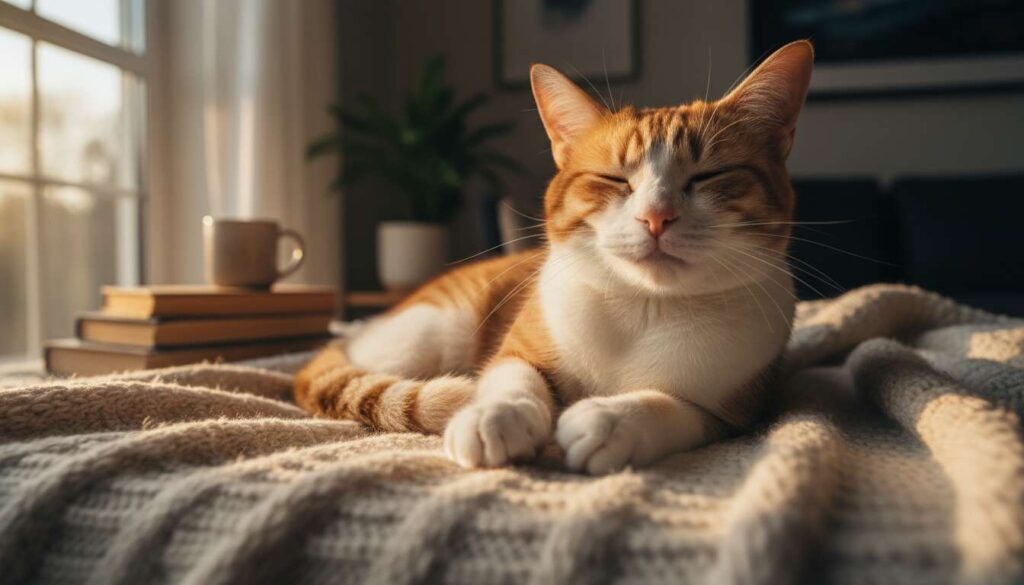
Every cat owner has witnessed this peculiar ritual: their feline companion rhythmically pushing its paws against a soft surface, alternating between left and right in a mesmerising motion. This behaviour, affectionately termed “making biscuits” by cat enthusiasts, represents one of the most endearing yet mysterious aspects of feline conduct. Whilst it may occasionally prove uncomfortable when sharp claws are involved, kneading serves as a profound window into your cat’s emotional state and ancestral heritage. Understanding the complexities behind this instinctive action reveals much about the intricate bond between humans and their feline companions.
The evolutionary origins of kneading
Ancient survival mechanisms
The roots of kneading stretch far back into feline evolutionary history, long before cats became domesticated companions. Wild ancestors of modern cats employed similar paw movements for practical survival purposes. In their natural habitats, these early felines would press down vegetation and undergrowth to create comfortable, safe resting spots. This behaviour served multiple functions: it flattened tall grasses that might conceal predators, tested the ground for stability, and fashioned a cushioned surface for sleep.
Territorial marking through scent glands
Evolution equipped cats with scent glands located in their paw pads, which release pheromones during kneading. This biological feature transformed a simple physical action into a sophisticated communication tool. When wild cats kneaded their chosen resting areas, they simultaneously marked the territory as their own, warning other animals whilst creating familiar scent markers for themselves. This dual-purpose mechanism proved invaluable for solitary hunters requiring both security and territorial boundaries.
| Evolutionary function | Survival benefit |
|---|---|
| Vegetation flattening | Predator detection and comfort |
| Scent marking | Territory establishment |
| Surface testing | Safety verification |
These ancient instincts remain deeply embedded in modern felines, explaining why even pampered house cats continue to exhibit behaviours that once ensured their ancestors’ survival. The persistence of kneading across millennia demonstrates how fundamental this action is to feline nature.
Kneading: a behaviour inherited from childhood
The nursing connection
Newborn kittens instinctively knead their mother’s mammary glands whilst nursing, a behaviour that appears within hours of birth. This rhythmic pressing stimulates milk flow, ensuring adequate nutrition during the critical early weeks of life. The motion creates a powerful association in the kitten’s developing brain, linking the physical action with warmth, nourishment, and maternal comfort. This primal connection becomes permanently etched into feline neurology, persisting throughout adulthood.
Comfort and security imprinting
Beyond the purely nutritional aspect, kneading during kittenhood establishes profound emotional patterns. The experience combines several comforting elements:
- Physical closeness to the mother’s warmth
- The satisfaction of hunger being relieved
- The security of being protected within the litter
- The release of endorphins triggered by nursing
- The rhythmic, meditative quality of the repetitive motion
Adult retention of juvenile behaviours
Domestic cats frequently retain juvenile characteristics into adulthood, a phenomenon known as neoteny. Unlike their wild counterparts who must achieve complete independence, house cats exist in an environment where many of their needs are met by human caretakers. This perpetual dependency allows kittenhood behaviours to persist, with kneading being amongst the most common. When adult cats knead, they essentially regress to that blissful state of kittenhood, seeking the same comfort and security they experienced whilst nursing.
This childhood connection provides the foundation for understanding why kneading so often accompanies other signs of feline contentment, creating a comprehensive picture of emotional well-being.
Kneading: an indicator of feline well-being
Physical signs accompanying contentment
When cats feel genuinely relaxed and happy, kneading rarely occurs in isolation. Observant owners will notice a constellation of accompanying behaviours that collectively indicate positive emotional states. Purring typically accompanies kneading, creating a symphony of contentment that resonates through the cat’s entire body. The eyes may appear half-closed in a dreamy expression, the tail remains relaxed rather than twitching, and the overall body posture conveys ease rather than tension.
Environmental triggers for kneading
Specific circumstances tend to elicit kneading behaviour more frequently than others. Understanding these triggers helps owners recognise when their cats feel most secure:
- Settling onto particularly soft surfaces such as blankets or cushions
- Being gently stroked in preferred areas like the head or chin
- Experiencing familiar scents associated with safety
- Quiet environments free from stress or disruption
- Moments following meals when satisfaction peaks
Stress reduction and self-soothing
Beyond expressing existing contentment, kneading serves as an active stress-reduction mechanism. The repetitive motion releases endorphins, natural chemicals that promote feelings of calm and well-being. Cats may initiate kneading when feeling mildly anxious, using the familiar action to self-soothe and restore emotional equilibrium. This adaptive function demonstrates the behaviour’s complexity, serving both as an indicator of current happiness and a tool for achieving it.
| Emotional state | Kneading characteristics |
|---|---|
| Deep contentment | Slow, rhythmic, accompanied by purring |
| Mild anxiety | More vigorous, self-directed |
| Excitement | Rapid, may include claw extension |
Recognising these nuances allows owners to better interpret their cat’s emotional landscape, strengthening mutual understanding and fostering deeper connections.
What kneading means for human-cat relationships
Trust and attachment signals
When a cat chooses to knead on its owner, this represents a profound expression of trust. The behaviour indicates that the cat perceives its human as a source of safety and comfort comparable to its mother. This association places owners in a unique position within the cat’s social hierarchy, transcending typical territorial relationships. Being selected as a kneading recipient signifies that your cat feels vulnerable enough in your presence to engage in behaviours linked to its most defenceless life stage.
Bonding through physical contact
The physical intimacy of kneading strengthens the human-animal bond through multiple mechanisms. The rhythmic pressure provides tactile stimulation that many owners find pleasant, whilst the accompanying purring creates soothing auditory feedback. This multisensory experience promotes oxytocin release in humans, the same hormone associated with maternal bonding and social connection. The relationship becomes mutually beneficial: cats receive comfort whilst owners experience measurable stress reduction and emotional satisfaction.
Communication and emotional exchange
Kneading functions as a sophisticated form of non-verbal communication. Through this behaviour, cats convey messages that attentive owners learn to interpret:
- Affection and appreciation for care provided
- Contentment with their current environment
- Desire for continued physical contact
- Recognition of the owner as family
- Request for attention or interaction
Understanding these communications transforms the owner-cat dynamic from simple cohabitation to genuine interspecies dialogue, enriching both parties’ lives immeasurably.
Dealing with the inconveniences of kneading
Managing sharp claws during kneading
Sharp claws can transform pleasant kneading into an uncomfortable experience, particularly when cats knead directly on bare skin or delicate fabrics. However, discouraging the behaviour entirely risks damaging the emotional bond and denying cats a vital comfort mechanism. Instead, owners should focus on management strategies that preserve the behaviour whilst minimising discomfort.
Practical solutions for comfortable kneading
Several approaches allow cats to continue kneading whilst protecting both owners and furnishings:
- Regular nail trimming reduces claw sharpness without eliminating the behaviour
- Placing thick blankets or towels on laps creates protective barriers
- Gently redirecting cats to knead on cushions rather than directly on skin
- Using nail caps that cover claw tips whilst allowing normal paw function
- Keeping a designated “kneading blanket” readily available
Training and gentle redirection
Never punish a cat for kneading, as this natural behaviour stems from deep instinct and emotional need. Instead, employ positive reinforcement techniques. When a cat begins kneading on an inappropriate surface, gently lift and relocate it to an acceptable alternative, offering praise when it continues kneading there. Consistency proves essential: all household members must respond identically to establish clear expectations without causing confusion or distress.
| Management approach | Effectiveness | Cat comfort level |
|---|---|---|
| Regular nail trimming | High | Neutral to positive |
| Protective barriers | Very high | Positive |
| Gentle redirection | Moderate | Positive |
| Punishment | Counterproductive | Negative |
These practical solutions enable harmonious coexistence, allowing cats to express natural behaviours whilst respecting human comfort boundaries.
When to be concerned about cat kneading
Excessive or compulsive kneading patterns
Whilst kneading typically indicates positive emotions, excessive or compulsive kneading may signal underlying problems. Cats that knead continuously for extended periods, particularly when accompanied by other repetitive behaviours, might be experiencing anxiety or stress. Early weaning can contribute to intensified kneading behaviours, as cats attempt to compensate for abbreviated nursing periods. If kneading becomes so frequent that it interferes with normal activities like eating or grooming, veterinary consultation becomes advisable.
Physical discomfort indicators
Occasionally, changes in kneading behaviour reflect physical rather than emotional issues. Owners should monitor for concerning signs:
- Sudden cessation of previously regular kneading habits
- Limping or favouring certain paws during kneading
- Vocalising in apparent pain whilst kneading
- Swelling or sensitivity in paw pads
- Kneading accompanied by excessive drooling or panting
Behavioural context and environmental stressors
Context matters significantly when evaluating kneading behaviour. A cat that suddenly begins kneading far more frequently following household changes, new pets, or relocation may be using the behaviour as a coping mechanism for heightened stress. Whilst some increase proves normal during adjustment periods, persistent escalation warrants attention. Similarly, cats that knead only specific objects obsessively, particularly items with strong scents, might be exhibiting anxiety-related behaviours requiring professional assessment.
Most kneading remains perfectly healthy and should be celebrated as a sign of feline contentment. However, maintaining awareness of these potential warning signs ensures that any underlying issues receive prompt attention, safeguarding your cat’s physical and emotional well-being.
The rhythmic motion of a cat’s paws pressing against soft surfaces represents far more than a curious quirk of feline behaviour. Rooted in evolutionary survival strategies and reinforced through the profound bonds formed during kittenhood, kneading serves multiple functions that reveal the complexity of cat psychology. This behaviour simultaneously expresses contentment, strengthens social bonds, and provides self-soothing comfort during uncertain moments. For owners privileged enough to be chosen as kneading recipients, the experience offers tangible evidence of their cat’s trust and affection. By understanding the origins and meanings behind this endearing habit, whilst implementing practical strategies to manage its occasional inconveniences, cat owners can fully appreciate these moments of connection. Recognising when kneading patterns might indicate concern ensures that this ancient instinct continues to serve its purpose: promoting feline well-being and deepening the remarkable relationship between humans and their feline companions.