



Ecuador stands as one of the planet’s most biodiverse nations, hosting an extraordinary array of wildlife found nowhere else on Earth. Nestled between the Pacific Ocean and the Amazon rainforest, this South American country encompasses multiple ecosystems, from cloud forests to volcanic islands. The Galápagos archipelago, located nearly 1,000 kilometres off the mainland coast, represents a living laboratory of evolution where species have developed remarkable adaptations over millennia. These isolated islands, along with Ecuador’s mainland habitats, shelter creatures that have captivated scientists and nature enthusiasts alike, offering invaluable insights into natural selection and ecological balance.
Iconic Wildlife of the Galápagos Islands: a Unique Discovery
An Evolutionary Laboratory
The Galápagos Islands comprise a volcanic archipelago where isolation has fostered the development of extraordinary endemic species. The geological youth of these islands, combined with their distance from continental landmasses, created conditions where arriving species evolved independently, developing characteristics suited to their specific island environments.
The archipelago’s unique position at the convergence of several ocean currents brings together marine life from different climatic zones, creating an exceptional biodiversity hotspot. Cold currents from the south meet warmer tropical waters, supporting an unusual mix of temperate and tropical species in close proximity.
Key Ecological Features
- Volcanic landscapes providing diverse microclimates
- Nutrient-rich waters supporting abundant marine life
- Minimal human interference until recent centuries
- Geographic isolation enabling unique evolutionary pathways
The islands’ fauna demonstrates remarkable fearlessness towards humans, a characteristic resulting from the historical absence of large predators. This behaviour allows visitors extraordinary close encounters with wildlife, though it also makes these species particularly vulnerable to introduced threats.
Understanding this unique ecosystem provides essential context for appreciating the remarkable creatures that have made these islands their exclusive home.
The Giant Tortoises of the Galápagos: iconic Symbols
Living Monuments of Evolution
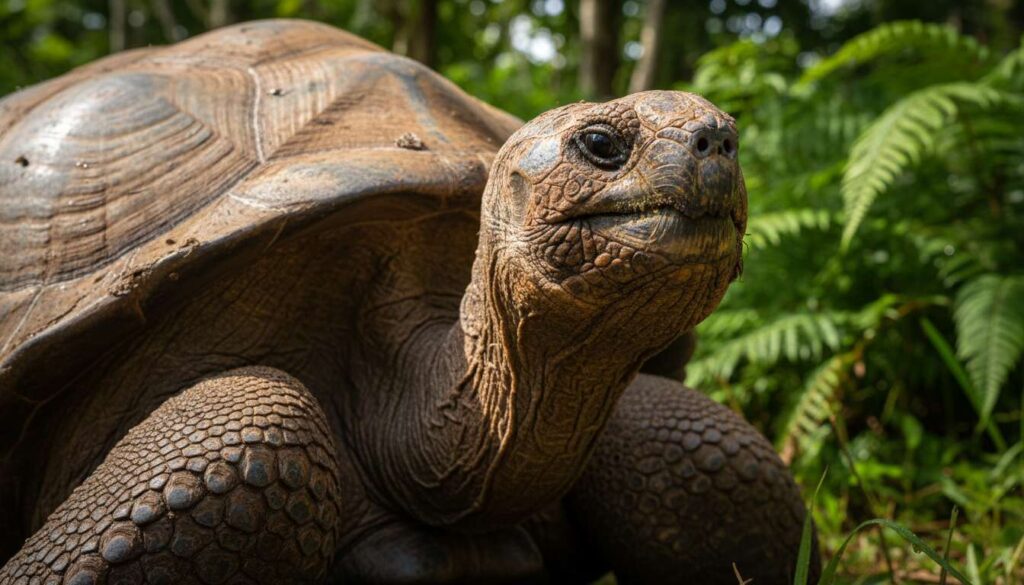
The Galápagos giant tortoise represents perhaps the most recognisable symbol of the archipelago. These magnificent reptiles can weigh over 400 kilograms and live well beyond a century, with some individuals documented at over 150 years old. Different islands harbour distinct subspecies, each adapted to their particular environment.
| Tortoise Type | Shell Shape | Habitat |
|---|---|---|
| Saddleback | Raised front, curved | Arid lowland islands |
| Domed | Rounded, heavy | Humid highland zones |
Adaptive Characteristics
Saddleback tortoises evolved their distinctive shell shape on islands with sparse vegetation, allowing them to extend their necks upward to reach higher branches and cacti. Domed tortoises, inhabiting islands with abundant ground vegetation, developed heavier, more protective shells suited to grazing on lush grasses.
These ancient creatures face ongoing conservation challenges, including habitat loss and competition from introduced species. Breeding programmes have successfully increased populations of several critically endangered subspecies, though some varieties have been lost forever.
Beyond these terrestrial giants, the islands harbour equally fascinating reptilian inhabitants adapted to an entirely different realm.
The Marine Iguanas: real Sea Dragons
The World’s Only Seafaring Lizard
Marine iguanas hold the distinction of being the only lizards on Earth that forage in the ocean. These remarkable reptiles dive into cold Pacific waters to graze on algae clinging to underwater rocks, an adaptation found nowhere else in the reptilian world.
Their physical characteristics reflect their aquatic lifestyle:
- Flattened tails functioning as rudders for swimming
- Sharp claws for gripping slippery rocks against strong currents
- Specialised glands for expelling excess salt consumed with their algae diet
- Dark colouration for absorbing heat after cold-water dives
Behavioural Adaptations
After feeding underwater in temperatures that can drop below 10°C, marine iguanas must bask extensively on volcanic rocks to restore their body temperature. They often congregate in large groups, creating dramatic scenes of prehistoric-looking creatures sprawled across black lava formations.
During breeding season, males develop striking red and green colouration, particularly on islands like Española and Floreana. These colour changes serve to attract females and establish dominance hierarchies among competing males.
The evolutionary journey of these marine reptiles parallels that of another group of island inhabitants whose diversity proved scientifically revolutionary.
Darwin’s Finches and Their Historical Role
Architects of Evolutionary Theory
The Galápagos finches, comprising thirteen distinct species, provided crucial evidence for understanding natural selection. These small birds, all descended from a common ancestor, evolved remarkably different beak shapes and sizes corresponding to their specific food sources.
Each species occupies a unique ecological niche:
- Large ground finches with powerful beaks for cracking hard seeds
- Cactus finches with elongated beaks for probing cactus flowers
- Woodpecker finches using tools to extract insects from bark
- Warbler finches with delicate beaks for catching small insects
Ongoing Evolution
Research continues to document evolutionary changes in finch populations, with beak dimensions shifting measurably in response to environmental variations. Drought conditions favour birds with larger beaks capable of processing harder seeds, whilst wetter periods benefit those with smaller, more versatile beaks.
These birds demonstrate that evolution operates not merely across geological timescales but can produce observable changes within human lifetimes, making them invaluable subjects for ongoing scientific study.
Whilst finches adapted to terrestrial niches, another unexpected species colonised the islands’ coastal waters in defiance of geographical expectations.
The Galápagos Penguins: a Surprising Species in South America
Equatorial Penguins
The Galápagos penguin holds the remarkable distinction of being the only penguin species living north of the equator. These small penguins, standing approximately 50 centimetres tall, survive in tropical conditions thanks to the cold Cromwell Current that upwells along the western islands.
| Characteristic | Adaptation |
|---|---|
| Breeding | Opportunistic, linked to food availability |
| Thermoregulation | Panting and seeking shade during heat |
| Population | Fewer than 2,000 individuals |
Survival Strategies
These penguins employ various techniques to cope with equatorial heat, including hunching forward to shade their feet, swimming during the hottest hours, and breeding in lava tubes and crevices that provide cooler microclimates. Their breeding patterns differ from Antarctic relatives, occurring throughout the year when ocean conditions support adequate fish populations.
Climate fluctuations pose significant threats to this vulnerable species, with warming events reducing food availability and increasing mortality rates. Their small population size makes them particularly susceptible to environmental changes.
The challenges facing Galápagos penguins reflect broader conservation concerns affecting Ecuador’s unique wildlife.
Protecting and Preserving Ecuador’s Unique Biodiversity
Conservation Initiatives
Ecuador has established comprehensive protection measures for its endemic species, with the Galápagos National Park covering 97% of the archipelago’s land area. Strict regulations govern visitor access, limiting tourist numbers and requiring certified guides for all excursions.
Key conservation strategies include:
- Eradication programmes targeting invasive species
- Captive breeding and reintroduction initiatives
- Marine reserve expansion protecting feeding grounds
- Biosecurity protocols preventing new introductions
Sustainable Tourism
Responsible tourism plays a vital role in funding conservation whilst raising awareness about Ecuador’s irreplaceable natural heritage. Visitor fees directly support park management and scientific research, creating economic incentives for preservation.
The balance between access and protection remains delicate, requiring ongoing assessment and adaptive management to ensure these extraordinary species persist for future generations to study and admire.
Ecuador’s endemic animals represent millions of years of evolutionary innovation, offering insights into adaptation, speciation, and ecological relationships. From giant tortoises that witnessed centuries pass to penguins thriving at the equator, these species demonstrate nature’s remarkable creativity. Their continued survival depends upon sustained conservation efforts, scientific research, and responsible engagement from visitors who recognise the privilege of encountering wildlife found nowhere else on Earth. Protecting these creatures preserves not merely individual species but entire evolutionary narratives that illuminate our understanding of life itself.