



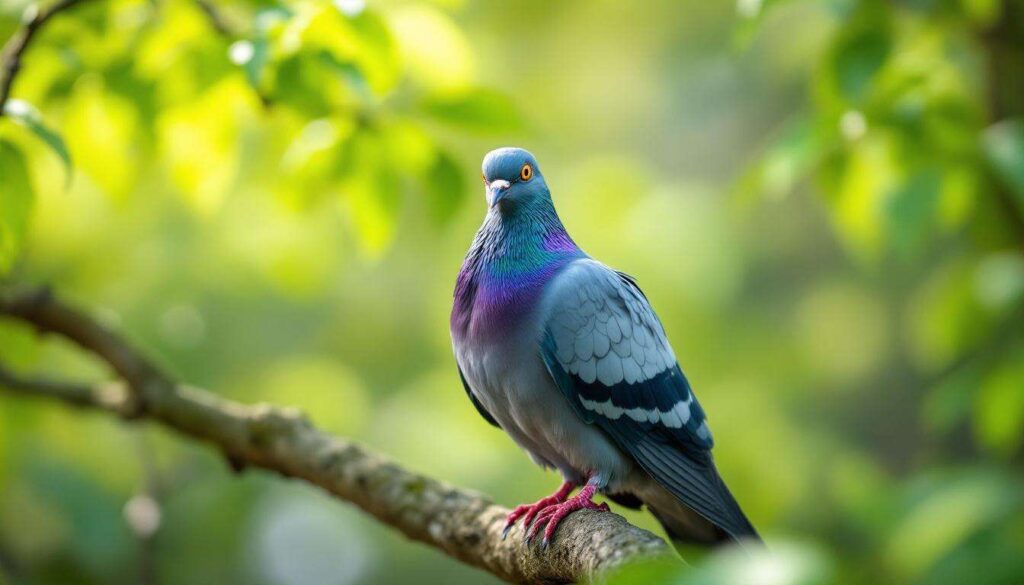
Perched on ledges and rooftops across cities worldwide, pigeons have become such a familiar sight that most people rarely give them a second glance. Yet beneath this ubiquity lies a fascinating story of adaptation, survival and evolutionary success that begins not in our urban centres, but on remote cliffsides where their wild ancestors still cling to existence. The rock dove, the progenitor of all domestic and feral pigeons, offers profound insights into avian behaviour, ecological resilience and the complex relationship between humans and wildlife. Through dedicated field research in some of the most isolated habitats where these birds remain truly wild, a deeper understanding emerges of what makes these creatures so remarkably successful, yet so profoundly misunderstood.
Observation of wild pigeons: an immersion in their habitat
Studying wild rock doves requires venturing far from the urban environments where their descendants thrive. The remote cliffsides and coastal regions of places like Scotland’s Outer Hebrides provide crucial sanctuaries where these birds exhibit behaviours largely uninfluenced by human proximity. Unlike their city-dwelling relatives, wild rock doves demonstrate a pronounced wariness of people, maintaining considerable distance and favouring inaccessible nesting sites on sheer rock faces.
Characteristics of natural habitats
The preferred environments of wild rock doves share several distinctive features that set them apart from urban pigeon territories:
- steep coastal cliffs providing secure nesting ledges protected from terrestrial predators
- proximity to open grasslands or agricultural fields for foraging
- minimal human disturbance and absence of feral pigeon populations
- reliable freshwater sources within reasonable flying distance
- exposure to strong winds that facilitate their powerful, direct flight patterns
These wild populations exhibit markedly different social structures compared to urban flocks. Group sizes tend to be smaller and more cohesive, with established hierarchies that govern access to prime nesting sites and feeding areas. The birds display greater vigilance, with designated sentinels scanning for aerial predators such as peregrine falcons whilst others feed.
Fieldwork challenges and rewards
Observing these shy creatures demands patience and non-intrusive methodology. Extended periods of stillness, often in uncomfortable positions on rocky outcrops, allow researchers to witness natural behaviours without causing disturbance. The rewards include observing courtship displays, territorial disputes and parental care patterns that remain largely unchanged from ancestral behaviours developed over millennia.
Understanding these baseline behaviours in wild populations provides essential context for interpreting the modifications seen in their urban counterparts, revealing which traits represent fundamental pigeon characteristics and which result from adaptation to human-dominated landscapes.
The diversity of behaviours in wild pigeons
Wild rock doves exhibit a sophisticated repertoire of behaviours that reflects their intelligence and social complexity. These behaviours encompass communication, reproduction, navigation and survival strategies honed through evolutionary pressures quite different from those faced by urban populations.
Communication and social interaction
Vocalisations form a crucial component of pigeon communication. The characteristic cooing serves multiple functions, from territorial declarations to mate attraction and maintaining flock cohesion. Wild populations demonstrate more varied vocal patterns than their urban relatives, possibly due to reduced acoustic competition from human noise pollution.
Visual displays complement vocal communication. Males perform elaborate bowing rituals, puffing their neck feathers whilst circling potential mates. Aggressive encounters involve wing-slapping and direct physical confrontation, establishing dominance hierarchies that determine breeding opportunities and access to resources.
Foraging strategies and dietary preferences
In their natural habitat, wild rock doves primarily consume:
- seeds from grasses and wild plants
- grains from agricultural fields during certain seasons
- green vegetation including leaves and shoots
- occasionally small invertebrates, though these form a minor dietary component
Foraging typically occurs in open areas where the flock can maintain vigilance against predators. Birds feed rapidly, storing food in their crop before retreating to safer locations for digestion. This cautious approach contrasts sharply with the bold scavenging behaviours of urban pigeons accustomed to human food sources.
These natural behaviours establish a baseline against which the extraordinary adaptations of urban populations can be measured, highlighting the remarkable plasticity that has enabled pigeons to colonise human environments so successfully.
The remarkable adaptations of pigeons to urban environments
The transition from cliffsides to cityscapes represents one of the most successful colonisations in avian history. Feral pigeons, descended from domesticated rock doves, have transformed urban architecture into functional equivalents of their ancestral habitats, demonstrating extraordinary behavioural and physiological flexibility.
Architectural exploitation
Buildings provide structural analogues to natural cliff faces, with ledges, windowsills and bridge underpasses serving as nesting sites. Pigeons have learned to navigate complex urban landscapes, memorising routes, recognising individual humans and even adapting their flight patterns to traffic flows.
| Natural habitat feature | Urban equivalent | Functional similarity |
|---|---|---|
| Cliff ledges | Building ledges, window sills | Protected nesting sites |
| Cave openings | Bridge underpasses, alcoves | Sheltered roosting areas |
| Open grasslands | Parks, plazas, car parks | Foraging grounds |
| Rock faces | Vertical building facades | Perching and surveillance points |
Dietary adaptation and opportunism
Urban pigeons have become highly opportunistic feeders, exploiting food sources unavailable to their wild relatives. This dietary flexibility includes processed human foods, waste products and intentional feeding by people. Whilst this abundance supports larger populations, it also introduces nutritional imbalances absent in natural diets.
The capacity to thrive in environments so radically different from ancestral habitats demonstrates the underlying adaptability that made pigeons attractive candidates for domestication thousands of years ago, setting the stage for their current ecological role.
The role of pigeons in the urban ecosystem
Far from being merely tolerated residents, pigeons perform several ecologically significant functions within urban environments, contributing to nutrient cycling, seed dispersal and food web dynamics.
Nutrient redistribution
Pigeon droppings, whilst often considered a nuisance, contribute substantial quantities of nitrogen and phosphorus to urban soils. This nutrient input supports plant growth in parks and green spaces, though excessive accumulation can create localised problems.
Prey species for urban predators
Pigeons constitute an important food source for urban-adapted predators including:
- peregrine falcons, which have successfully colonised cities partly due to abundant pigeon prey
- sparrowhawks and other raptors that hunt in urban parks
- foxes and cats, which occasionally capture ground-feeding or injured birds
This predator-prey relationship helps maintain ecological balance and supports biodiversity in otherwise heavily modified environments.
However, the relationship between pigeons and urban ecosystems remains complex, with both beneficial and problematic aspects that have given rise to numerous misconceptions requiring clarification.
Myths and realities about wild pigeons
Public perception of pigeons is heavily influenced by persistent myths that often obscure the reality of these birds’ biology and behaviour. Distinguishing fact from fiction proves essential for informed conservation and management decisions.
Disease transmission concerns
Pigeons are frequently characterised as disease vectors, yet scientific evidence suggests the actual risk to human health is minimal. Whilst pigeons can carry certain pathogens, transmission to humans remains rare, particularly with basic hygiene precautions. The reputation exceeds the genuine threat, with other urban animals presenting comparable or greater disease risks without similar stigmatisation.
Intelligence and cognitive abilities
Research has revealed that pigeons possess remarkable cognitive capabilities, including:
- categorisation of complex visual stimuli, including distinguishing between artistic styles
- numerical competence and basic mathematical reasoning
- episodic-like memory for specific events and locations
- self-recognition abilities demonstrated in mirror tests
These findings challenge dismissive attitudes towards pigeons, revealing them as sophisticated organisms worthy of scientific interest and ethical consideration.
Population decline of true wild rock doves
Whilst feral pigeons thrive in cities, genuine wild rock dove populations face serious challenges. Interbreeding with feral birds has compromised genetic integrity across much of their historical range. In many regions, including England and Wales, pure wild rock dove populations have essentially disappeared, absorbed into feral gene pools. This represents a significant but largely unrecognised conservation issue.
These realities underscore how human activities continue to reshape pigeon populations, both urban and wild, with consequences that extend beyond simple coexistence.
Impacts of human interactions on wild pigeons
The relationship between humans and pigeons spans millennia, progressing from initial domestication to the current situation where feral populations dominate urban landscapes whilst wild populations retreat to increasingly isolated refuges.
Genetic swamping and hybridisation
Perhaps the most significant impact involves the genetic dilution of wild rock dove populations through interbreeding with feral birds. This process has fundamentally altered the distribution and genetic composition of wild populations across Europe, Africa and Asia, creating conservation challenges distinct from typical habitat loss scenarios.
Feeding practices and dependency
Intentional feeding by well-meaning people creates artificial population densities unsustainable by natural food sources alone. This practice alters behaviour, increases disease transmission potential through crowding and creates conflict between those who feed pigeons and those who view them as pests.
Management and control measures
Various control methods have been implemented with varying success:
- architectural modifications to prevent roosting and nesting
- population control through egg replacement programmes
- contraceptive feeding schemes in some municipalities
- predator encouragement, particularly peregrine falcon nest boxes
Effective management requires understanding pigeon biology and behaviour, recognising that simplistic approaches often prove counterproductive, whilst conservation of remaining wild populations demands habitat protection and prevention of feral pigeon encroachment.
The study of wild pigeons reveals creatures of remarkable adaptability and complexity, whose success in human-modified environments paradoxically threatens their wild ancestors. From remote cliffsides to bustling city centres, these birds demonstrate evolutionary flexibility that has enabled both domestication and ferality. Understanding the distinctions between wild rock doves and their urban descendants illuminates broader questions about wildlife adaptation, conservation priorities and the ecological consequences of millennia of human-animal interaction. As genuine wild populations face genetic absorption and habitat pressure, appreciating what makes these birds extraordinary becomes increasingly urgent, not merely for scientific knowledge but for preserving the ancestral forms that inspired human fascination across cultures and centuries.