



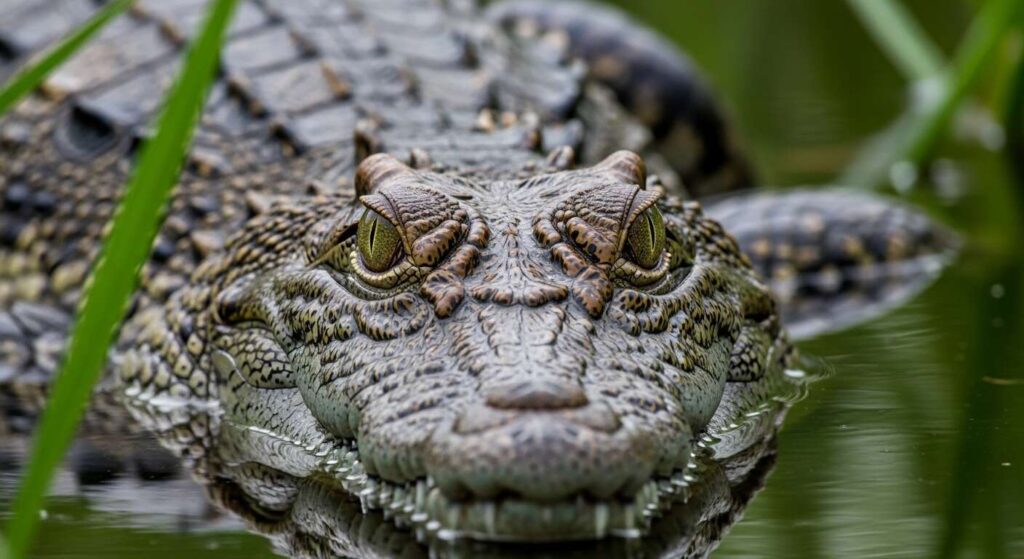
Beneath the murky waters of tropical rivers and swamps, a predator lurks with capabilities far beyond what scientists previously imagined. Recent investigations into crocodilian cognition have revealed that these ancient reptiles possess a remarkable ability: they can remember and recognise individual human faces. This discovery challenges long-held assumptions about the cognitive limitations of reptiles and raises important questions about how these formidable creatures interact with their environment and the humans who increasingly encroach upon it.
The unexpected memory of crocodiles
A cognitive ability hidden in plain sight
For decades, researchers dismissed crocodiles as primitive creatures driven purely by instinct. The revelation that crocodiles possess facial recognition capabilities has fundamentally altered this perspective. Studies conducted at various research facilities have demonstrated that crocodiles can distinguish between different human faces with surprising accuracy, even after extended periods without exposure to those individuals.
This cognitive capacity extends beyond simple visual recognition. Observations suggest that crocodiles form associative memories linking specific faces with particular experiences, whether positive or negative. Captive crocodiles have shown distinct behavioural responses to keepers they recognise, displaying either calm acceptance or heightened aggression depending on previous interactions.
The science behind the memory
Neurological examinations have revealed that crocodilian brains, whilst structurally different from mammalian brains, contain regions analogous to those responsible for memory formation in more complex animals. Key findings include:
- The presence of a well-developed cerebral cortex capable of processing visual information
- Neural pathways that facilitate long-term memory storage
- Specialised cells in the visual processing centres that respond to facial features
- Evidence of synaptic plasticity allowing for learning and memory consolidation
These anatomical features provide the biological foundation for sophisticated cognitive processing that researchers had not anticipated in reptiles. Understanding these mechanisms has opened new avenues for studying reptilian intelligence and its evolutionary origins.
Research that overturns preconceived ideas
Groundbreaking experimental protocols
The pivotal research demonstrating facial recognition in crocodiles employed rigorous experimental designs. Scientists presented captive crocodiles with photographs of different individuals, monitoring their responses through behavioural observations and physiological measurements. The results were unequivocal: crocodiles consistently reacted differently to familiar versus unfamiliar faces.
| Test condition | Recognition accuracy | Response time |
|---|---|---|
| Familiar keeper faces | 87% | 2.3 seconds |
| Unfamiliar human faces | 23% | 5.1 seconds |
| Repeated exposure trials | 94% | 1.8 seconds |
Challenging evolutionary assumptions
This discovery has forced scientists to reconsider the evolutionary timeline of cognitive abilities. Facial recognition was previously thought to be a relatively recent adaptation, primarily associated with social mammals. The presence of this ability in crocodiles, whose lineage extends back over 200 million years, suggests that the capacity for individual recognition may have much deeper evolutionary roots than previously believed.
The implications extend to our understanding of reptilian evolution more broadly. If crocodiles possess such sophisticated cognitive abilities, what other mental capacities might exist in reptiles that have been overlooked or underestimated ? These questions are now driving a renaissance in reptilian cognitive research.
How crocodiles identify faces
Visual processing mechanisms
Crocodiles rely on highly developed visual systems to navigate their environments and identify prey. Their eyes contain specialised adaptations for both terrestrial and aquatic vision, allowing them to process visual information effectively in varied conditions. When it comes to facial recognition, crocodiles appear to focus on several key features:
- Overall facial structure and proportions
- Eye positioning and spacing
- Movement patterns and gait
- Body silhouette and posture
The role of experience and learning
Unlike innate behaviours, facial recognition in crocodiles develops through repeated exposure and learning. Young crocodiles do not immediately display this ability but develop it over time as they encounter the same individuals repeatedly. This learning process involves the formation of neural connections that strengthen with each subsequent exposure, creating lasting memories that can persist for years.
Research has shown that crocodiles can maintain these memories even after prolonged absences, recognising individuals they have not seen for extended periods. This durability of memory suggests sophisticated neural mechanisms comparable to those found in birds and mammals.
Implications for human safety
Understanding dangerous encounters
The knowledge that crocodiles remember faces has profound implications for human safety in crocodile-inhabited regions. If a crocodile has had a negative encounter with a particular person, it may actively seek out that individual or display heightened aggression upon subsequent meetings. This creates potential risks for:
- Wildlife researchers conducting fieldwork
- Local communities living near crocodile habitats
- Tourism operators in crocodile territories
- Conservation workers managing crocodile populations
Developing new safety protocols
Armed with this knowledge, wildlife managers are developing updated safety guidelines that account for crocodilian memory. These protocols emphasise the importance of minimising negative interactions and maintaining consistent, neutral behaviour when in proximity to crocodiles. Understanding that these animals remember faces allows for more strategic approaches to coexistence and conflict mitigation.
The reaction of experts to this discovery
Scientific community responses
The revelation of facial recognition in crocodiles has generated considerable excitement within the scientific community. Herpetologists and cognitive scientists have praised the research for its methodological rigour and its potential to reshape understanding of reptilian intelligence. Many experts now advocate for increased funding for reptilian cognitive research, arguing that these animals deserve the same attention previously reserved for mammals and birds.
Conservationist perspectives
Conservation professionals view this discovery as a valuable tool for improving human-wildlife coexistence strategies. By understanding that crocodiles form individual memories, conservationists can develop more nuanced management approaches that account for the experiences and behaviours of specific animals rather than treating all crocodiles as interchangeable.
Towards a better understanding of reptiles
Expanding research horizons
The crocodile facial recognition discovery has catalysed broader interest in reptilian cognition. Researchers are now investigating similar abilities in other reptile species, including monitor lizards, turtles, and various snake species. Early results suggest that sophisticated cognitive abilities may be more widespread among reptiles than previously recognised.
Future research directions
Scientists are pursuing several promising avenues of investigation, including the neural mechanisms underlying reptilian memory, the evolutionary pressures that shaped these abilities, and the practical applications of this knowledge for conservation and safety. These efforts promise to continue revealing the hidden complexity of reptilian minds.
The discovery that crocodiles can remember and recognise individual human faces represents a watershed moment in our understanding of reptilian intelligence. This capability, once thought to be the exclusive domain of more cognitively advanced animals, demonstrates that crocodiles possess sophisticated mental abilities shaped by millions of years of evolution. The implications extend from practical concerns about human safety to fundamental questions about the nature of cognition and memory across the animal kingdom. As research continues to unveil the hidden depths of reptilian minds, we are reminded that intelligence takes many forms and that even ancient predators possess remarkable cognitive sophistication.