



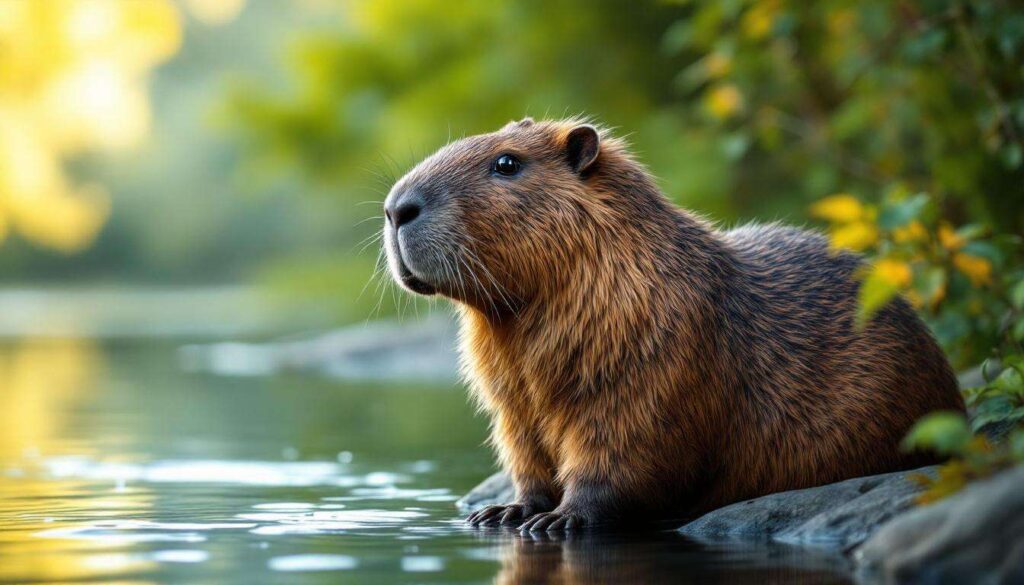
Capybaras possess an extraordinary survival advantage that sets them apart from most prey animals in South America’s wetlands and grasslands. These rodents, the largest in the world, have developed a complex social structure that functions as their primary shield against predators. Unlike solitary creatures that rely solely on speed or camouflage, capybaras have mastered the art of collective vigilance, creating a network of eyes and ears that makes them remarkably difficult to catch. Their ability to coordinate group behaviour, communicate through subtle signals, and maintain constant awareness of their surroundings transforms what might appear to be a vulnerable herd into a formidable defensive unit. This social cohesion, combined with their semi-aquatic lifestyle, creates multiple layers of protection that few predators can penetrate consistently.
Understanding the natural habitat of capybaras
Geographic distribution and preferred environments
Capybaras inhabit a vast territory across South America, thriving in regions where water and vegetation converge. Their range extends from Colombia and Venezuela southward through Brazil, Paraguay, and into northern Argentina. These semi-aquatic mammals demonstrate a clear preference for environments that offer immediate access to water bodies.
- Dense riverbanks with abundant vegetation
- Flooded grasslands and seasonal wetlands
- Forest edges adjacent to streams and ponds
- Agricultural areas near water sources
Essential habitat requirements
The ideal capybara habitat must satisfy specific ecological needs. Permanent water sources remain non-negotiable, as these animals use aquatic environments not merely for hydration but as escape routes from terrestrial predators. The surrounding landscape must provide sufficient grazing areas with grasses and aquatic plants that constitute their primary diet. Temperature regulation also depends heavily on water access, as capybaras lack sweat glands and must submerge themselves to cool down during hot periods.
| Habitat Feature | Importance Level | Primary Function |
|---|---|---|
| Water bodies | Critical | Escape, thermoregulation, mating |
| Grasslands | Essential | Feeding grounds |
| Dense vegetation | Moderate | Shelter, shade |
The proximity of these habitat elements directly influences capybara survival rates and population density. Areas offering all three components within close range support larger, more stable groups that can better withstand predation pressure.
This environmental foundation creates the stage upon which capybaras have developed their most effective survival strategy.
The importance of group living among capybaras
Typical group composition and size
Capybara social units typically consist of 10 to 20 individuals, though groups can swell to 40 or more during dry seasons when water sources become scarce. Each group maintains a hierarchical structure with a dominant male, several females, subordinate males, and juveniles of various ages. This stratified organisation ensures order during feeding, movement, and threat response.
Advantages of collective living
The benefits of group cohesion extend far beyond simple companionship. Multiple individuals scanning the environment simultaneously create a surveillance network that dramatically reduces the likelihood of successful predator ambush. When one capybara detects danger, the entire group responds instantaneously.
- Increased detection range for approaching threats
- Shared responsibility for vigilance allows more feeding time
- Confusion effect when fleeing en masse
- Protection for vulnerable young through collective guarding
- Enhanced learning opportunities for juveniles
Social bonds and group stability
Capybaras invest considerable effort in maintaining social cohesion through grooming, vocalisation, and proximity. Females often nurse offspring communally, and juveniles from different litters play together under the watchful eyes of multiple adults. This interconnected care system ensures that even if a mother is killed, her young have a higher chance of survival through adoption by other group members.
These intricate social arrangements form the foundation for their sophisticated defensive behaviours.
Social interactions: a defence mechanism
Coordinated vigilance patterns
Capybaras employ a rotational vigilance system where different individuals assume lookout duties whilst others feed or rest. This staggered approach means the group never experiences a complete lapse in awareness. Dominant individuals often position themselves at strategic vantage points, scanning for jaguars, caimans, and anacondas.
Alarm responses and group coordination
When danger is detected, capybaras demonstrate remarkable synchronisation. A single alarm bark triggers immediate group movement towards water, with adults positioning themselves between threats and juveniles. This coordinated response happens within seconds, providing minimal opportunity for predators to isolate individuals.
| Threat Type | Primary Response | Success Rate |
|---|---|---|
| Terrestrial predators | Immediate water entry | 85-90% |
| Aquatic predators | Shore retreat, grouping | 75-80% |
| Aerial threats | Dense vegetation cover | 70-75% |
Teaching defensive behaviours
Young capybaras learn appropriate threat responses through observation and practice. Adults tolerate juvenile alarm calls even when no genuine threat exists, allowing youngsters to develop discrimination skills without punishment. This educational tolerance ensures the next generation inherits effective survival strategies.
Understanding these defensive interactions reveals how capybaras contribute to their broader environment.
The role of capybaras in the ecosystem
Grazing impact on vegetation
As ecosystem engineers, capybaras significantly influence plant community composition through their feeding habits. Their grazing creates and maintains open areas within wetlands, preventing certain plant species from dominating whilst allowing others to flourish. This vegetation management benefits numerous other species that depend on diverse plant communities.
Nutrient cycling contributions
Capybaras consume large quantities of vegetation and produce substantial amounts of waste, which enriches both terrestrial and aquatic environments. Their faeces provide nutrients that support algae growth, which in turn feeds fish populations. This nutrient transfer between land and water ecosystems makes capybaras vital connectors in food webs.
- Fertilisation of grazing areas through waste deposition
- Seed dispersal across their ranging territory
- Creation of pathways used by smaller animals
- Maintenance of water access points for other species
Position in the food chain
Despite their defensive abilities, capybaras remain important prey species for apex predators including jaguars, pumas, and large caimans. This position makes them crucial for maintaining predator populations, though their defensive strategies ensure predation rates remain sustainable rather than devastating to capybara populations.
These ecological roles have shaped the specific adaptations that make capybaras such challenging prey.
Adaptation strategies against predators
Aquatic escape capabilities
Capybaras possess exceptional swimming abilities that serve as their primary escape mechanism. Their partially webbed feet propel them efficiently through water, whilst their eyes, ears, and nostrils positioned atop their heads allow them to remain almost completely submerged whilst monitoring their surroundings. They can hold their breath for up to five minutes, making pursuit extremely difficult for terrestrial predators.
Physical characteristics as defence
Beyond behaviour, capybaras have evolved physical traits that enhance survival. Their robust build makes them challenging prey even for large predators, requiring significant effort to subdue. Thick skin provides some protection against bites, whilst their powerful legs enable rapid acceleration when fleeing.
| Adaptation | Function | Effectiveness |
|---|---|---|
| Webbed feet | Swimming efficiency | High |
| High-set sensory organs | Submerged surveillance | Very high |
| Large body mass | Deterrent to smaller predators | Moderate |
Temporal activity patterns
Capybaras adjust their activity schedules based on predation risk. In areas with high jaguar populations, they become more crepuscular or nocturnal, feeding during twilight hours when visibility challenges both prey and predator. This flexibility demonstrates their capacity to modify behaviour according to local threat levels.
These adaptations work in concert with sophisticated communication systems that bind groups together.
The discreet communication of capybaras in the wild
Vocal repertoire and meanings
Capybaras employ a diverse vocal repertoire that facilitates group coordination without attracting predator attention. Their calls range from soft purrs during contentment to sharp barks signalling danger. Each vocalisation conveys specific information about context and urgency, allowing appropriate group responses.
- Alarm barks: sharp, loud warnings of immediate danger
- Purrs and whistles: contact calls maintaining group cohesion
- Squeals: distress signals from juveniles or during conflicts
- Clicks: low-intensity communication during feeding
Chemical and tactile signals
Beyond vocalisations, capybaras utilise scent marking through specialised glands to communicate territorial boundaries and reproductive status. Dominant males possess prominent morillo glands on their snouts, which they use to mark vegetation and group members. Tactile communication through grooming reinforces social bonds and reduces tension within groups.
Subtle body language
Capybaras communicate volumes through posture and positioning. An alert stance with raised head signals vigilance, prompting others to increase their own awareness. Submissive individuals lower their bodies and avoid eye contact with dominants, maintaining hierarchy without costly physical confrontations. This nuanced communication system allows groups to function efficiently whilst minimising conspicuous signals that might alert predators.
The combination of habitat selection, social structure, defensive coordination, ecological integration, physical adaptations, and sophisticated communication creates a survival system that renders capybaras remarkably resilient. Their success lies not in any single extraordinary ability but in the seamless integration of multiple strategies that function collectively. Group living amplifies individual vigilance, transforming each capybara into both sentinel and beneficiary within a mutual protection network. Their semi-aquatic nature provides an escape option unavailable to purely terrestrial prey, whilst their ecological role ensures habitat maintenance that benefits their own survival. This multifaceted approach to survival demonstrates that in nature, the most effective defence often comes not from solitary prowess but from the strength found in social bonds and environmental adaptation.