



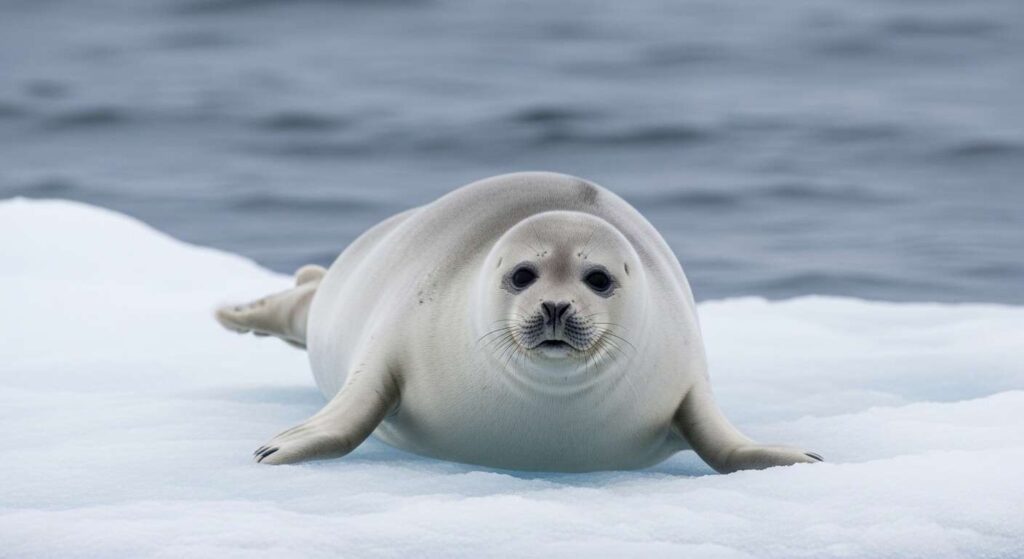
The North Atlantic fishing grounds have witnessed a troubling phenomenon over recent decades. Atlantic cod populations, once abundant enough to sustain entire coastal economies, have struggled to recover despite significant reductions in commercial fishing pressure. This ecological puzzle has sparked considerable debate amongst marine biologists, fisheries managers, and coastal communities. At the centre of this controversy stands an unexpected suspect: the harp seal, whose own population has flourished in the same waters where cod numbers remain stubbornly depressed. The relationship between these two species has become a focal point for understanding the complex dynamics of marine ecosystem recovery.
Introduction to the issue: harp seal and Atlantic cod
The ecological relationship
The harp seal and Atlantic cod share overlapping habitats across the Northwest Atlantic, creating a natural predator-prey dynamic that has existed for millennia. Harp seals, identifiable by their distinctive dark harp-shaped markings, are opportunistic feeders that consume various fish species, including juvenile cod. This relationship has taken on new significance as scientists examine why cod stocks have failed to rebound to historical levels.
The complexity of this interaction extends beyond simple predation. Both species compete for similar prey resources, including capelin and other forage fish that form crucial links in the marine food web. Understanding this multifaceted relationship requires examining not just direct consumption but also indirect effects on ecosystem structure.
Population trends
Recent population assessments reveal a striking divergence between the two species:
| Species | Population trend | Conservation status |
|---|---|---|
| Harp seal | Increasing substantially | Least Concern |
| Atlantic cod | Declining or stagnant | Vulnerable |
This divergence has fuelled speculation about whether seal predation represents a significant barrier to cod recovery. The historical context of these population changes provides essential perspective on current conditions.
Historical context of cod fishing
The collapse of the fishery
For centuries, Atlantic cod supported one of the world’s most productive fisheries. The Grand Banks off Newfoundland became legendary for their seemingly inexhaustible cod stocks. However, intensive commercial fishing throughout the twentieth century, combined with increasingly efficient harvesting technology, placed unsustainable pressure on cod populations. The fishery experienced catastrophic collapse in the early 1990s, prompting authorities to impose moratoria on commercial cod fishing in many areas.
The collapse devastated coastal communities that had depended on cod fishing for generations. Thousands lost their livelihoods as processing plants closed and fishing fleets were decommissioned. The socioeconomic impact continues to resonate through affected regions.
Recovery expectations
When fishing moratoria were implemented, scientists and policymakers anticipated that cod populations would recover within a decade or two. This expectation was based on the species’ biological characteristics:
- High fecundity, with females producing millions of eggs
- Historical resilience to environmental fluctuations
- Rapid growth rates under favourable conditions
- Broad dietary flexibility
However, recovery has proven far slower and more uncertain than predicted, leading researchers to investigate alternative explanations beyond fishing pressure alone. This unexpected outcome has directed attention towards other factors influencing cod populations, particularly the role of marine mammals.
Impact of seals on the marine ecosystem
Predation pressure
Harp seals consume substantial quantities of fish annually. Individual seals require approximately 1.5 to 2 tonnes of prey each year to maintain their body condition and support reproduction. With harp seal populations numbering in the millions across the Northwest Atlantic, their collective consumption represents a significant proportion of available fish biomass.
Dietary studies reveal that cod, particularly juveniles, feature regularly in seal stomach contents. This predation occurs during critical life stages when young cod are establishing themselves in the ecosystem. The cumulative effect of this predation across multiple year classes could theoretically suppress cod recruitment and population growth.
Ecosystem restructuring
Beyond direct predation, seal populations may influence marine ecosystems through several mechanisms:
- Competition for shared prey resources
- Alteration of prey behaviour and distribution patterns
- Changes to nutrient cycling through waste products
- Indirect effects on food web structure
Some researchers propose that the Northwest Atlantic has undergone regime shift, transitioning to an ecosystem state dominated by marine mammals rather than commercial fish stocks. In this alternative stable state, high seal abundance might prevent cod populations from recovering even when fishing pressure is removed. These theoretical frameworks have prompted intensive scientific investigation.
Scientific studies and recent observations
Research findings
Numerous studies have examined the seal-cod relationship, producing varied and sometimes contradictory results. Some research suggests that seal predation does impact cod recovery, particularly in specific regions or during certain seasons. Other studies indicate that environmental factors and ecosystem changes play more significant roles than predation.
Key research findings include:
- Seal diet composition varies considerably by location and season
- Cod represents only a fraction of total seal consumption in most areas
- Environmental conditions strongly influence cod recruitment success
- Multiple stressors affect cod populations simultaneously
Methodological challenges
Quantifying seal impact on cod populations presents substantial methodological difficulties. Estimating consumption rates requires understanding seal population size, individual energy requirements, and dietary preferences across different seasons and regions. Each parameter carries significant uncertainty, and errors compound when calculating ecosystem-level effects.
Furthermore, isolating seal predation from other factors influencing cod populations remains challenging. Climate change, habitat degradation, prey availability, and residual fishing pressure all affect cod recovery, making it difficult to attribute population trends to any single cause. These complexities have informed approaches to management and conservation.
Management and conservation measures
Regulatory approaches
Fisheries managers face the difficult task of balancing multiple objectives: cod stock recovery, seal population management, and the interests of coastal communities. Current management strategies include:
- Continued restrictions on commercial cod fishing
- Regulated seal harvests in some jurisdictions
- Ecosystem-based management frameworks
- Monitoring programmes for both species
Seal culling has been proposed as a potential tool to reduce predation pressure on cod, but this approach remains highly controversial. Scientific evidence supporting large-scale culls as an effective recovery strategy is limited, whilst ethical concerns and public opposition present significant obstacles.
Integrated ecosystem management
Increasingly, authorities recognise that single-species management approaches are insufficient for addressing complex ecosystem interactions. Modern frameworks attempt to consider multiple species, trophic relationships, and environmental factors simultaneously. This holistic perspective acknowledges that cod recovery depends on restoring overall ecosystem health rather than simply reducing seal numbers.
These management philosophies will shape future strategies for both species as scientists continue gathering evidence.
Future outlook for Atlantic cod and seals
Recovery scenarios
The future trajectory of Atlantic cod populations remains uncertain. Several scenarios appear possible:
| Scenario | Key factors | Likelihood |
|---|---|---|
| Gradual recovery | Improved environmental conditions, ecosystem adaptation | Moderate |
| Continued stagnation | Multiple stressors persist, including seal predation | Moderate to high |
| Further decline | Climate change impacts intensify | Low to moderate |
Research priorities
Advancing understanding of the seal-cod relationship requires continued investment in several research areas. Long-term monitoring programmes provide essential data on population trends and ecosystem changes. Improved dietary studies using modern techniques can better quantify seal consumption patterns. Climate change research helps predict how environmental shifts will affect both species.
Ultimately, determining whether harp seals genuinely impede cod recovery or merely coincide with other limiting factors demands rigorous, sustained scientific investigation across multiple scales and timeframes.
The question of whether harp seals bear responsibility for stalled Atlantic cod recovery defies simple answers. Whilst seals undoubtedly consume cod and compete for prey resources, attributing population-level effects remains scientifically challenging. Historical overfishing created the initial collapse, but multiple factors now influence recovery prospects. Environmental change, ecosystem restructuring, and complex species interactions all play roles alongside any seal predation effects. Moving forward, effective management will require acknowledging this complexity whilst continuing to gather evidence. The fate of Atlantic cod ultimately depends on understanding and addressing the full suite of challenges facing this once-abundant species, rather than focusing narrowly on any single factor.