


Protecting one’s home remains a paramount concern for countless households across the country. Whilst sophisticated alarm systems and surveillance cameras offer technological solutions, the presence of a well-trained guard dog provides an unparalleled combination of deterrence, companionship, and instinctive protection. Selecting the right breed requires careful consideration of temperament, trainability, and physical capabilities. These remarkable animals possess an innate ability to distinguish between genuine threats and everyday occurrences, making them invaluable guardians for families seeking both security and loyalty.
The essential characteristics of a good guard dog
Temperament and trainability
A reliable guard dog must demonstrate a balanced temperament that combines confidence with controlled aggression. The ideal protector remains calm in routine situations whilst maintaining heightened awareness of potential threats. Trainability stands as perhaps the most crucial attribute, as even the most naturally protective breed requires proper instruction to channel its instincts appropriately. Dogs that respond well to commands and demonstrate eagerness to please their handlers make superior guardians.
Physical attributes and presence
Size and strength contribute significantly to a guard dog’s effectiveness, though these qualities alone do not guarantee success. The most effective protectors possess:
- Robust build with sufficient strength to deter intruders
- Imposing appearance that serves as a visual deterrent
- Athletic capabilities for pursuit and restraint when necessary
- Keen senses, particularly acute hearing and sense of smell
- Endurance for extended periods of vigilance
Loyalty and protective instincts
The bond between a guard dog and its family forms the foundation of effective protection. Loyalty drives these animals to place themselves between their loved ones and perceived threats without hesitation. This devotion, combined with territorial instincts, creates a formidable guardian that considers the home and family as resources worth defending. The most successful guard dogs exhibit natural suspicion towards strangers whilst remaining affectionate and gentle with family members.
Understanding these fundamental qualities provides the framework for evaluating specific breeds renowned for their protective capabilities.
German shepherd: the versatile protector
Intelligence and adaptability
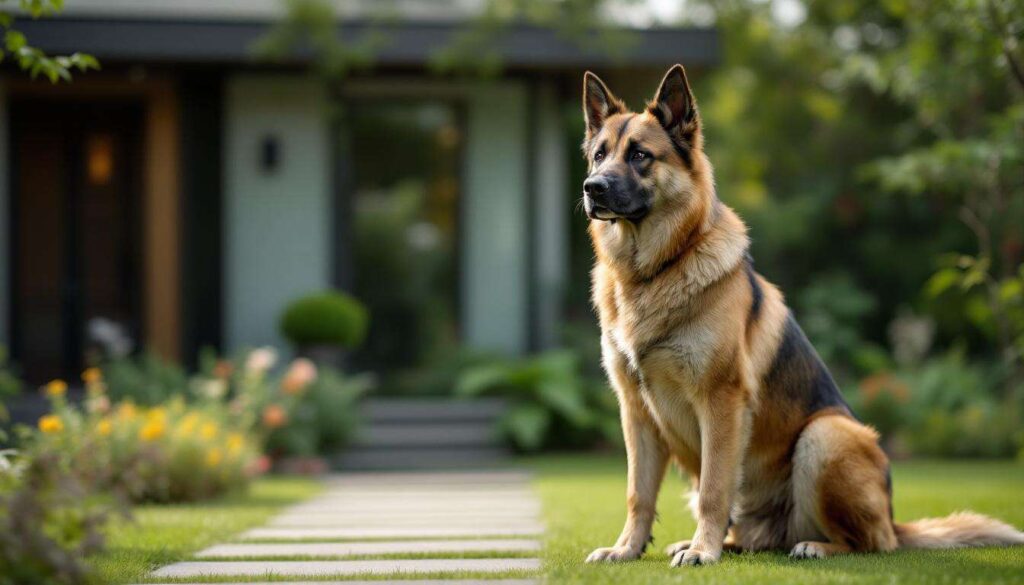
The German shepherd consistently ranks amongst the most intelligent dog breeds, demonstrating remarkable problem-solving abilities and swift learning capacity. This cognitive prowess translates directly into security work, as these dogs quickly master complex commands and adapt their responses to varying situations. Their versatility has made them the preferred choice for police forces, military units, and private security operations worldwide.
Physical capabilities and presence
Standing between 55 and 65 centimetres at the shoulder and weighing 30 to 40 kilogrammes, German shepherds possess the physical attributes necessary for effective protection. Their muscular build, combined with impressive agility and speed, allows them to respond rapidly to threats. The breed’s distinctive appearance alone often serves as sufficient deterrent to potential intruders.
| Characteristic | Rating |
|---|---|
| Trainability | 9/10 |
| Protective instinct | 9/10 |
| Family compatibility | 8/10 |
| Energy level | 8/10 |
These exceptional qualities have established the German shepherd as a benchmark, yet other breeds offer equally compelling protective capabilities.
Rottweiler: a powerhouse at your service
Strength and determination
The Rottweiler brings formidable physical strength to the role of guardian, with males weighing between 50 and 60 kilogrammes of solid muscle. This breed’s determination and courage make them exceptionally effective at deterring intruders. Their powerful presence commands respect, whilst their natural territorial instincts create an unwavering commitment to protecting their domain.
Loyalty and family bonds
Despite their intimidating appearance, Rottweilers form deep emotional connections with their families. They display remarkable gentleness with children when properly socialised, transforming from fierce protectors to affectionate companions within the safety of their home environment. This duality makes them particularly valuable for families seeking both security and companionship.
Training requirements
Rottweilers require consistent, firm training from an early age. Their strong-willed nature demands an experienced handler who can establish clear leadership whilst maintaining positive reinforcement methods. Key training priorities include:
- Early socialisation with various people and situations
- Obedience training to ensure controlled responses
- Boundary establishment to prevent over-protectiveness
- Regular mental stimulation to prevent boredom
Whilst the Rottweiler excels in raw power, other breeds combine strength with remarkable grace and agility.
Doberman: elegance in the service of security
Speed and alertness
The Doberman represents the perfect synthesis of athleticism and vigilance. This breed’s lean, muscular physique enables extraordinary speed and agility, allowing rapid response to threats. Their heightened alertness means few disturbances escape their notice, making them exceptionally effective early warning systems for potential dangers.
Intelligence and trainability
Dobermans possess keen intelligence that rivals the German shepherd, combined with an eagerness to work that makes training relatively straightforward for experienced handlers. They excel at learning complex commands and demonstrate excellent judgement in distinguishing between normal activities and genuine threats. This discernment prevents unnecessary aggression whilst maintaining protective readiness.
Maintenance and care
The breed’s short coat requires minimal grooming, though their high energy levels demand substantial daily exercise. Dobermans thrive on mental challenges and physical activity, making them ideal for active families who can provide adequate stimulation. Without proper outlets for their energy, these dogs may develop destructive behaviours.
For those seeking a slightly more compact yet equally devoted protector, another breed offers compelling advantages.
Boxer: a loyal defence companion
Playful protector
The Boxer combines protective instincts with an exuberant, playful personality that makes them particularly suitable for families with children. Their boundless energy and affectionate nature create a guardian that integrates seamlessly into family life whilst maintaining vigilant awareness of potential threats. This breed’s patience with children, coupled with their protective instincts, creates an ideal balance for household security.
Physical attributes
Weighing between 25 and 32 kilogrammes, Boxers possess sufficient strength and athleticism to serve as effective deterrents without the overwhelming size of larger breeds. Their muscular build and powerful jaw provide genuine protective capability when circumstances demand intervention.
Training and socialisation needs
Boxers respond exceptionally well to positive reinforcement training methods. Their desire to please their owners facilitates the learning process, though their stubborn streak occasionally requires patience and consistency. Early socialisation proves essential for developing appropriate responses to strangers and other animals.
For those requiring the ultimate combination of athleticism and protective capability, one final breed deserves particular attention.
Belgian malinois: the athletic protector
Unmatched work ethic
The Belgian Malinois has emerged as the preferred choice for elite military and police units worldwide, surpassing even the German shepherd in certain applications. This breed’s extraordinary work ethic and intense focus make them exceptional guardians for those who can meet their demanding exercise and mental stimulation requirements.
Physical prowess
Slightly smaller than German shepherds, Malinois compensate with superior agility and endurance. Their athletic capabilities include:
- Exceptional jumping ability, easily clearing obstacles over two metres
- Sustained running speeds suitable for pursuit
- Quick reflexes enabling rapid threat response
- Remarkable stamina for extended work periods
Suitability considerations
The Belgian Malinois requires an experienced handler capable of providing extensive daily exercise and mental challenges. This breed is not recommended for first-time dog owners or sedentary households. However, for active individuals or families with the time and expertise to properly train and exercise them, Malinois represent the pinnacle of canine protection.
Selecting a guard dog represents a significant commitment that extends far beyond security considerations. Each breed discussed offers unique advantages suited to different household situations and owner experience levels. The German shepherd’s versatility, the Rottweiler’s strength, the Doberman’s elegance, the Boxer’s family-friendly nature, and the Belgian Malinois’s athletic excellence all provide proven protective capabilities. Success ultimately depends upon matching the right breed to your specific circumstances, followed by consistent training, proper socialisation, and the dedication required to develop a well-adjusted guardian. These remarkable animals offer not merely security, but loyal companionship that enriches family life whilst providing invaluable peace of mind.