
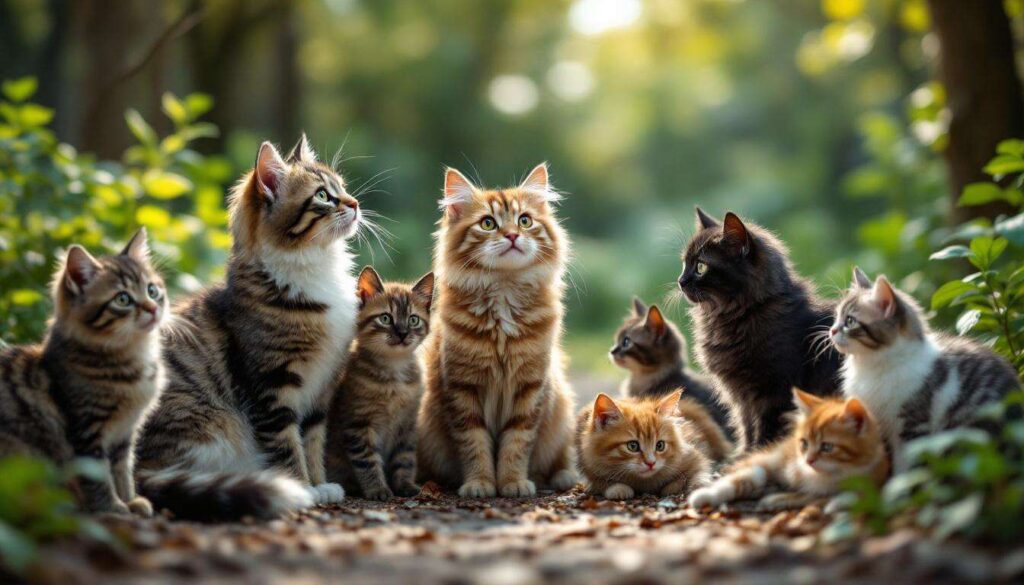
Felines have captivated humans for millennia, yet the question of how distinct cat breeds emerged remains a subject of scientific and historical intrigue. Unlike dogs, which underwent intensive selective breeding for specific tasks, many cat populations evolved through environmental adaptation and geographic isolation. Some breeds trace their lineage to ancient port cities, whilst others developed unique characteristics in remote island communities. Understanding which breeds arose naturally versus through human intervention reveals fascinating insights into feline evolution and the complex relationship between cats and civilisation.
Origin of cat breeds
Ancient domestication patterns
The domestication of cats began approximately 10,000 years ago in the Fertile Crescent, where wildcats (Felis silvestris lybica) were drawn to agricultural settlements by rodent populations. Unlike the deliberate breeding programmes that shaped canine diversity, cats largely domesticated themselves through a process of natural selection favouring individuals tolerant of human proximity. This self-domestication created a foundation population from which various breeds would eventually emerge.
Geographic dispersal and isolation
As human civilisations expanded through trade and exploration, cats accompanied merchants and sailors across continents. These feline travellers established populations in diverse environments, from the forests of Norway to the tropical climates of Southeast Asia. Geographic isolation in these regions allowed distinct physical and behavioural traits to develop over generations, creating the basis for what we now recognise as natural breeds.
The relationship between human migration and feline population development set the stage for understanding how specific regional characteristics became established in cat communities worldwide.
Cat breeds that developed naturally
Norwegian Forest Cat
The Norwegian Forest Cat, known locally as Skogkatt, evolved in Scandinavia’s harsh climate over centuries. This breed developed a thick, water-resistant double coat, substantial bone structure, and tufted ears as adaptations to severe winters. Historical records suggest these cats lived alongside Vikings, though their exact origins remain debated amongst researchers.
Turkish Angora
Originating in the Ankara region of Turkey, the Turkish Angora represents one of the oldest natural breeds. These cats developed their distinctive silky coat and elegant physique through adaptation to the region’s climate variations. The breed’s genetic diversity remained relatively intact due to geographic isolation in mountainous areas.
Maine Coon
The Maine Coon emerged in northeastern America through natural selection in a demanding environment. Key characteristics include:
- Large, muscular build for hunting in snow
- Water-resistant fur adapted to cold, wet conditions
- Tufted paws functioning as natural snowshoes
- Bushy tail providing warmth and balance
Siberian Cat
Russia’s Siberian Cat developed over approximately 1,000 years in the taiga forests. This breed exhibits remarkable cold-weather adaptations, including a triple-layered coat and robust constitution. Genetic studies confirm their ancient lineage and minimal human intervention in their development.
These naturally occurring breeds share common features that distinguish them from their selectively bred counterparts, particularly regarding genetic diversity and adaptive traits.
The specific case of the Manx cat
Island isolation and genetic mutation
The Manx cat from the Isle of Man presents a unique example of natural breed development through genetic mutation combined with geographic isolation. The breed’s defining characteristic—a naturally occurring taillessness or shortened tail—resulted from a spontaneous dominant mutation that became concentrated in the island’s limited gene pool.
Founder effect phenomenon
The Manx exemplifies the founder effect, whereby a small population’s genetic characteristics become amplified through limited breeding options. The island’s isolation prevented genetic dilution from mainland populations, allowing the tailless trait to persist and proliferate. This natural experiment in population genetics occurred without deliberate human selection.
Genetic health considerations
| Genetic Factor | Impact on Breed |
|---|---|
| Homozygous mutation | Lethal; kittens do not survive |
| Heterozygous mutation | Produces viable tailless or short-tailed cats |
| Spinal complications | Potential health issues in some individuals |
The Manx demonstrates how natural breed development can involve both beneficial adaptations and genetic challenges, providing valuable insights into the mechanisms that distinguish natural from artificially created breeds.
Distinctions between natural and artificial breeds
Genetic diversity markers
Natural breeds typically exhibit greater genetic diversity compared to artificially created breeds. This diversity manifests in several measurable ways:
- Broader range of acceptable physical variations within breed standards
- Lower incidence of inherited genetic disorders
- More robust immune systems and general health
- Greater adaptability to environmental changes
Development timelines
Natural breeds evolved over centuries or millennia through environmental pressures and geographic isolation, whilst artificial breeds often emerge within decades through intensive selective breeding. The Persian, for example, underwent dramatic facial structure changes in less than 50 years through deliberate human intervention, contrasting sharply with the gradual evolution of natural breeds.
Breeding objectives
Artificial breed development prioritises aesthetic characteristics defined by breed standards, sometimes at the expense of health and functionality. Natural breeds, conversely, developed traits that enhanced survival and reproduction in specific environments. This fundamental difference in selective pressure explains why natural breeds generally maintain better overall health profiles.
Understanding these distinctions helps explain how population movements and geographic factors influenced the distribution and characteristics of naturally developed breeds.
Impact of migrations on cat breeds
Maritime trade routes
Seafaring civilisations played a crucial role in distributing cat populations globally. Ships carried cats as rodent control, inadvertently transporting genetic material across continents. The Japanese Bobtail, for instance, likely arrived in Japan via Chinese or Korean trading vessels centuries ago, where isolation allowed distinctive traits to develop.
Colonial expansion effects
European colonial expansion during the 15th to 19th centuries dramatically altered global cat population genetics. Cats from European ports mixed with indigenous populations in colonised regions, creating new genetic combinations. However, some isolated populations maintained their distinct characteristics despite these migrations.
Modern transportation influences
Contemporary globalisation poses both opportunities and challenges for natural breeds. Increased mobility threatens genetic distinctiveness through population mixing, whilst simultaneously enabling preservation efforts through organised breeding programmes. The balance between maintaining genetic diversity and preserving breed characteristics remains a subject of ongoing debate amongst feline geneticists.
These migration patterns worked in concert with spontaneous genetic changes to shape the diversity of cat breeds we observe today.
Role of genetic mutations in breed development
Spontaneous mutations in isolated populations
Random genetic mutations provided the raw material for natural breed differentiation. In isolated populations, beneficial or neutral mutations could become established through genetic drift rather than active selection. The polydactyl trait in certain Maine Coon populations exemplifies how mutations can persist when they offer survival advantages or remain selectively neutral.
Coat variations and climate adaptation
Mutations affecting coat length, density, and texture proved particularly significant in breed development. The gene responsible for long hair, for example, arose through mutation and became prevalent in cold-climate populations where it offered thermal advantages. Similarly, the hairless trait in breeds like the Donskoy emerged spontaneously, though this particular mutation required human intervention to perpetuate.
Colour pattern genetics
Natural colour variations arose through mutations in genes controlling pigment production and distribution. The distinctive patterns of the Turkish Van, with coloured markings limited primarily to the head and tail, represent a naturally occurring genetic variant that became fixed in a geographically isolated population.
Several cat breeds indeed developed naturally through environmental adaptation, geographic isolation, and spontaneous genetic mutations rather than deliberate human breeding programmes. The Norwegian Forest Cat, Maine Coon, Siberian, Turkish Angora, and Turkish Van exemplify breeds that evolved over centuries in response to local conditions. The Manx cat demonstrates how island isolation can concentrate genetic mutations naturally. These natural breeds exhibit greater genetic diversity and typically better health profiles than artificially created breeds. Maritime trade and human migrations distributed cat populations globally, allowing isolated groups to develop distinctive characteristics. Spontaneous mutations provided the genetic variation upon which natural selection acted, particularly regarding coat adaptations and physical traits suited to specific environments. Understanding these natural development processes illuminates the complex interplay between genetics, environment, and evolution in shaping feline diversity.